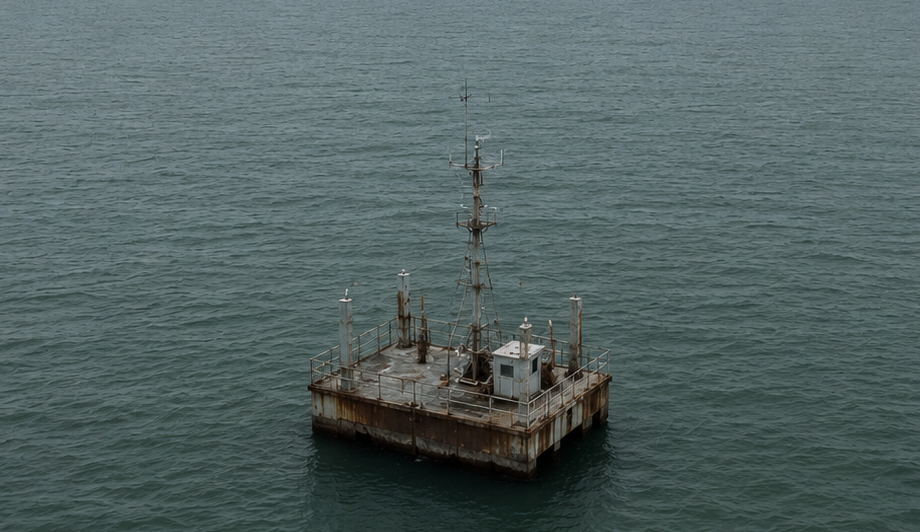
The Philippine National Task Force for the West Philippine Sea confirmed the presence of a floating structure measuring 6 by 6 metres with what appeared to be an antenna inside the disputed Scarborough Shoal lagoon. China's foreign ministry dismissed Manila's protest, reiterating "indisputable sovereignty" over the shoal — which it calls Huangyan Island — and said that activities there, including scientific research, were the legitimate rights of a sovereign state. Armed Forces of the Philippines chief of staff Gen. Romeo Brawner said the Philippine military would not allow China to turn Scarborough into another island base. "We will not allow an incident before to happen again, where a small structure was built and later on, it grew into an artificial island," Brawner said.
The comparison Brawner is reaching for is Mischief Reef. In 1995, Chinese troops occupied that reef, claimed by the Philippines as part of its EEZ, and built in succeeding years a strong naval base equipped with a sophisticated communications system — a project initially disguised as shelters for Chinese fishermen. Scarborough Shoal is a high-tide elevation — a critical legal distinction, because under UNCLOS, high-tide elevations generate a 12 nautical mile territorial sea. A permanent structure there would be categorically more consequential than anything China has built on the submerged reefs of the Spratlys. The 2016 arbitration ruling invalidated China's claims to virtually the entire South China Sea, but Beijing has never recognised it. A 6-metre floating platform with an antenna and personnel aboard is not a coincidence — it is a data point in a sequence Manila, Washington, and every ASEAN claimant state has been watching for over a decade.