On the morning of June 8, 2026, Pakistan's Interior Minister Mohsin Naqvi landed at Mehrabad International Airport in Tehran. He was not there for routine diplomacy. In his briefcase, according to two sources familiar with the visit, were letters addressed directly to Supreme Leader Ali Khamenei — the first written communication from Islamabad to the Iranian leadership at that level in over four years.
The visit landed with quiet significance in a region where quiet significance is increasingly rare. The Strait of Hormuz had seen its most serious military incident in years just forty-eight hours earlier, when US Navy vessels shot down two Iranian drones in what the Pentagon described as a defensive response to an unprovoked escalation. Tehran called it an act of aggression in Iranian territorial waters. The gap between those two descriptions is not semantic. It is the distance between a contained incident and a war.
Into that gap, Pakistan has inserted itself.
The logic of the mediator
Islamabad's decision to pursue this role is not altruistic. Pakistan is one of the few countries in the world that maintains functional, high-level relationships with both Tehran and Washington simultaneously — a balance it has sustained through two decades of American pressure, three Iranian nuclear crises, and the complete restructuring of regional alliances following the Abraham Accords.
That balance has never been comfortable. Pakistan has faced repeated American pressure to distance itself from Iran, particularly over energy — the long-proposed Iran-Pakistan gas pipeline has been stalled for years under the threat of US sanctions. At the same time, Pakistan shares a 900-kilometre border with Iran, houses a large Shia minority population, and cannot afford the kind of hostile relationship with Tehran that Washington periodically demands of its partners.
The result is a foreign policy posture that Islamabad has always described, with some pride, as 'independent.' What that has meant in practice is a studied ambiguity — neither fully aligned with the American position on Iran, nor openly sympathetic to Tehran's defiance of the international order.
What has changed in 2026 is that the cost of ambiguity has risen sharply, and the opportunity it presents has risen with it.
What Naqvi carried
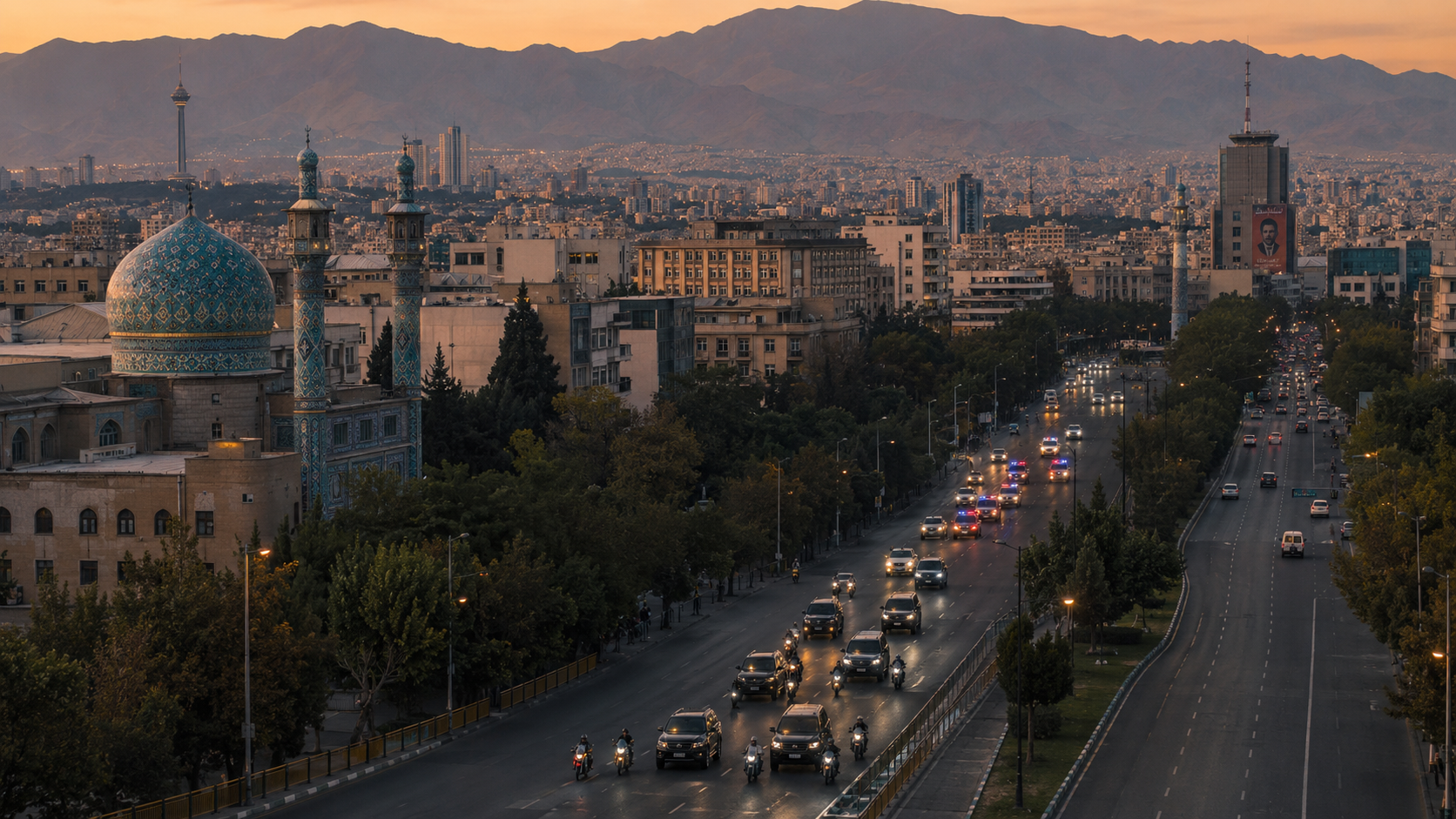
The contents of the letters Naqvi carried to Tehran have not been officially confirmed by either government. Pakistani officials have described the visit as a 'goodwill mission' aimed at 'reducing tensions in the region.' Iranian state media covered the arrival with unusual prominence, publishing photographs of the motorcade and noting that the Interior Minister had been received at a level typically reserved for foreign ministers.
Three independent analysts who track Pakistani foreign policy told The Global Voice that the most plausible interpretation of the visit is that Islamabad is testing whether Tehran would be receptive to a back-channel communication with the United States — not direct talks, which Iran has publicly ruled out, but an indirect channel that preserves Iranian face while giving Washington something to work with diplomatically.
'Pakistan has done this before,' said one analyst, who requested anonymity because of the sensitivity of ongoing diplomatic contacts. 'During the Obama era, Islamabad facilitated communications between Iranian and American officials that neither side was willing to acknowledge publicly. The architecture is familiar to both sides.'
Washington's calculation
The Trump administration's position on Iran has been publicly maximalist and privately contradictory. The President has alternated between threatening military action and expressing openness to a deal — a pattern that has left American allies and adversaries alike uncertain about Washington's actual intentions.
What is clear from the past six weeks is that the administration's preferred approach — maximum pressure combined with the threat of force — has not produced Iranian concessions. If anything, the Hormuz drone incident suggests Tehran is willing to test American resolve in ways it was not eighteen months ago, when the fear of US military response was a more effective deterrent.
For Washington, the question is not whether to negotiate — the administration's maximalist rhetoric has effectively ruled that word out — but whether there is a face-saving mechanism that achieves the substantive goal of de-escalation without appearing to capitulate to Iranian pressure. Pakistan, if it can persuade Tehran to signal any form of receptivity, could provide exactly that mechanism.
The regional stakes
The Hormuz Strait carries approximately 20 percent of the world's oil supply. Any sustained disruption — even one that falls short of a full closure — would send crude prices above $120 per barrel within days, according to energy market analysts. Brent crude has already crossed $102 on the back of the drone incident alone.
For India, which imports roughly 40 percent of its oil from Gulf producers and has significant investments in the Iranian port of Chabahar, the stakes of an escalating Iran-US confrontation are immediate and material. New Delhi has maintained its own quiet diplomatic channel with Tehran and has watched the Pakistani initiative with a combination of concern and interest — concern because a successful Pakistani mediation would significantly enhance Islamabad's regional standing, interest because any outcome that avoids a Hormuz crisis serves Indian economic interests directly.
For China, which has deepened its energy and infrastructure relationship with Iran significantly since the 2021 25-year cooperation agreement, the calculus is different. Beijing prefers instability that keeps American attention divided, but not instability that disrupts the oil flows its own economy depends on. The Pakistani initiative, from Beijing's perspective, is acceptable as long as it does not produce an outcome that strengthens the American position in the Gulf.
What Pakistan's Naqvi carried in his briefcase may determine whether any of these calculations need to be revised. The answer, according to sources in Islamabad, will be known within days.