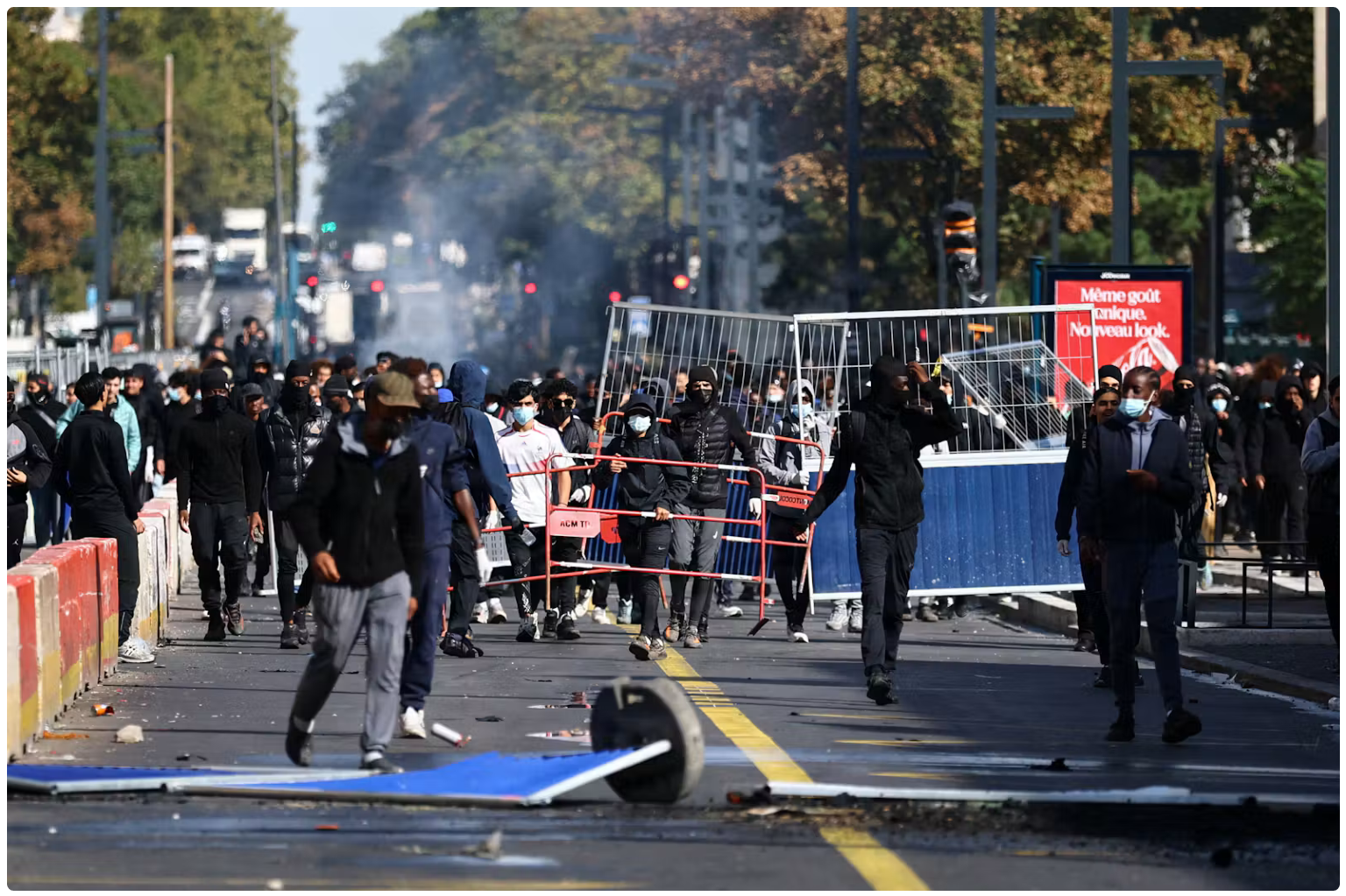
France is struggling to contain nationwide school protests that have escalated into fires, vandalism and clashes with riot police, forcing more than 400 high schools to close and disrupting education at hundreds of others.
The movement began at high schools in the Paris region before spreading to Marseille, Strasbourg, Rennes, Lyon, Lille, Toulouse and other cities. Students initially organised blockades to protest overcrowded classrooms, shortages of teachers, deteriorating buildings, exhausting timetables and what they describe as an increasingly unequal education system.
By Friday afternoon, France’s Education Ministry said 564 schools had experienced protests or disruptions during the day. More than 400 of the country’s approximately 3,700 high schools were closed, with some institutions shifting lessons online. The previous day, more than 1,200 schools had reportedly been affected by blockades or other actions.
🚨Marseille Horror: woman burned in the face after trying to stop bus-shelter damage
— Gauci Reports (@GauciReports) October 2, 2026
A woman in Marseille stepped in to stop people damaging a bus shelter during high-school protests on 1 October. A hooded man in black then aimed a flame from a spray can and lighter at her face.… https://t.co/WKJUz97Pyq pic.twitter.com/gLjsiY6fOV
Peaceful demonstrations have continued in many places, but the movement has increasingly been accompanied by serious violence. Rubbish bins and vehicles have been set on fire, explosive fireworks and other projectiles have been fired at police, and school buildings have been damaged.
In Nantes, a fire severely damaged the entrance of the Nelson Mandela high school. Fires were also reported outside schools in Paris, while fireworks were directed towards police in Marseille and Strasbourg. Authorities said around 100 schools had sustained serious damage and 40 headteachers had been injured since the unrest began.
Police have responded with tear gas, batons and mass arrests. The Interior Ministry reported 1,949 arrests by Thursday, with most of those detained believed to be teenagers. Authorities also said 305 police officers had been injured during the disturbances.
🇫🇷🔴 JUST IN: French high school students knock out a police officer and begin kicking his head with full force in the city of Belfort.
— Remix News & Views (@RMXnews) October 2, 2026
The health status of the officer remains unknown.
This is a developing story.
Follow: @RMXnews pic.twitter.com/AAt34K8xe7
Students and education workers have reported injuries as well. Rights organisations and student groups have accused officers of using disproportionate force against minors, including riot-control projectiles. The government has opened several investigations into allegations of police misconduct.
Education Minister Édouard Geffray urged parents to discourage their children from participating in street demonstrations, warning that students were placing themselves in danger. Justice Minister Gérald Darmanin said parents could be made financially responsible when minors deliberately damage public property.
The government says the original movement has been infiltrated by outsiders seeking confrontation. Officials have also accused the hard-left France Unbowed party of encouraging the unrest for political purposes. The party has supported the students’ demands but denies organising violence, describing the government’s allegations as an attempt to discredit legitimate anger.
Behind the unrest lies a deeper argument over the condition of French public education. Students have described classes containing as many as 35 or 40 pupils, shortages of chairs, leaking buildings, broken toilets and repeated teacher absences. Others have criticised long school days and the complicated university admissions system.
The government has proposed an education budget of approximately €65.5 billion, but the planned increase is expected to remain below inflation. Students and teachers argue that this would amount to another real-terms reduction in resources at a time when many schools are already struggling.
Prime Minister Sébastien Lecornu convened an emergency meeting as the demonstrations spread, while specialist riot police and mobile gendarmerie units were deployed to several cities. Authorities also prohibited demonstrations around hundreds of closed schools.
The immediate challenge for the government is to separate legitimate student grievances from the violence now surrounding parts of the movement. With further demonstrations being discussed, France faces the possibility that a protest over classroom conditions could develop into a broader confrontation over public spending, policing and political authority.