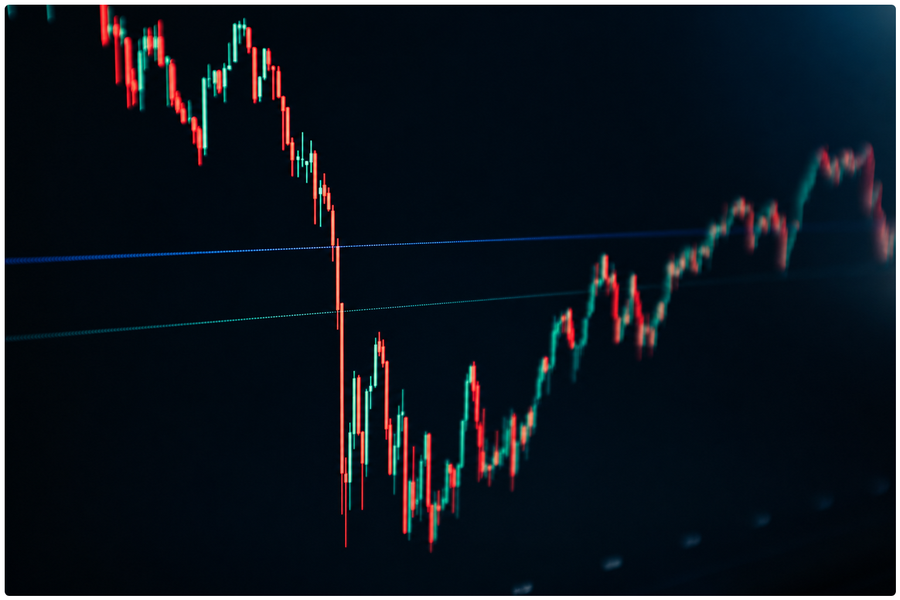
Artificial-intelligence-linked stocks continued to slide on Monday as investors confronted an unusual threat to one of the market’s most powerful investment themes: warnings from the people building the technology that its development may need to slow down.
The pressure has been heaviest on companies whose valuations depend on continued explosive spending on chips and data centres. Nvidia fell more than 3% during Monday trading, while Micron Technology dropped nearly 7% and Marvell Technology about 8%. The iShares Semiconductor ETF was down roughly 5%, while AI infrastructure companies Nebius and CoreWeave also fell sharply.
The selloff spread well beyond Wall Street. SoftBank, one of the largest investors in OpenAI, plunged nearly 11% in Tokyo. South Korea’s SK Hynix lost more than 6%, Samsung Electronics fell more than 4%, and European semiconductor equipment maker ASML also came under heavy pressure. The Nasdaq, which has benefited enormously from the AI boom, fell as technology shares weakened.
The immediate catalyst came from Anthropic CEO Dario Amodei, who called for the industry to slow the advance of the most powerful AI models while stronger safeguards are developed. His concerns received support from other prominent technology figures, including OpenAI CEO Sam Altman and Elon Musk, turning what had largely been a debate about AI safety into something investors could no longer easily ignore.
🚨 WARNING: TOMORROW WILL BE THE BIGGEST MARKET CRASH OF 2026!!
— Chiefy (@0xChiefy) September 13, 2026
OpenAI, Anthropic, and xAI just called for an AI slowdown.
But China is NOT slowing down.
AI stocks now account for 62% of the S&P 500’s market cap.
When the market opens on Monday, this won’t be “just a dip.”… pic.twitter.com/iKSJPaZyMf
For markets, the problem is not simply whether AI becomes safer. It is what a meaningful slowdown could do to the enormous capital-spending cycle that has supported chipmakers, memory manufacturers, data-centre operators and power infrastructure companies. Investors have spent years pricing in an environment in which increasingly powerful models require ever-larger clusters of GPUs, more memory, more electricity and billions of dollars of additional infrastructure.
Any interruption to that cycle could therefore affect earnings expectations across the AI supply chain.
Yet there is little evidence so far that the spending boom has actually stopped. Wall Street analysts at J.P. Morgan and Jefferies have argued that calls for greater caution do not amount to a halt in AI development, while demand from companies deploying AI systems continues to grow. Some analysts also see the weakness as a rotation within the technology sector rather than the beginning of a collapse in AI investment. Software and cybersecurity stocks, for example, have performed considerably better than semiconductor shares during the selloff.
The broader market environment is making that reassessment more painful. Oil prices surged again on Monday amid renewed Middle East tensions, while the U.S. 10-year Treasury yield reached around 5%. Traders are also pricing a near-90% probability that the Federal Reserve will raise interest rates this week after stronger-than-expected inflation data. Higher yields are particularly damaging to richly valued technology stocks because they reduce the present value investors place on future earnings.
That leaves the AI trade facing two questions at once. The first is whether governments and technology companies will genuinely restrain the race toward increasingly powerful models. The second is whether investors have paid too much for companies whose valuations assume that the race will continue almost without interruption.
For now, the AI boom has not ended. But the market is beginning to price in the possibility that its next phase may not move as quickly or as smoothly as investors once assumed.