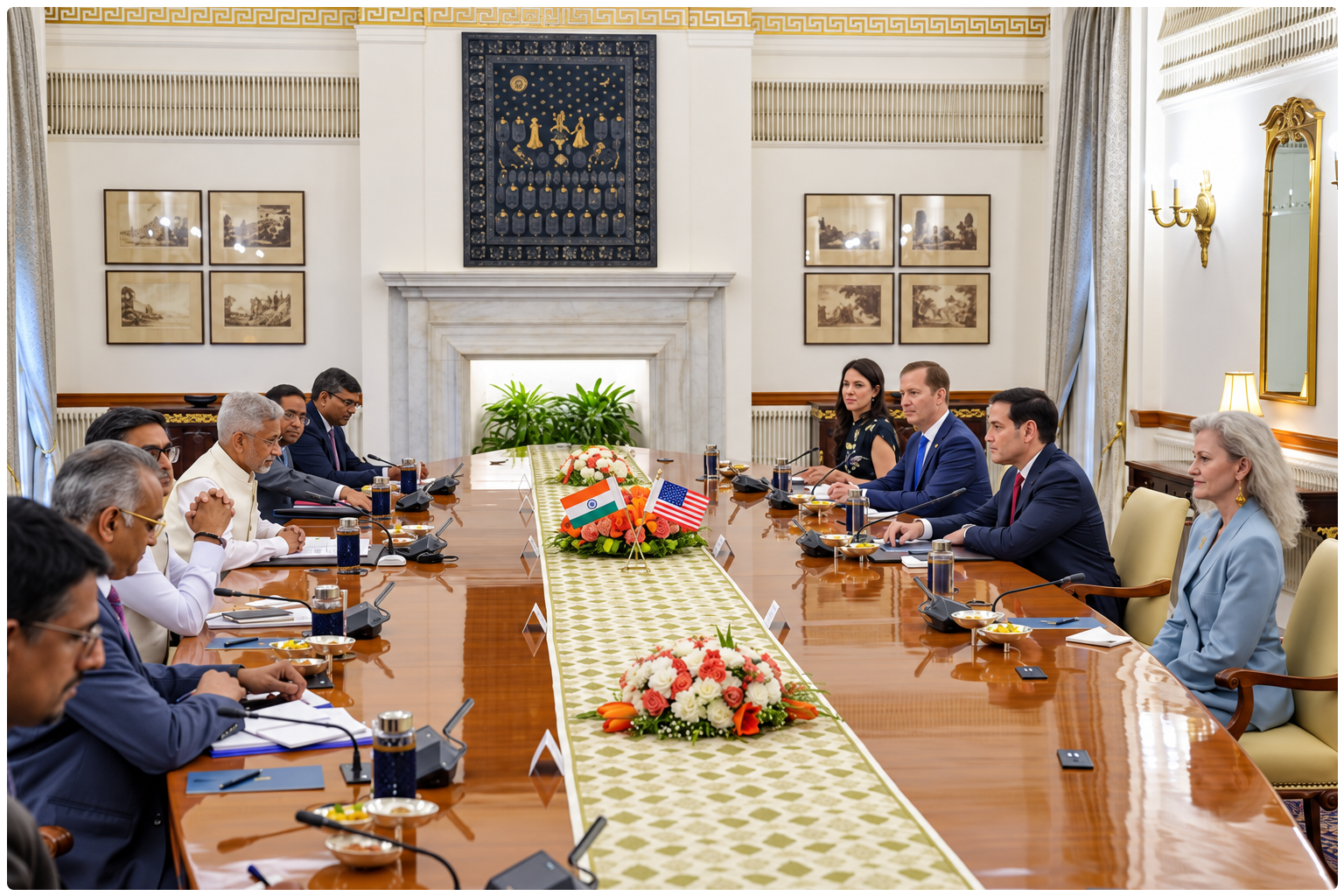
S Jaishankar and Marco Rubio have met several times this year, but their next conversation will take place away from the familiar diplomatic setting of New Delhi or Washington. India’s external affairs minister and the US secretary of state will hold talks in Mumbai on October 20, with trade, energy and investment expected to shape much of the discussion.
The Ministry of External Affairs confirmed the meeting on Friday. Spokesperson Randhir Jaiswal said the visit would allow both countries to review their relationship and consider further steps under the India-US Comprehensive Global Strategic Partnership.
Jaishankar will also attend an event marking the 250th anniversary of American independence as guest of honour. The programme places political talks alongside commercial engagements, reflecting the economic emphasis of Rubio’s visit.
Washington has scheduled Rubio’s journey through Samarkand, Mumbai and Jamnagar between October 17 and 22. The US side has said he will meet Indian officials and business leaders, exchange views on international developments and explore opportunities in energy, investment and wider economic cooperation. US Ambassador to India Sergio Gor had indicated before New Delhi’s announcement that Jaishankar was expected to join the Mumbai meetings.
The two ministers last met in New York on September 23. According to the US State Department’s official account, that discussion covered bilateral trade, defence cooperation, energy security, critical minerals and the Quad. The breadth of that agenda leaves the Mumbai meeting with several negotiations to advance rather than a new diplomatic framework to construct.
Trade is likely to attract the closest attention. India and the United States announced a framework for an interim agreement in February. It included an 18 per cent reciprocal US tariff on specified Indian goods and commitments to continue negotiations towards a broader bilateral trade agreement.
The remaining negotiations involve more than bringing tariffs down. India wants terms that leave its exporters competitively placed against major manufacturing rivals, particularly Vietnam and China. Without that advantage, preferential access on paper may deliver limited gains in the American market.
Rubio’s planned stop in Jamnagar gives the energy agenda a practical dimension. The Gujarat city contains one of the world’s largest oil-refining complexes, while Washington has identified stronger energy cooperation and commercial investment as objectives of the visit.
Neither government has announced that an agreement will be signed on October 20. The immediate measure of the Mumbai talks will be whether months of ministerial contact produce visible movement on trade and energy without allowing defence, critical technology and Indo-Pacific coordination to slip down the agenda.