Iran has threatened to answer American economic pressure with a new maritime exclusion zone across parts of the Persian Gulf, raising the possibility that its confrontation with the United States could increasingly be fought through the world's energy and shipping networks.
Mohsen Rezaei, secretary of Iran's Supreme National Security Council, issued the warning on Tuesday as tensions between Tehran and Washington escalated again following attacks on Iranian oil tankers and US warships.
“Economic warfare will be met by a maritime exclusion zone across the Persian Gulf to the blockade perimeter,” Rezaei said.
He added that Iran had “fundamentally recalibrated” its military posture towards American warships and bases in the region.
Tehran says it will announce details of the restricted zone along with maps for a new shipping corridor through the Strait of Hormuz.
The zone would extend from the area where the United States is enforcing its naval blockade of Iran towards the Persian Gulf. Ships entering the proposed area could be placed on an Iranian sanctions list if they fail to comply with Tehran's transit requirements.
The threat comes as Washington intensifies efforts to choke Iran's oil exports, one of the most important sources of revenue for the Iranian state.
US forces struck three Iranian oil tankers on Saturday, including one near Kharg Island, Iran's principal oil export hub, after the Islamic Revolutionary Guard Corps launched ballistic missiles towards two US Navy warships.
Iranian officials claimed that the attack involved a new advanced ballistic missile, identified by Iranian state media as the Qassem Basir.
But the confrontation is increasingly spreading beyond Iran and American forces.
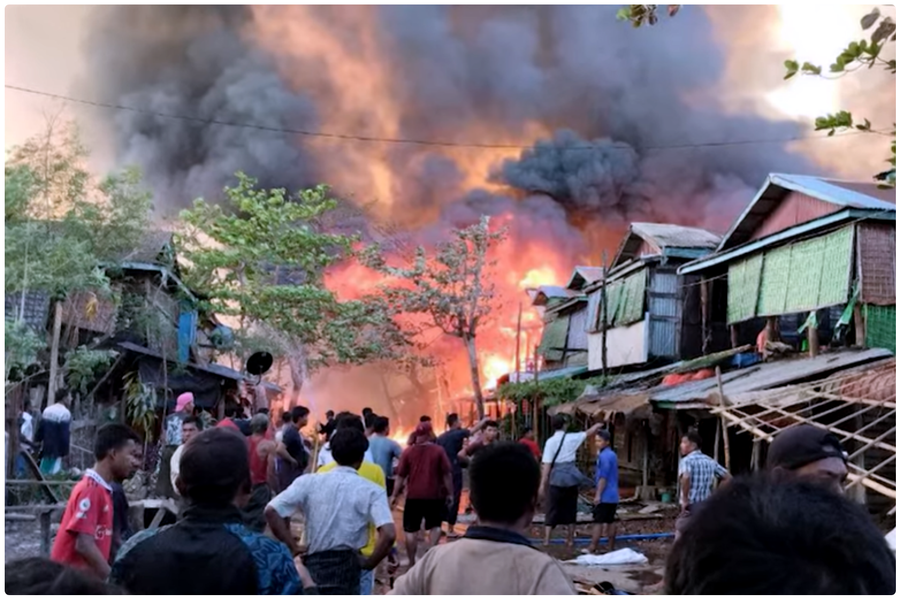
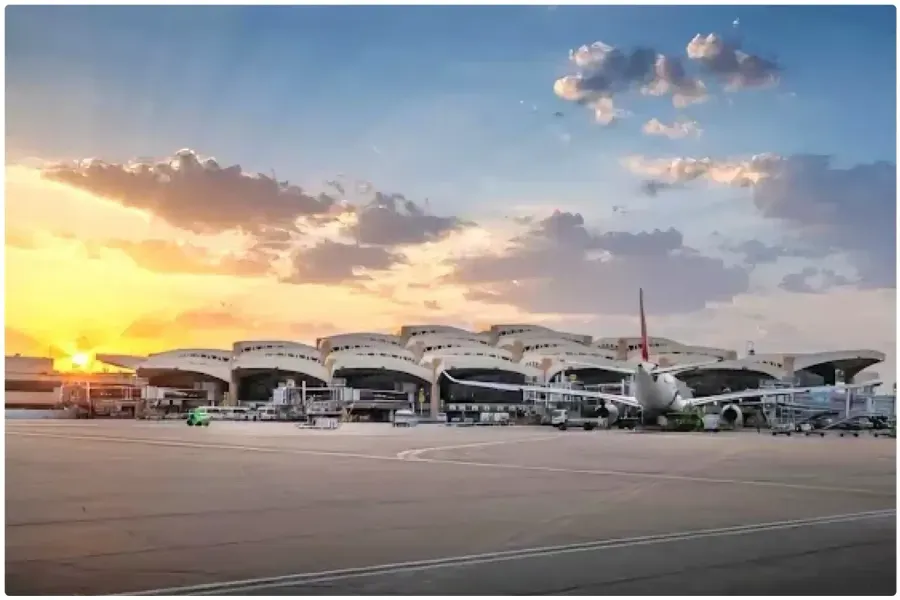
Iran-backed Houthi forces attacked several cities and energy facilities in Saudi Arabia on Tuesday, wounding 73 people, according to the Saudi-led coalition fighting in Yemen.
The strikes provide one of the clearest indications yet of how the six-month conflict could expand into a wider regional war.
Iran has also warned that American economic interests across the Gulf could become targets.
Iranian parliament speaker Mohammad Baqer Qalibaf said the region's oil and gas infrastructure was “sprawling, accessible and exposed,” explicitly warning US energy companies operating around the Gulf.
“Strike our assets and you get struck,” he said.
Behind the threats lies growing pressure on Iran's economy.
The US blockade and sanctions are restricting Tehran's ability to sell crude abroad. Iranian crude stored aboard vessels outside the blockade has fallen from roughly 90 million barrels in mid-July to about 29 million barrels in early September, according to Kpler data cited by analysts.
Inside Iran, officials are increasingly acknowledging the economic strain caused by inflation, unemployment, currency instability and disruptions to production.
But Tehran retains one enormous source of leverage: geography.
Before the war, roughly one-fifth of global oil and gas shipments passed through the Strait of Hormuz. Even without completely closing the waterway, Iran can disrupt traffic sufficiently to raise freight rates, insurance costs and global energy prices.
Commodity shipping through Hormuz has already fallen sharply. An average of just 10 commodity vessels per day passed through the strait during a recent 10-day period, the lowest level since May.
Brent crude consequently climbed towards $98 a barrel this week.
The confrontation therefore increasingly resembles a battle over who can impose the greater economic cost.
Washington is attempting to deprive Tehran of oil revenue through sanctions, a naval blockade and attacks on Iranian tankers. Iran, unable to match the United States economically, is threatening to use its position around the Persian Gulf to make that strategy painful for Washington and the wider global economy.
That calculation carries enormous risks.
The United Arab Emirates has already said it is developing alternative routes for energy exports and trade to ensure that its economy is not held hostage by the conflict. Saudi Arabia is again facing direct attacks from the Houthis, while global oil markets are pricing in the possibility of further disruption.
Diplomatic efforts have meanwhile struggled to regain momentum after an interim ceasefire reached in June began to unravel.
Iran's latest threat shows how quickly the nature of the conflict is changing.
What began as a military confrontation involving American and Israeli strikes on Iran is increasingly becoming a contest over tankers, shipping lanes, oil infrastructure and the global price of energy.
And if Tehran follows through on its threat to extend restrictions across the Persian Gulf, the economic battlefield could become considerably larger than the military one.