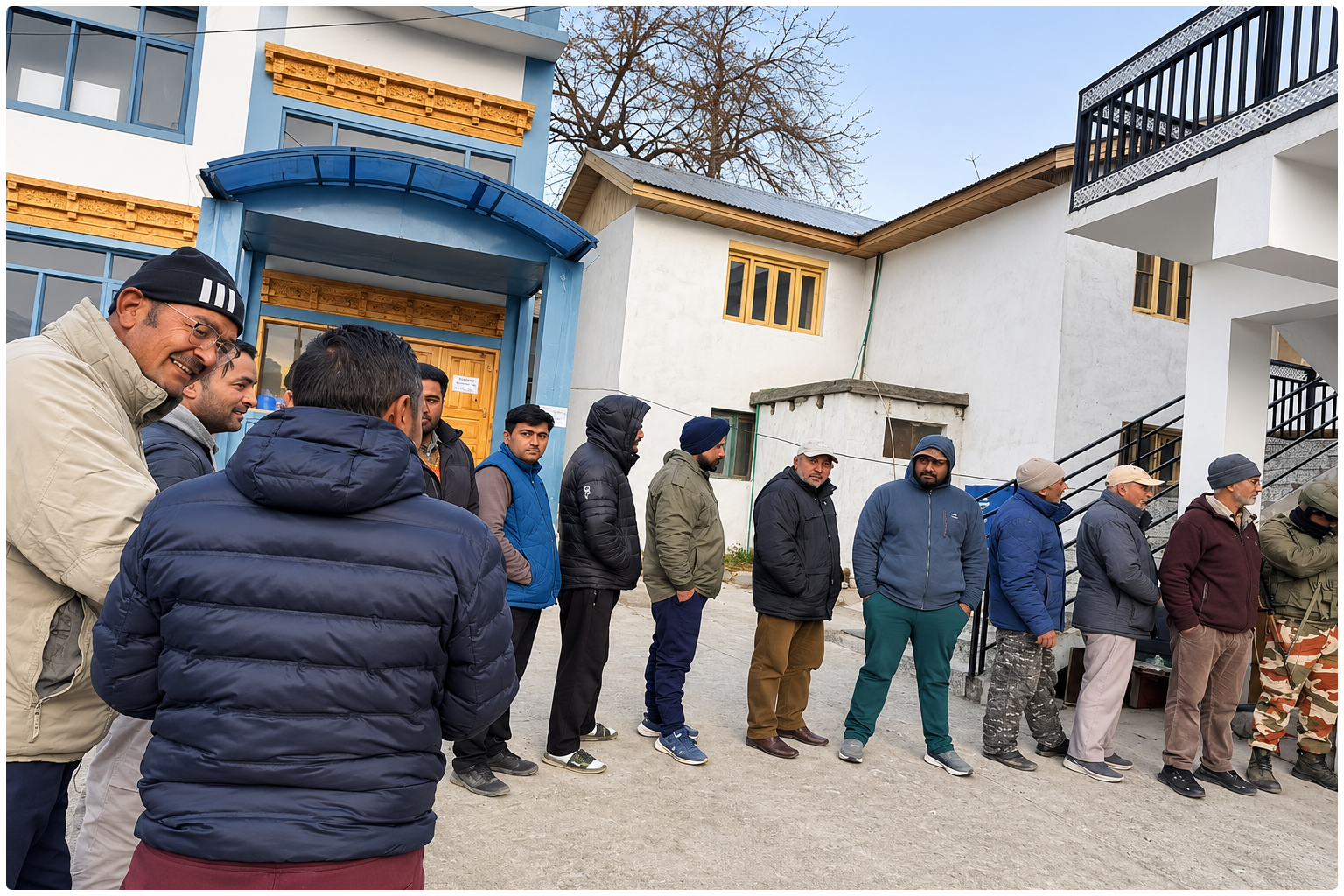
Ladakh is voting for village and municipal representatives for the first time since it became a Union Territory, returning elected government to the institutions that handle many of the region’s everyday civic concerns. The ballot does not settle the wider debate over statehood or legislative representation, but it restores a layer of local accountability that residents have been without since the previous elections in 2018.
Polling on November 21 covers 192 Panchayat Halqas as well as the municipal councils of Leh and Kargil. According to the Union Territory administration’s election figures, 55 sarpanches have already been elected unopposed, leaving contests in 137 Halqas. Of the 1,428 Panch seats, 1,186 were also decided without a contest.
Municipal voters face a different picture. All 21 wards in Leh are being contested, while four of Kargil’s 17 wards have returned candidates unopposed. The municipal election schedule requires the process to be completed by November 30.
These are Ladakh’s first Panchayat and municipal elections since its separation from the former state of Jammu and Kashmir in October 2019. They are not, however, its first elections of any kind as a Union Territory. Leh elected its Autonomous Hill Development Council in 2020, and Kargil held its council election in 2023. The distinction is important because Panchayats and municipalities operate closer to daily administration, dealing with village development, sanitation, local infrastructure and civic services.
The November vote is also the opening stage of a larger institutional exercise. Elections to the Ladakh Autonomous Hill Development Councils are scheduled for December 4 across 100 constituencies. Ladakh, which initially comprised Leh and Kargil districts, now has eight districts, and the new council structure extends elected representation across all of them. The administration says 36 of the 100 council seats are reserved for women.
That expansion carries particular weight because Ladakh remains a Union Territory without a legislature. The elected councils cannot exercise the authority of a legislative assembly, and the polls do not dispose of continuing demands concerning statehood, constitutional safeguards, land or employment. They do, however, give communities a formal route to influence local spending and development priorities within the existing constitutional arrangement.
Conducting the elections across Ladakh’s dispersed settlements has required separate logistical planning. In Kargil, the administration increased the number of polling stations from 106 to 296 and arranged heating at polling and counting centres. Contingency measures were also prepared for remote and snow-bound areas where roads and weather can disrupt the movement of personnel and election material.
By December, Ladakh is expected to have renewed elected bodies from the village and municipal levels to its district hill councils. Their powers will remain defined by the Union Territory framework, but residents will once again have representatives directly responsible for the local services through which government is encountered most often.