Pakistan's farmers are facing a deepening profitability crisis as soaring prices for fertiliser, diesel, electricity and other agricultural inputs collide with weak crop prices, low productivity and growing uncertainty over government support.
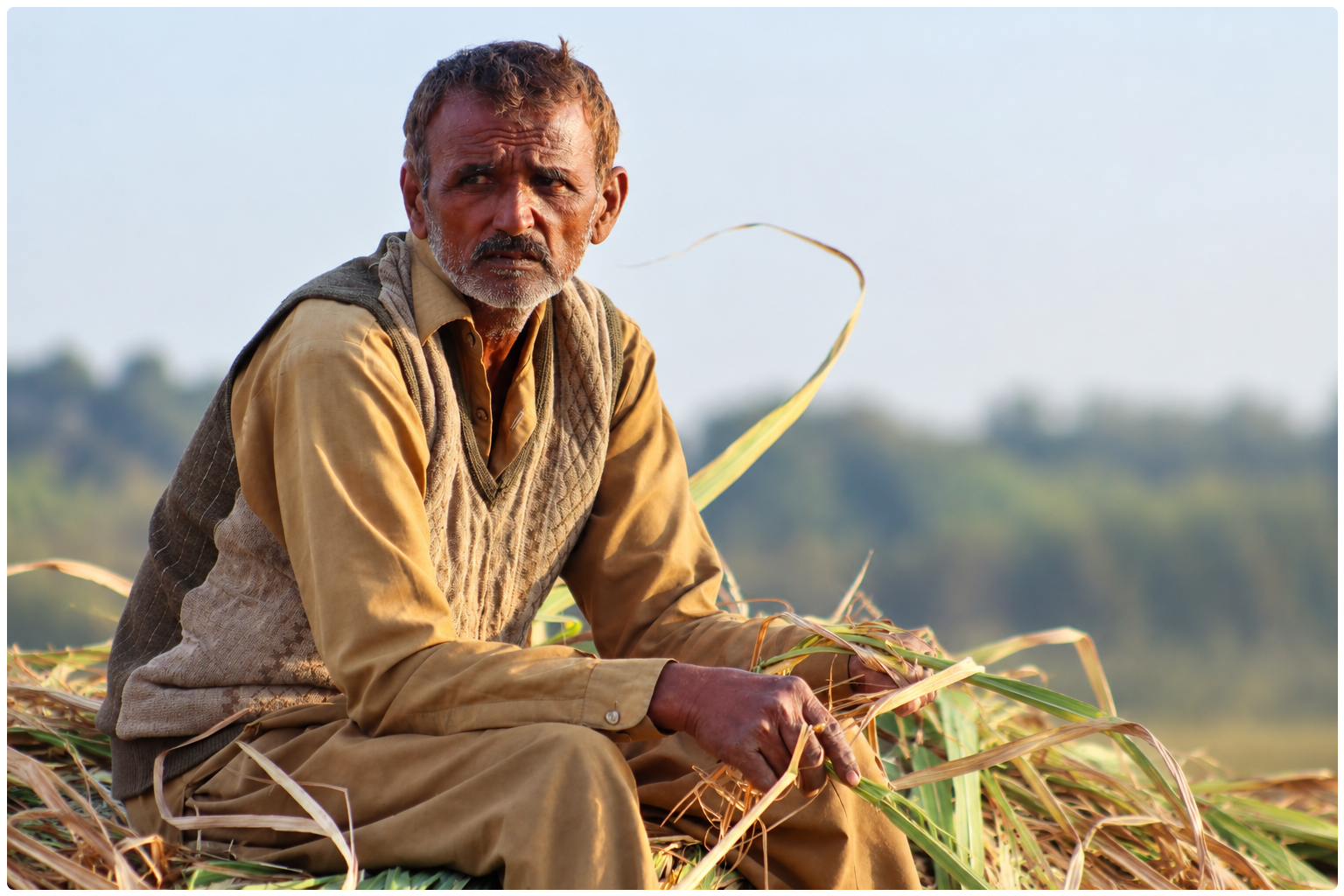
Agriculture remains one of the foundations of Pakistan's economy, supporting millions of rural households and supplying important industries including textiles and food processing. But farmers' organisations say cultivating major crops is becoming increasingly difficult to justify financially.
Khalid Mehmood Khokhar, president of Pakistan Kissan Ittehad, warned earlier this year that rising production costs were making farming increasingly unprofitable.
“Our production costs have inflated,” Khokhar said. “It is very difficult for farmers to cultivate currently. In fact, agriculture is not a profitable business currently.”
Farmers say fertiliser has become one of their biggest burdens. A 50-kilogram bag of diammonium phosphate, or DAP, was selling for around Rs17,500 in June, while nitrogen-phosphorus fertiliser cost around Rs11,000. Electricity tariffs used for agricultural operations have also risen sharply, while higher diesel prices have increased the cost of operating tractors, tube wells and other machinery.
The Pakistan Economic Survey 2025-26 estimates that farmers collectively spend around Rs1.2 trillion annually on fertiliser. Every Rs100 increase in the price of a 50kg fertiliser bag adds an estimated Rs20 billion to farmers' costs nationwide.
Prices of DAP rose 18.3% during July-March FY2026, while NP and SSP fertilisers increased by 16.6% and 12.5% respectively. High prices contributed to a 1.9% decline in phosphate fertiliser consumption during the period.
At the same time, farmers have struggled to obtain prices for their crops that reflect these higher costs.
Sindh Abadgar Board president Mehmood Nawaz Shah said urea prices had risen from about Rs1,700 per bag several years ago to more than Rs4,500, while DAP had climbed from around Rs3,700 to between Rs16,000 and Rs17,000.
Yet prices received by growers have moved in the opposite direction. Wheat, which had an official price of Rs4,000 per 40kg in 2025, reportedly fetched only around Rs3,200-Rs3,300 in the market. Rice growers who received around Rs4,500 two years earlier were reportedly getting only Rs2,200-Rs2,400 last season.
The pressure extends across several major crops. Pakistan's agriculture sector grew by a provisional 2.89% in FY2025-26, an improvement from 1.53% the previous year. But much of that improvement came from livestock, which expanded by 3.75%.
Crop-sector growth was considerably weaker at 1.44%, while the country's major crops grew by just 0.65%. Cotton ginning was almost stagnant, expanding only 0.07%.
The problems are increasingly visible in Pakistan's trade figures.
Food imports jumped 11.66% to $9.15 billion in FY2025-26, while food exports fell 29.49% to $5.02 billion. That pushed the country's food trade deficit to approximately $4.13 billion, compared with about $1.08 billion a year earlier.
Rice export earnings, traditionally an important source of foreign exchange, fell 31% to $2.29 billion as Pakistani exporters faced stronger competition in international markets, particularly after India returned more aggressively to the global rice trade.
The crisis is not solely about input prices. Pakistan continues to struggle with relatively low crop yields, outdated farming techniques, weak seed technology, limited mechanisation and inadequate storage and cold-chain infrastructure. Post-harvest losses for some agricultural products are estimated at between 20% and 40%.
Government policy has also become a source of concern for growers. Pakistan has moved away from administered wheat pricing and large-scale government procurement as part of market reforms linked to its IMF programme. Farmers argue that the shift has exposed small growers to private buyers without first addressing high production costs or weaknesses in agricultural markets.
The result is a difficult cycle: farmers receive inadequate returns, leaving them with less money to invest in better seeds, irrigation and machinery. That suppresses productivity, weakens domestic supply and makes Pakistan increasingly dependent on food imports.
Without measures that improve productivity while bringing down the cost of cultivation, Pakistan risks turning what is currently a farm profitability crisis into a broader challenge for food security, exports and the rural economy.