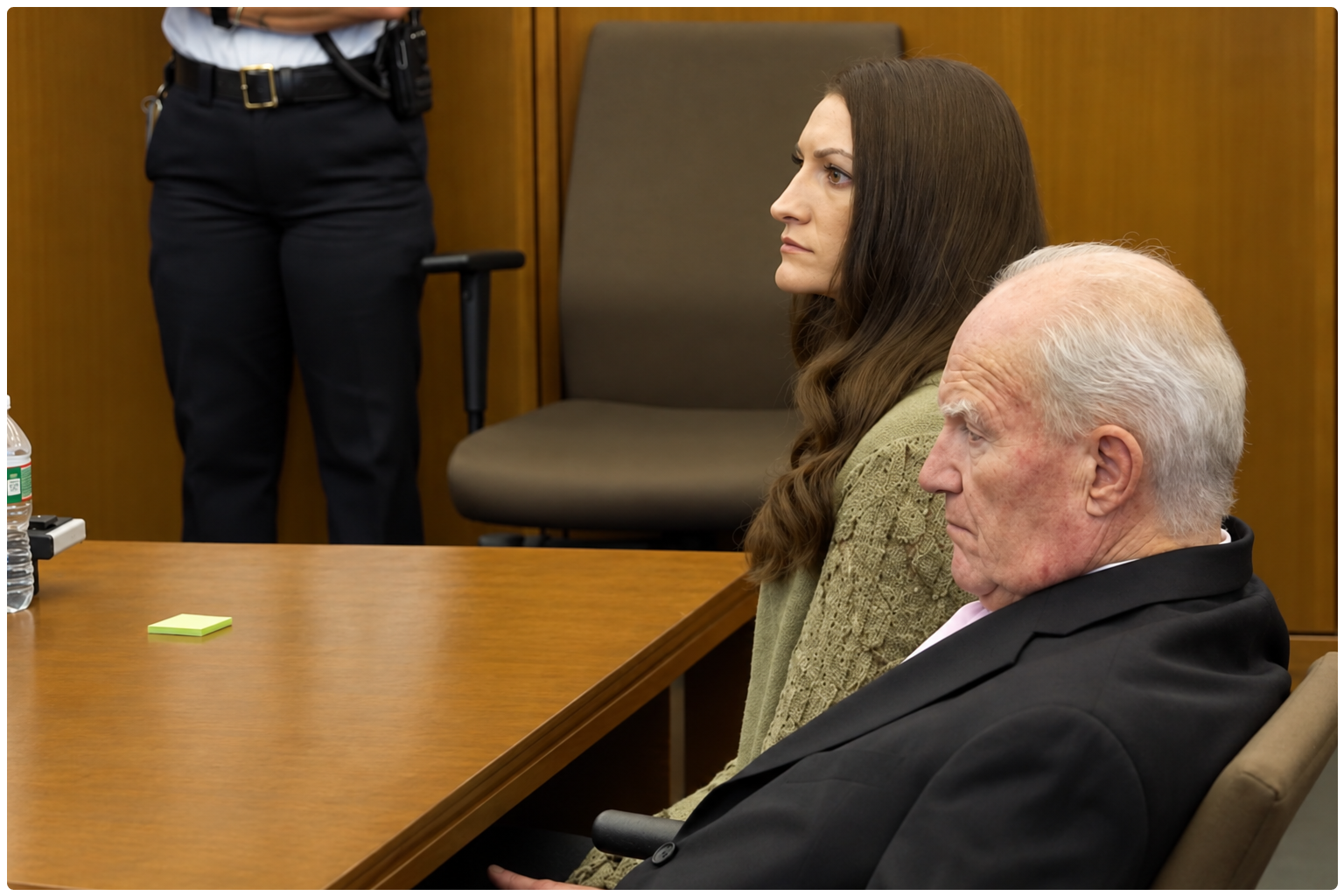
For nearly six weeks, a Massachusetts courtroom wrestled with a question more complicated than whether Lindsay Clancy killed her three children. Everyone agreed that she did. The question was whether she was criminally responsible when she did it or whether severe postpartum mental illness had taken control of her mind.
After seven days of deliberations, the jury could not agree. And on September 4, Judge William Sullivan declared the whole case a mistrial. What emerged afterwards made the outcome even more extraordinary.
According to jury foreperson Roni Carlson, 11 jurors were prepared to find Clancy not guilty by reason of lack of criminal responsibility. One juror refused. Carlson said the holdout juror acknowledged having reasonable doubt during deliberations but still refused to vote for acquittal. The deadlock means one of America's most closely watched murder cases could now be tried all over again.
The tragedy began on January 24, 2023. Clancy, a labour-and-delivery nurse, was living in Duxbury, Massachusetts, with her husband Patrick and their three children. That evening, she sent Patrick out to collect medicine and food.
While he was gone, Clancy strangled five-year-old Cora, three-year-old Dawson and eight-month-old Callan using exercise resistance bands. She then cut herself and jumped from a second-storey window in an attempt to take her own life, leaving herself paralysed.

But the trial was never simply about what Clancy did. It was about what was happening inside her mind when she did it. In the months after Callan's birth, Clancy had repeatedly sought psychiatric treatment, been prescribed multiple medications and spent time in psychiatric care. Her defence argued that she was suffering from postpartum psychosis.
Clancy later described hearing a male voice telling her that this was her final opportunity to kill the children and herself. Defence psychiatrist Dr Phillip Resnick testified that Clancy's mental illness left her unable to conform her behaviour to the law and that she believed she had no choice but to obey the command she was hearing.
Prosecutors presented a very different interpretation. They argued that Clancy had deliberately planned the killings rather than acting in a sudden, uncontrollable psychotic episode. Prosecutors pointed to her decision to send Patrick out of the house to collect food and medication, suggesting that she wanted him away when the children were attacked. They also highlighted evidence that she had checked how long his errands were expected to take, arguing that this showed she had considered the timing and created a window in which she could act without interruption.
A prosecution psychologist concluded that Clancy intended to die and killed the children because she believed they would suffer without her. The prosecution therefore did not need to establish that Clancy was mentally healthy. It argued that despite her illness, she still understood what she was doing and remained legally responsible.
Under Massachusetts law, a defendant may not be held criminally responsible if a mental illness prevented them from understanding that their actions were wrong or from controlling their behaviour. That became the question dividing the jury.
When deliberations reached an impasse, Clancy's lawyer Kevin Reddington asked for the holdout juror to be removed, arguing that he was refusing to properly apply the judge's instructions concerning reasonable doubt. Judge Sullivan refused. Reddington sought emergency intervention from Massachusetts' highest court. That effort also failed. The mistrial followed.
Prosecutors must now decide whether to put Clancy through a second trial. Plymouth County District Attorney Timothy Cruz has not yet announced that decision. If convicted of murder, Clancy could spend the rest of her life in prison.
If she is found not criminally responsible, she would not necessarily go free. She could be sent to a psychiatric hospital, where a judge would regularly review her confinement. The next hearing of this case is scheduled for September 29.
The case has inevitably drawn comparisons with Andrea Yates, the Texas mother who drowned her five children in 2001 while suffering from severe postpartum mental illness. Yates was initially convicted of murder and sentenced to life imprisonment. Her conviction was later overturned, and at a second trial she was found not guilty by reason of insanity and committed to a psychiatric hospital.
Twenty-five years later, the Clancy case is forcing America to confront a similar question about where severe mental illness ends and criminal responsibility begins. It has also raised a troubling question beyond the courtroom.
Clancy had sought help. She had seen healthcare professionals, taken psychiatric medication and received inpatient treatment. Yet three children still died. Whatever happens at a second trial, that part of the case cannot be resolved by a verdict.
Eleven jurors reportedly believed Clancy's illness meant she was not criminally responsible for killing her children. One did not. And because a criminal jury must reach the required unanimous verdict, that single disagreement may send Lindsay Clancy back to trial.