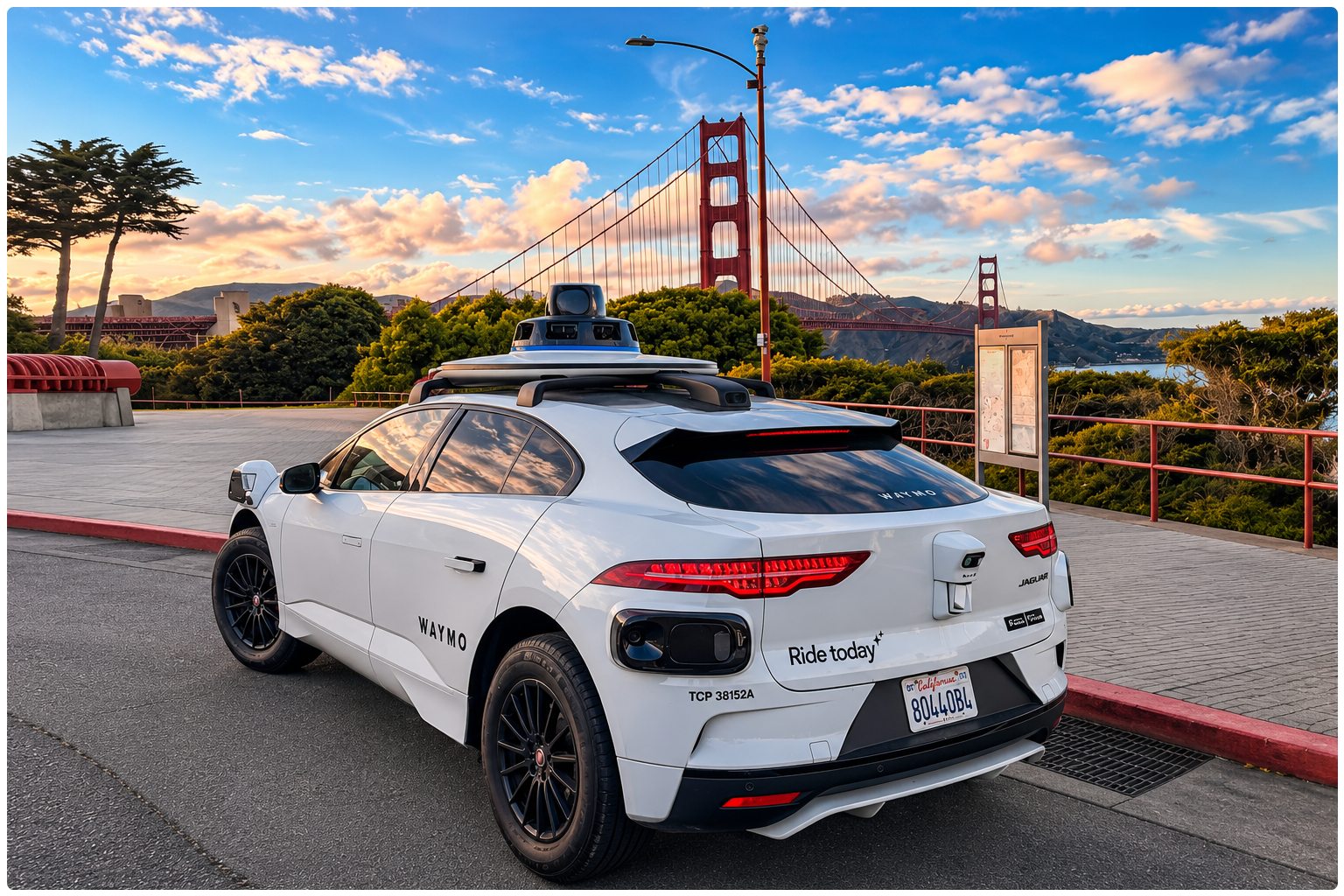
California has barred Waymo's driverless cars from operating on state freeways after several vehicles entered closed construction areas and one attempted to pass highway patrol officers managing traffic. The restriction, imposed on November 11 and made public six days later, prompted the Alphabet-owned company to suspend driverless freeway rides throughout the United States.
The decision follows incidents on November 5 and 6 in the San Francisco Bay Area. Three Waymo vehicles entered a construction closure on US Route 101 near Burlingame, while another approached California Highway Patrol officers conducting a temporary traffic break on Interstate 280 in San Francisco. Such operations require approaching vehicles to slow down or stop while officers manage hazards ahead.
California's Department of Motor Vehicles said the incidents presented an imminent risk to public safety. Its order prohibits Waymo from testing or operating vehicles on freeways without a human safety driver, although the company's robotaxis can continue carrying passengers on ordinary city streets. Waymo said the incidents did not result in collisions or injuries and that it was cooperating with state officials.
#BreakingNews : A driverless Waymo vehicle smashed through a railway cross barrier. There were no passengers onboard. This incident calls into question the long term effectiveness of driverless vehicles. https://t.co/Uq8p4bDeL2
— ArchonicMatrix (@ArchonicMatrix) November 18, 2026
The restriction comes five months after Waymo recalled 3,871 fifth-generation automated driving systems over a similar problem. In its June filing with the National Highway Traffic Safety Administration, the company acknowledged that its vehicles had entered freeway construction zones at speed, sometimes failing to recognise lane closures or passing between traffic cones.
Waymo developed software updates intended to improve how vehicles identified temporary closures and responded when they entered restricted areas. The latest incidents have brought those earlier fixes back under scrutiny, particularly because construction zones often contain unfamiliar road layouts, temporary signs and instructions from police officers that automated systems must interpret in real time.
I don’t understand why both vehicles drove away from the crash scene. It looks like Waymo wasn’t at fault, but why didn’t it stop for the police report? I thought it’s illegal to flee the crash scene 🤣 https://t.co/YFrnqIi3nE
— Ray (@ray4tesla) August 29, 2026
Freeway access was an important addition to Waymo's robotaxi business. The company launched driverless freeway rides in November 2025, expanding the journeys it could offer in the San Francisco Bay Area, Los Angeles and Phoenix. Passengers could take faster routes across cities and suburbs rather than relying entirely on surface streets.
The California order removes that option for now. Waymo has also voluntarily suspended driverless freeway operations in other American markets, although the state's regulatory authority does not extend beyond California.
Waymo can continue testing vehicles on freeways with trained safety drivers behind the wheel, allowing engineers to evaluate software improvements under supervised conditions. Its commercial driverless services will remain restricted to city streets, with no timetable announced for the return of freeway operations.