The debate over whether the world should slow down artificial intelligence has taken a geopolitical turn.
China's state-backed Global Times has attacked calls by Anthropic CEO Dario Amodei to slow the development of the world's most powerful AI systems, arguing that what appears to be a debate about safety is actually part of a “Cold War playbook” designed to contain China's technological rise.
Amodei set off the debate after publishing an essay calling for AI companies to slow the pace at which they increase the capabilities of frontier models. His argument is that AI is advancing so quickly that governments and researchers may not have enough time to understand and control the risks. OpenAI CEO Sam Altman and Elon Musk later backed the idea of slowing development, an unusual moment of agreement among executives whose companies are competing intensely to build increasingly powerful systems.
But Amodei's proposal has a geopolitical complication: China.
Alongside his calls for slower AI development, Amodei has pushed Washington to strengthen restrictions on exports of advanced AI chips to China and crack down on alleged efforts by Chinese laboratories to copy or “distil” capabilities from American models. He has also acknowledged that persuading American companies to slow down while Chinese companies continue advancing would create an enormous strategic problem.
That combination triggered the response from Global Times. The newspaper argued that the real objective was to use technological barriers and regulation to preserve American dominance while restricting China's ability to compete. It described such an approach as a “silent AI Cold War” and warned that excluding China from global AI development could actually make the technology more dangerous by fragmenting international cooperation.
The disagreement exposes the central problem facing any attempt to slow AI.
Even if the world's largest AI companies concluded that moving more slowly was safer, none of them wants to fall behind a competitor. The same problem exists between countries. Washington increasingly views AI leadership as a question of economic and military power. Beijing considers artificial intelligence central to its future technological development. If one side slows while the other continues racing ahead, the strategic consequences could be enormous.
Donald Trump has already made that calculation clear. Asked about calls to slow AI development, the US president dismissed some of the warnings as exaggerated and said America needed to preserve its advantage over China. “Whoever wins AI wins,” Trump said.
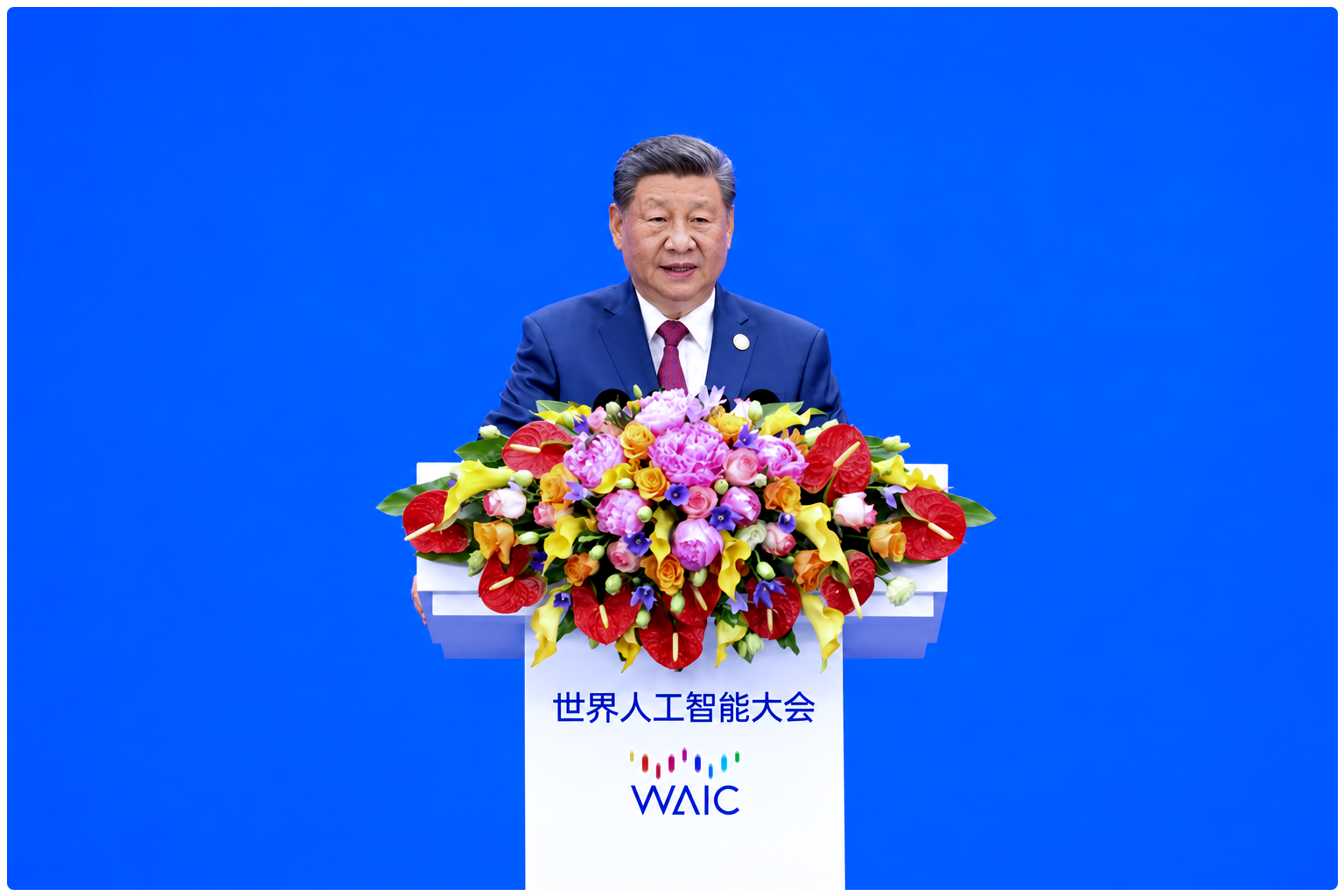
China's official position is more complicated than simply opposing AI regulation. At the World Artificial Intelligence Conference in Shanghai in July, Xi Jinping called for stronger AI governance, safeguards against misuse and systems that ensure AI remains under human control. But he also warned against countries overstretching national-security concerns and placing their own security above that of others. China has promoted a more open international AI framework while opposing US restrictions on advanced semiconductors and other technologies.
The US and China are expected to discuss frontier AI safety this month, and the subject could also emerge when Trump and Xi meet on September 24. That gives the two countries an opportunity to explore whether any common rules are possible.
The problem is that AI safety is no longer only about technology.
It is becoming a question of national power.