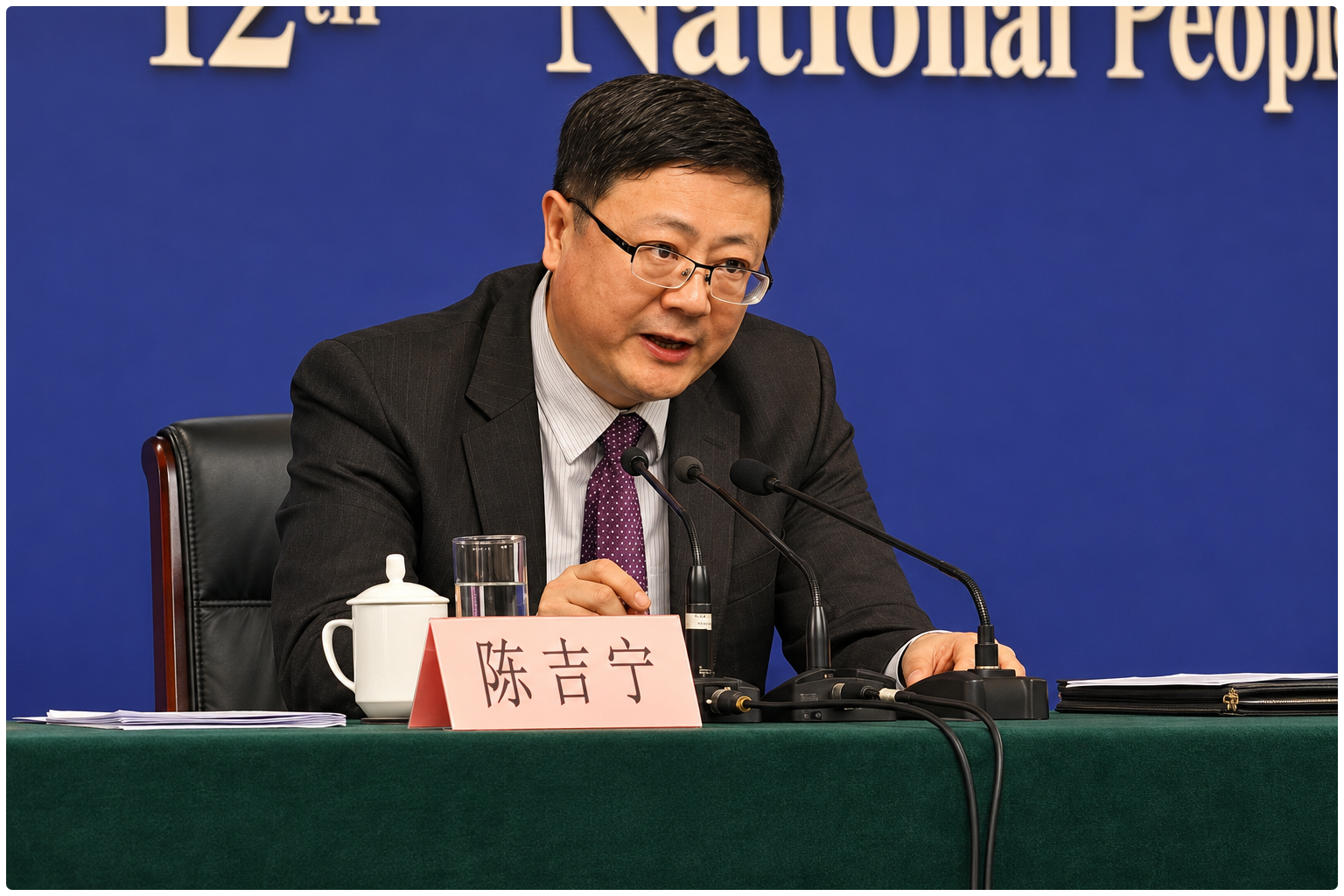
Chen Jining, the Communist Party chief of Shanghai and one of China's most senior political figures, has been placed under investigation for suspected serious violations of party discipline and state law. His sudden removal from public political activity brings China's continuing crackdown on senior officials to the leadership of its largest economic centre, where Chen had overseen efforts to strengthen investment, technology development and international business ties.
The Central Commission for Discipline Inspection (CCDI), China's top anti-corruption watchdog, announced the investigation on November 24. Its brief statement confirmed that Chen, a member of the Communist Party's 24-member Politburo, was undergoing disciplinary and supervisory investigation but offered no details about the suspected offences.
This is wild. High-flying Politburo member and Shanghai Party Secretary Chen Jining is now under investigation. Most thought he had a very bright future and would join the standing committee. Perhaps that is why he’s under investigation? - Think he is now the fourth Politburo member investigated following He Weidong, Zhang Youxia, and Ma Xingrui. - The Shanghai job is a launchpad, and both Xi Jinping and Li Qiang held the job. Chen was tied to Xi Jinping (connected presumably through Chen Xi), and was a technocrat with scientific expertise and former Qinghua president, so would have seemed safe from scrutiny. - He is the first sitting Shanghai party chief placed under investigation since Chen Liangyu in 2006. https://t.co/A5jpI4PkU5
— Rush Doshi (@RushDoshi) November 24, 2026
Chen's position makes the investigation particularly consequential. Shanghai's Communist Party secretary exercises considerable authority over the city's political administration and economic direction, while membership in the Politburo places the officeholder among China's highest-ranking national leaders. The city is also central to the country's financial services, international trade and advanced manufacturing ambitions, with its economic output reaching 5.67 trillion yuan in 2025.
The 62-year-old official had followed an unusually academic route into China's political leadership. Trained as an environmental engineer, Chen studied in Britain before becoming president of Tsinghua University in 2012. He subsequently served as environment minister and mayor of Beijing, building a reputation for administrative experience across education, environmental policy and urban governance. In October 2022, he succeeded Li Qiang as Shanghai's party secretary, shortly before Li became China's premier.
Until recently, Chen had continued his official engagements. On November 18, he met Severin Schwan, chairman of Swiss pharmaceutical company Roche, to discuss investment and cooperation in Shanghai's biopharmaceutical industry. A day later, he visited China COSCO Shipping Corporation, where discussions focused on the development of the shipping sector and its technological transformation.
His investigation follows disciplinary action against several senior Chinese figures, including former Xinjiang party chief Ma Xingrui and senior military official Zhang Youxia. The cases have brought scrutiny to the upper ranks of the Communist Party ahead of its next national congress in 2027, when major leadership appointments will be determined.
Beijing has presented its anti-corruption campaign as an essential part of strengthening party governance and accountability. The CCDI's recent account of its disciplinary work emphasised continued investigations into corruption involving senior officials and sectors where political authority intersects with substantial economic resources.
Shanghai's party leadership responded quickly to the announcement. During an expanded meeting on Tuesday evening, the municipal party committee endorsed the central authorities' decision and called for continued efforts against corruption while maintaining economic development and administrative stability.
No formal criminal charges or judicial findings against Chen have been announced. The authorities have also not publicly identified the transactions, decisions or conduct underlying the investigation.
For Shanghai, the immediate responsibility falls on its remaining leadership to maintain the city's development programmes and international commercial relationships. The municipal committee has already signalled that its economic priorities will continue, even as the investigation removes one of the most prominent figures associated with their implementation.