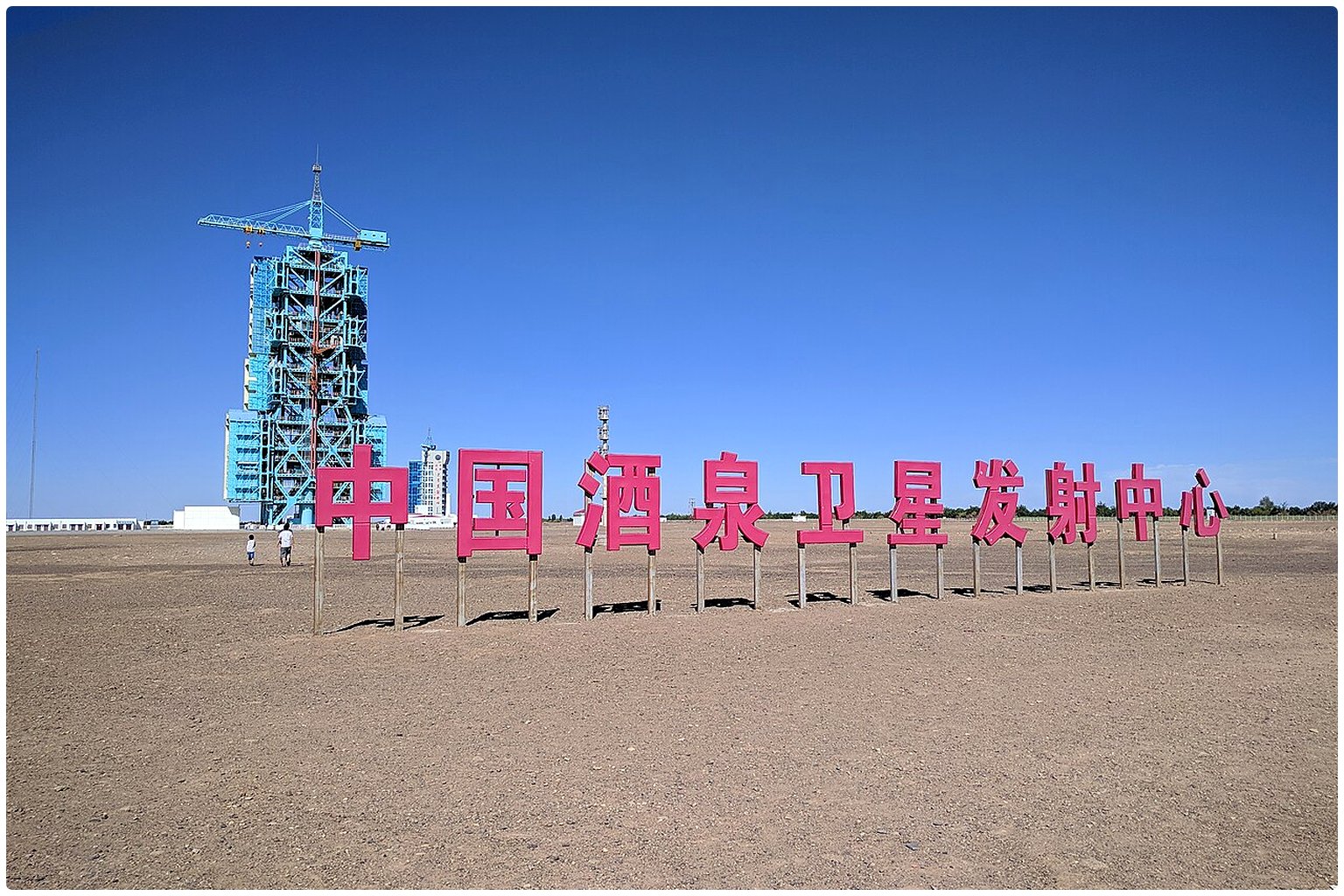
The first foreign astronaut to travel to China’s Tiangong space station has reached orbit. Shenzhou-24 lifted off from the Jiuquan Satellite Launch Centre at 8:18 am Beijing time on 25 November, carrying Pakistani payload specialist Muhammad Zeeshan Ali alongside Chinese astronauts Tang Hongbo and Wu Yi.
China’s Manned Space Agency said the spacecraft entered its planned orbit after launch aboard a Long March-2F rocket. The flight makes Ali the first astronaut from outside China to join a crew bound for Tiangong, and the first Pakistani to travel to space. The mission is the 41st crewed flight in China’s space programme.
BREAKING:🇵🇰🇨🇳 Pakistan and China make history with joint space mission Pakistani astronaut Muhammad Zeeshan Ali joins Chinese astronauts Tang Hongbo and Wu Yi aboard Shenzhou-24. Ali has become Pakistan’s first astronaut in orbit and the first foreign astronaut to board China’s Tiangong space station. 💬 “This mission is not a finish line; it is a launchpad,” Ali said. The mission marks a historic milestone for Pakistan’s space program and China-Pakistan scientific cooperation.
— Patrick in China (@PatrickZhengCHN) November 25, 2026
Ali’s role is deliberately focused. As a payload specialist, he will work on experiments developed through China-Pakistan cooperation, including installing experimental samples and equipment. China’s mission plan calls for him to make a short stay before returning to Earth aboard the departing Shenzhou-23 spacecraft. The mission briefing says Shenzhou-24 will dock with the station after entering orbit, joining the incoming and outgoing crews during the handover.
The arrangement also makes this a different kind of rotation for the station. Shenzhou-23 astronaut Zhu Yangzhu is expected to remain aboard Tiangong for a year, rather than return with his crewmates. If completed as planned, the extended stay will give China a longer period of observation as it studies how the human body responds to prolonged time in orbit.
For Ali, the flight is the first practical test of an agreement that had until now been expressed through training and plans. China selected him under its cooperation framework with Pakistan; he trained for the mission alongside the Chinese crew. The crew announcement names Tang as commander, with Wu serving as flight engineer and Ali as payload specialist.
Tiangong has been continuously occupied since 2021 and fully operational since 2022. Its crews maintain the station while conducting scientific work in microgravity. China says the Shenzhou-24 crew will continue that routine, carrying out station maintenance, research and public-education activities as well as the joint experiments.
The arrival of a foreign astronaut does not turn Tiangong into an international station. It does, however, put a person from another national space programme inside China’s crewed-flight system, trained to work with its spacecraft, procedures and station. The experiment is as much organisational as scientific: cooperation has moved from an agreement on paper to a shared mission in orbit.