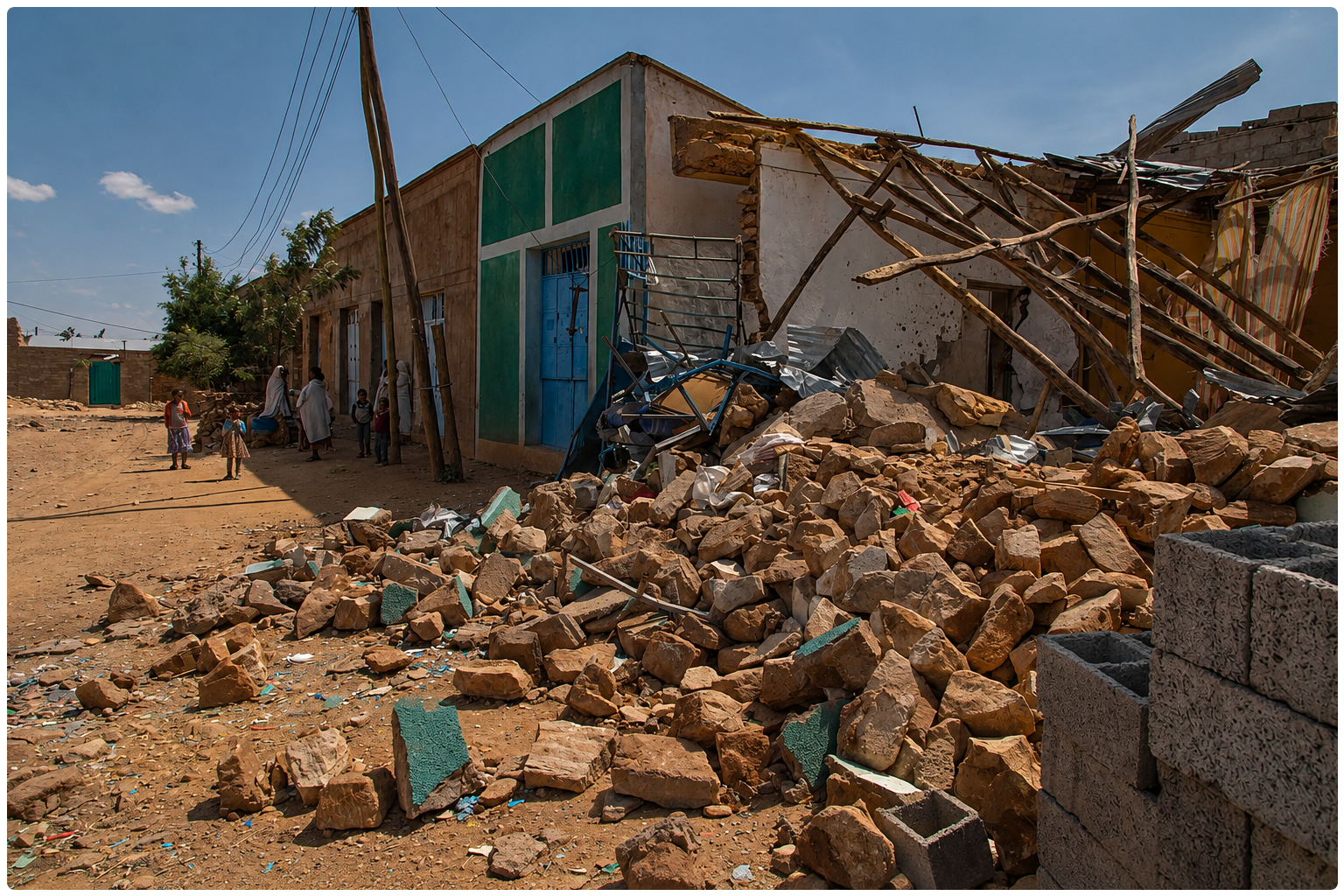
The northern Ethiopian town of Zalambessa has changed hands again, bringing federal troops to the Eritrean frontier at a time when relations between Addis Ababa and Asmara are deteriorating rapidly. Further south, civilians in Tigray are being killed and injured by shelling, while medical facilities struggle to function amid renewed fighting.
Ethiopian forces and allied Tigrayan fighters advanced into Zalambessa and nearby Fatsi on October 13, following the withdrawal of forces aligned with the Tigray People's Liberation Front (TPLF). The movements have brought Ethiopia's internal military campaign dangerously close to the territory of a neighbouring country with which it fought a devastating border war between 1998 and 2000.
The humanitarian consequences are already visible. The Global Centre for the Responsibility to Protect documented reports of at least 52 people killed during fighting around Alamata between September 26 and 29. Humanitarian sources also reported at least 17 deaths following airstrikes in Adwa and Sheraro on October 5. These figures remain preliminary, and the full civilian death toll has not been independently established.
Human Rights Watch has separately received accounts of civilians killed and wounded by shelling in southern Tigray, with attacks reportedly forcing health facilities to close. The organisation has not publicly identified those responsible for the particular shelling incidents. In an October 9 appeal for international intervention, it warned that indiscriminate attacks on populated areas and civilian infrastructure could constitute war crimes.
The fighting has reopened political divisions that the November 2022 Pretoria peace agreement was intended to settle. The accord ended the war between Ethiopia's federal government and Tigrayan forces, but disputes over territorial administration, disarmament and implementation have persisted. Earlier this month, federal and allied forces retook Mekelle after TPLF fighters withdrew from the regional capital. The subsequent spread of fighting towards Eritrea's frontier has complicated an already fragile political settlement.
Addis Ababa accuses Eritrea of sending troops across the border and supporting armed groups operating against the Ethiopian government. Foreign Minister Gedion Timothewos has informed the United Nations Security Council that Ethiopia is taking measures in self-defence. Eritrea has rejected those accusations and asked the Security Council to intervene, describing Ethiopia's military actions as aggression against its sovereignty. Neither government's account of the disputed troop movements has been independently established.
Eritrea and Ethiopia were allies during the 2020–2022 Tigray war, despite their earlier decades of hostility. Their subsequent estrangement has been aggravated by Prime Minister Abiy Ahmed's insistence that landlocked Ethiopia needs reliable access to the Red Sea, an issue Eritrea regards with considerable suspicion given its sovereignty over the ports of Assab and Massawa.
The United Nations Secretary-General's October 10 statement called for an immediate cessation of hostilities and a return to the Pretoria framework, expressing concern over reports of Eritrean forces operating inside Ethiopia. The United Kingdom's October 15 statement likewise urged respect for national borders, humanitarian access and renewed dialogue under African Union leadership.
For Tigray's population, the renewed conflict comes before recovery from the previous war has been completed. Displacement, damaged health services and interrupted livelihoods remain serious problems. Even where federal forces have regained control of towns, the immediate test will be whether civilians can obtain medical treatment, receive humanitarian assistance and return to ordinary life without further military disruption.