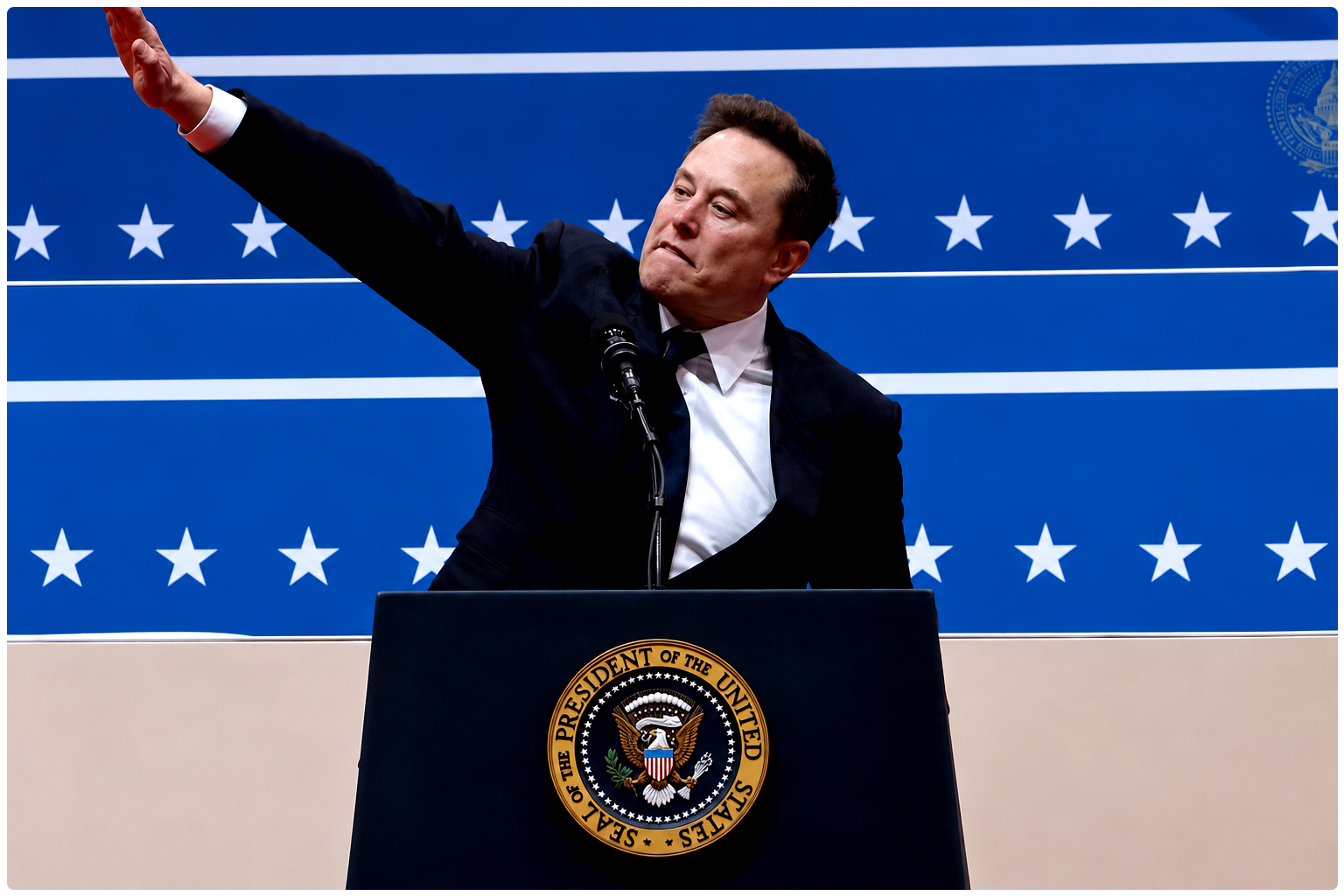
Elon Musk is entitled to argue for Starlink’s entry into India. He is not entitled to turn a regulatory dispute into a public indictment of India’s political system without evidence.
Musk’s recent posts on X alleged that Starlink had spent years complying with Indian law, claimed that “oligarchs” were blocking its entry, and drew a political response from Rahul Gandhi, who wrote to Musk, “Welcome to India, Elon. Wait till you discover the other guy.” Musk then responded to Gandhi, pushing the argument deeper into India’s domestic politics.
For an opposition leader, the temptation is obvious. Musk’s accusation offers a convenient frame: crony capitalism, regulatory capture, and a government allegedly bending rules for favoured business interests. Those are legitimate questions in a democracy when backed by documents, parliamentary scrutiny or regulatory evidence. But adopting the claim of a foreign corporate owner as political ammunition before the regulatory facts are established is a poor institutional instinct.
India’s satellite communication policy is not an ordinary consumer-tech approval. Under the Telecommunications Act, 2023, spectrum assignment and telecom authorisation sit inside a sovereign framework where national security, lawful interception, network control and public interest are central considerations. Satellite broadband is especially sensitive because it involves cross-border infrastructure, ground gateways, terminals, data routing and the possibility of communication beyond conventional terrestrial networks.
That does not mean Starlink should be blocked. India needs more competition in connectivity, especially in remote and border regions where terrestrial networks remain uneven. But market access in a country of 1.4 billion people cannot be negotiated through public pressure on a platform owned by Musk.
There is a wider irony here. Musk is accusing India’s system of being bent by powerful domestic interests, but he is hardly a neutral outsider standing above politics. In the United States, Musk became one of Donald Trump’s most consequential political financiers. His America PAC spent heavily in the 2024 election cycle to support Trump and other Republican candidates, according to federal campaign finance disclosures tracked through the Federal Election Commission. A businessman who funds domestic politics at that scale cannot credibly pretend that political influence is a sin only when others are accused of it.
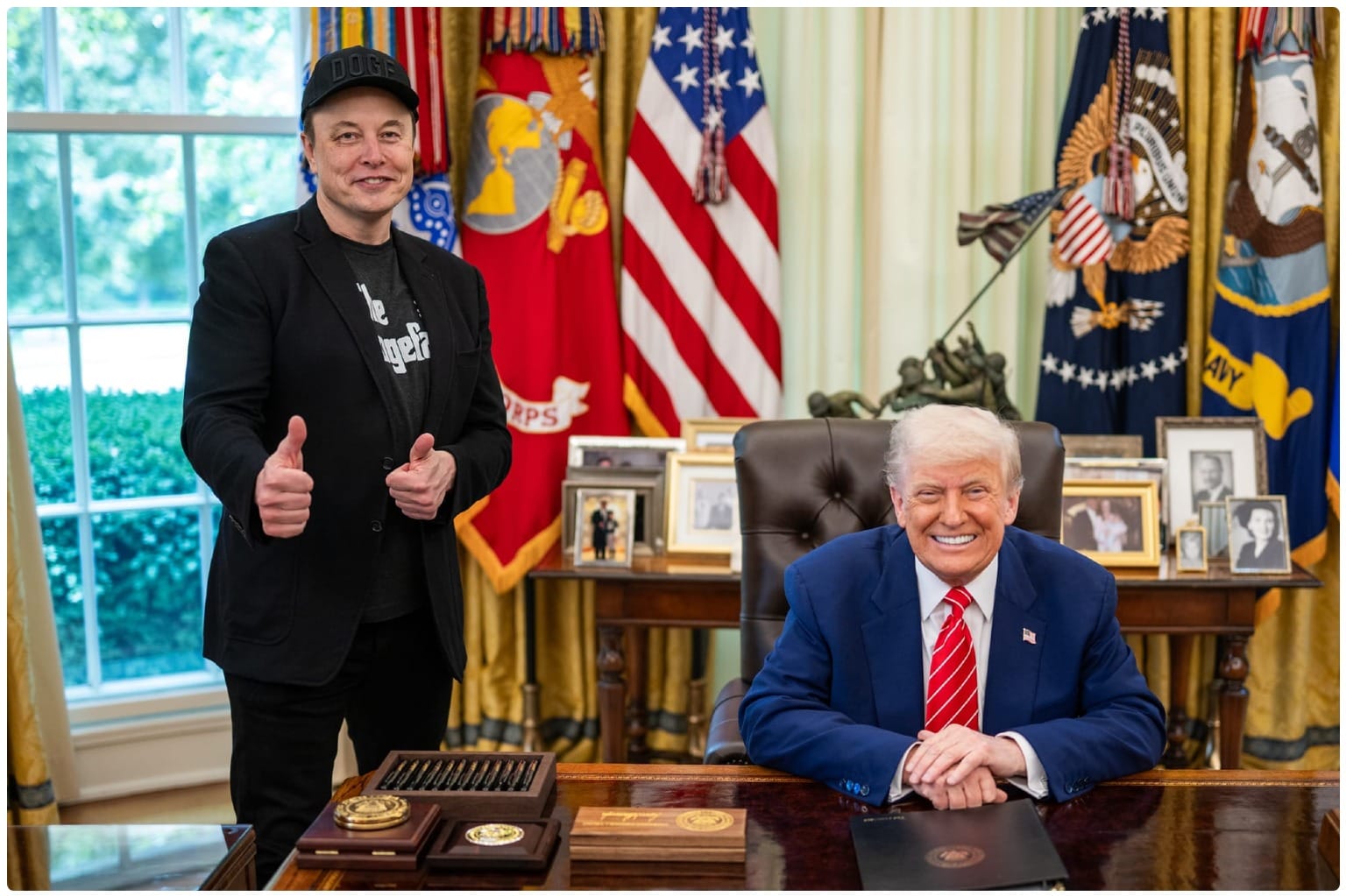
The same applies to market protection. The United States has not treated foreign technology or foreign competition as a purely open-market question. In 2024, Washington raised tariffs on Chinese electric vehicles from 25 percent to 100 percent under Section 301, saying the move would protect American manufacturers from China’s industrial practices. The White House stated this clearly in its fact sheet on Chinese imports. BYD, the Chinese electric car manufacturer, is one of the companies effectively priced out of the American market by that tariff wall. Tesla, Musk’s own company, is among the obvious beneficiaries of a policy that keeps cheaper Chinese EVs from competing freely in the US.
Nor is this limited to cars. America forced the TikTok question into a national-security framework. Congress passed the Protecting Americans from Foreign Adversary Controlled Applications Act, which made it unlawful to distribute or maintain TikTok in the US unless ByteDance executed a qualified divestiture. A later White House order described TikTok’s US restructuring as a qualified divestiture, saying the app would no longer be controlled by a foreign adversary and would not maintain an operational relationship with its former parent’s US operations. In plain language, America threatened to ban a foreign-controlled platform unless control of its US business changed hands. That is not free-market competition. It is bullying of the highest order.
There is also a historical reason Indians are suspicious of foreign pressure in domestic politics. This is not a recent nationalist reflex. It is written into India’s legal architecture across governments.
The original Foreign Contribution Regulation Act was enacted in 1976, during Indira Gandhi’s rule, to regulate foreign contributions and hospitality in a sovereign democratic republic. The Home Ministry’s own FCRA portal says the law exists so that associations function consistently with the values of a sovereign, democratic Republic, and that foreign contributions are not used for activities detrimental to national interest.
The suspicion outlived Indira Gandhi and the Emergency. In 2010, under the Congress-led UPA government, Parliament replaced the old law with the Foreign Contribution Regulation Act, 2010. Its core logic remained the same: foreign money, hospitality and institutional influence had to be regulated when they touched politics, public life and national interest. The Ministry of Home Affairs has also stated that political parties cannot receive contributions from a foreign source, and that Section 29B of the Representation of the People Act, 1951 prohibits such foreign contributions.
That history creates an awkward problem for Rahul Gandhi. The Congress tradition he inherits did not treat foreign influence as a harmless abstraction. It built and defended laws to keep foreign money and pressure away from political institutions. Congress leaders have repeatedly warned, in different contexts, that India’s politics must not become vulnerable to external leverage.
That is why siding reflexively with Musk weakens the argument rather than strengthening it. Rahul Gandhi can question whether India’s telecom approvals are fair. He can demand that the government disclose the status of Starlink, Jio, OneWeb and other satellite communication applicants. He can ask whether security clearances are being applied evenly. Those are Indian democratic questions. They should be asked through Parliament, regulators, committees and public records, not outsourced to a billionaire whose company has a direct commercial interest in the outcome.
India has every reason to apply that standard to Starlink. Satellite internet is not simply a faster broadband product. It is a communications network that can operate across borders, bypass damaged or restricted terrestrial infrastructure, and become politically significant in moments of crisis. The US Treasury’s Iran General License D-2 was issued specifically to expand internet services available to Iranians during protests, showing how satellite and internet tools can become instruments of geopolitical pressure. Reports of Starlink terminals being smuggled or used in Iran only reinforce why governments treat such systems as sensitive infrastructure, not ordinary consumer gadgets.
Ukraine offers the other side of the same warning. Starlink became vital to Ukrainian communications after Russia’s invasion, but its use around Crimea became controversial when Musk refused to enable coverage for a Ukrainian operation, citing fears of escalation. Whether one agrees with that decision or not, it exposed the central danger: a private foreign owner could influence military and political outcomes by enabling, restricting or geofencing access. No sovereign country should casually hand that level of leverage to a company headquartered abroad.
Musk’s position has another weakness. Approval in other countries does not automatically settle India’s security calculation. Every sovereign state decides how foreign telecom infrastructure enters its territory. India would be reckless if it treated satellite internet as merely another app rollout. The same Indian state that welcomes foreign investment also has the responsibility to ensure that communication networks operating inside its borders remain answerable to Indian law.
This is where the debate should be centred. If the government is favouring one corporate group over another, it must be challenged. If Starlink has met every legal and security requirement, the government should explain the delay. If it has not, Musk should say precisely which requirement is unreasonable and why. What cannot be accepted is a foreign corporate campaign that turns an unfinished regulatory process into a charge against India’s political sovereignty.
India’s democracy does not become stronger when foreign business interests are invited into its partisan vocabulary. It becomes stronger when its own institutions are forced to answer hard questions with evidence.