The European Union has declared its trade deficit with China “unsustainable” and warned that it is prepared to use all available tools to rebalance the relationship, marking a sharper turn in Brussels’ economic stance towards Beijing.
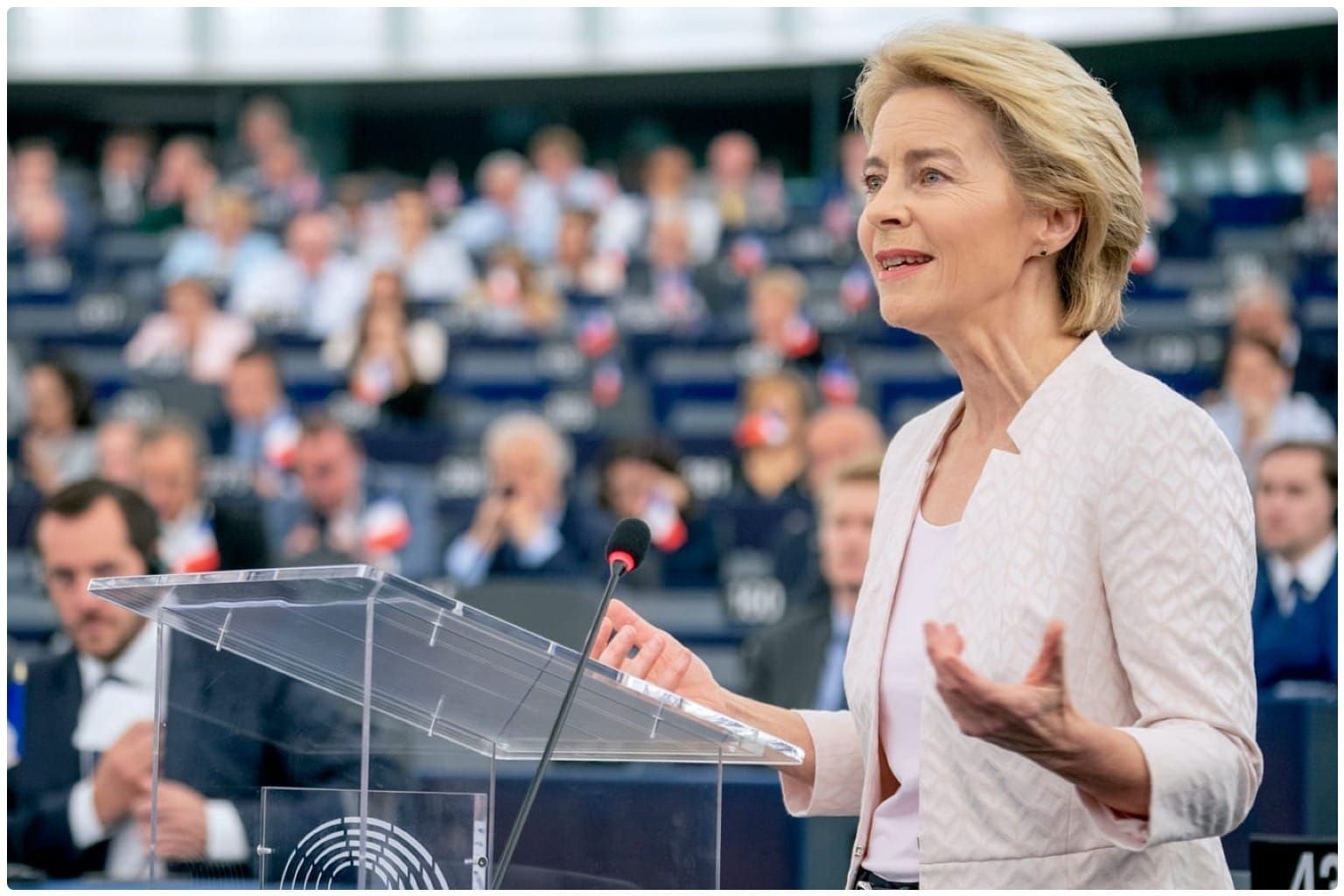
European Commission President Ursula von der Leyen made the warning during her State of the Union address in Strasbourg on September 16, saying the bloc’s goods deficit with China had reached around €1 billion a day. She argued that Europe was facing what she described as a “second China shock”, with cheap imports, industrial overcapacity and growing dependence on Chinese supply chains putting pressure on European manufacturing.
The numbers behind the warning are substantial. According to Eurostat, the EU imported €559.4 billion worth of goods from China in 2025 while exporting just €199.6 billion, leaving a deficit of €359.8 billion. Compared with 2024, EU exports to China fell 6.5% while imports rose 6.4%. China remained the bloc’s largest source of imports, accounting for more than one-fifth of all goods brought into the EU from outside the bloc.
A stronger, independent Europe is now emerging.
— Ursula von der Leyen (@vonderleyen) September 16, 2026
A Europe better able to defend itself than ever before.
That is there for Europeans.
This is a Europe we can be so proud of ↓ https://t.co/kwoTX3l4Ud
The gap has continued into 2026. Eurostat data shows that the EU’s trade deficit with China reached €103 billion in the second quarter alone, the highest quarterly level since 2022. China supplied €153.6 billion worth of goods to the EU during the quarter, while European exports remained far smaller. Electrical equipment, machinery, vehicles and other manufactured goods account for much of the imbalance.
Brussels’ concern is not limited to the size of the deficit. European officials have repeatedly accused China of supporting excess industrial capacity through subsidies and other state-backed policies, allowing Chinese manufacturers to export products at prices European companies struggle to match. The pressure is particularly visible in electric vehicles, batteries, solar equipment and machinery, where Chinese companies have expanded rapidly across European markets.
The EU has already imposed additional tariffs on Chinese electric vehicles and is considering broader measures aimed at reducing strategic dependence. Von der Leyen said ongoing trade negotiations with Beijing, led by EU Trade Commissioner Maroš Šefčovič, must produce tangible results, while the Commission is also preparing new rules that would push European companies to diversify critical supply chains away from China.
Critical minerals are another major concern. Europe remains heavily dependent on China for rare earths and other materials essential for electric vehicles, renewable energy, defence and high-tech manufacturing. Von der Leyen used her speech to propose a new European body that would help secure and stockpile strategic raw materials, reducing the risk that Beijing could use supply restrictions as political or economic leverage.
The tougher language does not mean the EU is preparing to cut economic ties with China. China remains one of Europe’s largest trading partners, and many European companies depend heavily on the Chinese market and Chinese supply chains. But Brussels is increasingly making clear that the current pattern of trade is no longer politically or economically acceptable.
The message from von der Leyen was therefore less about decoupling than rebalancing. Europe still wants trade with China, but it no longer appears willing to accept a relationship in which Chinese exports keep rising while European industry loses ground.