The European Union has opened the door to Canada becoming its first “associate member”, an unprecedented proposal that could create an entirely new category of relationship between the 27-member bloc and a country outside Europe.
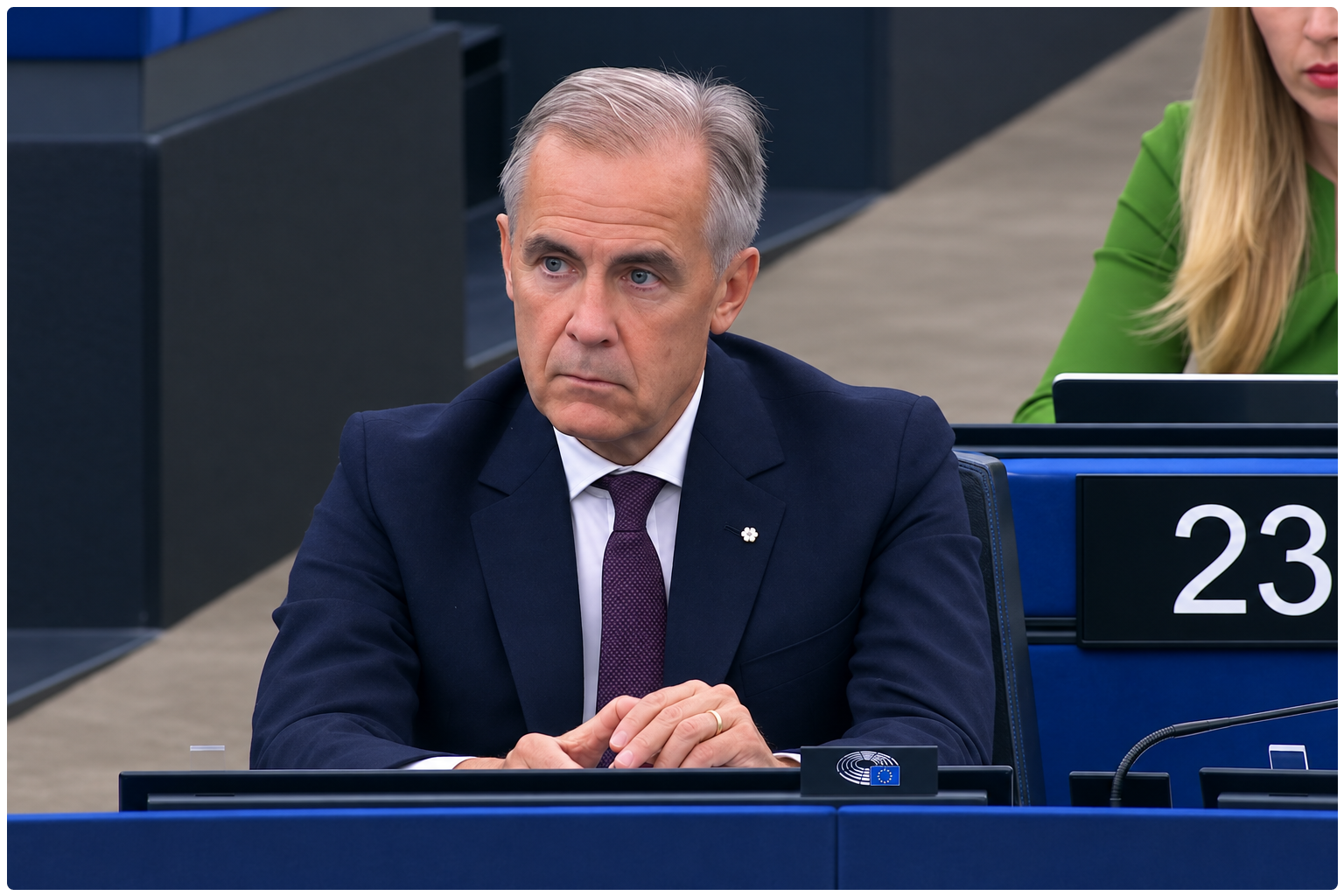
European Commission President Ursula von der Leyen made the proposal during her State of the Union address in Strasbourg on September 16, with Canadian Prime Minister Mark Carney sitting in the European Parliament. “We want to bring the relationship with Canada to the highest level possible,” she said, adding that she wanted to work with Ottawa on making Canada the EU’s first associate member. EU lawmakers responded with a standing ovation.
Canada and the EU are natural partners, united by shared values.
— Mark Carney (@MarkJCarney) September 16, 2026
With President von der Leyen and President Metsola, we focused on what comes next: a deeper partnership that reinforces our mutual sovereignty to create more opportunities and prosperity for our peoples. pic.twitter.com/GdOq5t7mGf
What that status would actually mean remains unclear. The European Union currently has no formal category of “associate membership” in its treaties, meaning the structure, rights and obligations of such an arrangement would have to be created from scratch. Reuters reported that some EU diplomats were surprised by the proposal and cautioned that any new model would require the backing of member states, several of which have previously been wary of flexible membership arrangements without a clear legal basis.
Carney has himself stopped short of saying Canada wants to join the EU. Ahead of von der Leyen’s speech, he said Ottawa was seeking a “unique security and economic alliance” with Europe rather than full membership. The proposal is expected to be explored further at the next Canada-EU summit, with possible cooperation covering defence, artificial intelligence, critical minerals, energy, Arctic security and digital trade.
The relationship has already deepened considerably. Canada became the first non-European country to participate in the EU’s €150 billion SAFE defence procurement programme after an agreement was formally concluded in June. The two sides had previously signed a Security and Defence Partnership in 2025, giving Canadian companies greater access to European defence projects and creating a framework for closer military-industrial cooperation.
Economic ties have also expanded under the Comprehensive Economic and Trade Agreement, or CETA, which has been provisionally in force since 2017. EU-Canada trade in goods and services reached €130 billion in 2025, up around 80% from 2016, while bilateral goods trade rose to €81.5 billion. The EU is now Canada’s second-largest trading partner after the United States.
The timing is significant. Canada is trying to reduce its heavy dependence on the United States after a sharp deterioration in relations under President Donald Trump, while the EU is simultaneously looking for reliable partners in defence, energy and critical raw materials as it attempts to reduce dependence on China and Russia. Carney has said Canada wants to dramatically expand trade outside the United States over the coming decade.
For now, “associate membership” remains a political proposal rather than a defined legal status. But von der Leyen’s decision to raise it publicly marks a significant step. Canada is no longer being discussed simply as another trade partner or NATO ally, but as a country that could potentially be brought closer to the EU than any non-European partner before it.