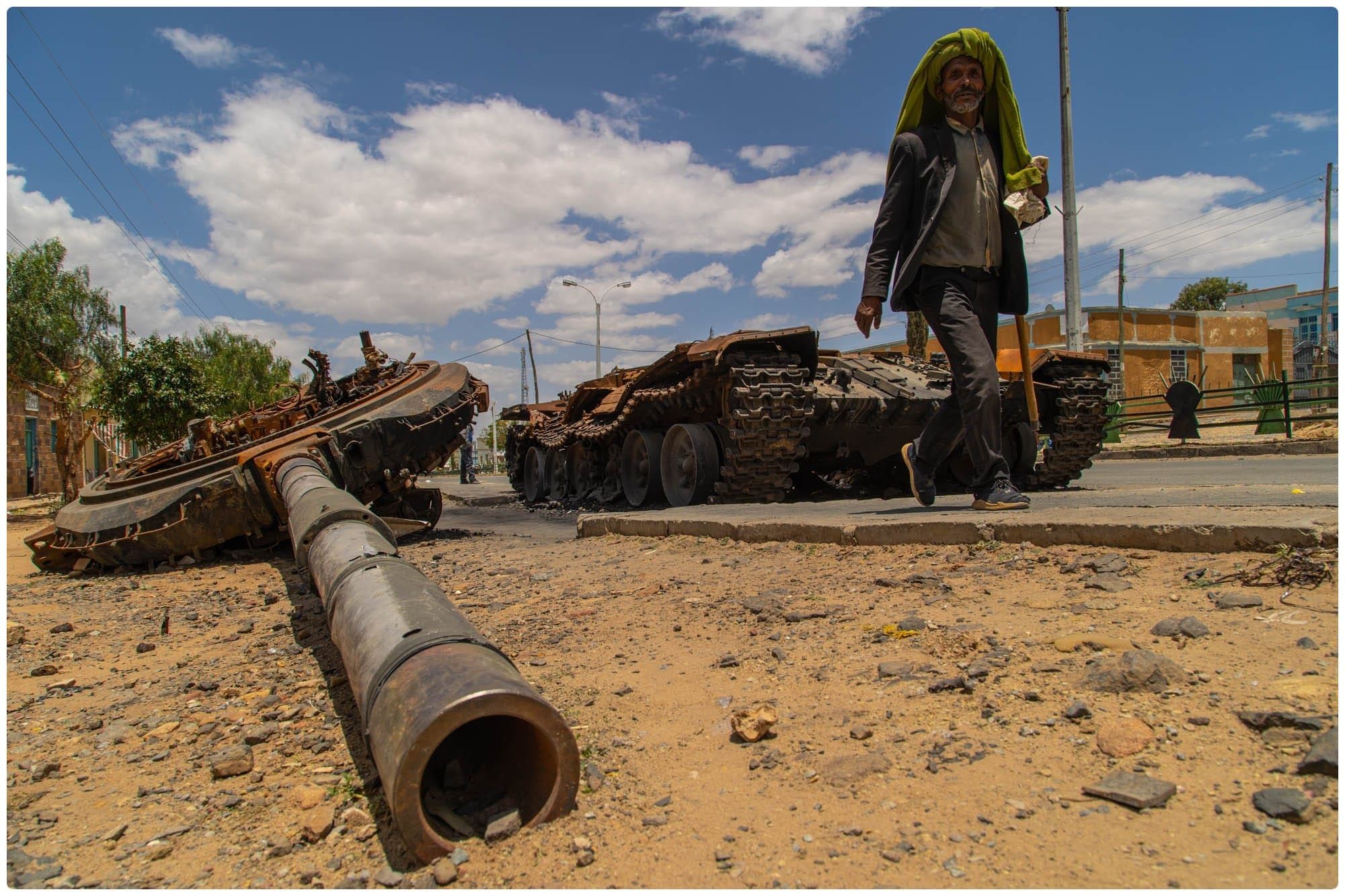
Airstrikes and artillery fire have struck northern Ethiopia after federal and allied forces retook Mekelle, raising fears that the country is sliding back towards the devastating war formally ended by the 2022 Pretoria peace agreement.
At least 17 people were reportedly killed in air attacks northwest of Mekelle, the capital of the Tigray region, according to information circulated among humanitarian organisations. Additional strikes and casualties were reported around Adwa and Sheraro, although the identity of the aircraft and the complete casualty figures have not been independently established.
Government forces also exchanged artillery fire with fighters loyal to the Tigray People’s Liberation Front, which withdrew from Mekelle over the weekend. Fighting has continued outside the regional capital despite federal troops and the pro-government Tigray Peace Forces militia consolidating their position inside the city.
#Ethiopia #SITREP | Horn of Africa | 29 September 2026 | The videos shared below highlight just how fragile and fluid the situation has become. One reportedly shows Ethiopian federal forces after regaining control of Alamata, a vital southern gateway and logistics hub for Tigray, roughly 180 km south of Mekelle. The development gives the Ethiopian National Defense Force renewed momentum on the northern front despite recent gains by Tigrayan forces. Ethiopia is now facing its most serious internal military escalation since the 2022 Pretoria Agreement. Fighting has expanded across Tigray, Amhara, and Afar, while seven armed opposition groups have announced a new alliance against Prime Minister Abiy Ahmed's federal government. The changing alliances are significant. Groups that fought each other during the 2020-2022 war are now cooperating against Addis Ababa. The latest escalation accelerated on 23 September when Tigrayan forces seized the airports at Mekelle, Axum, and Shire. Fighting subsequently expanded along the Tigray-Amhara and Tigray-Afar axes. Addis Ababa says Tigrayan forces initiated the offensive, while Tigrayan authorities describe their operations as defensive and accuse federal forces of launching attacks with ground forces, aircraft, drones, and artillery. The sequence leading to the escalation remains contested. Additional footage reportedly shows a convoy of Emirati-made Calidus MCAV-20 4×4 multirole armored combat vehicles moving toward Tigray, suggesting the ENDF is reinforcing the northern theater. In Amhara, Fano fighters reportedly ambushed ENDF forces near Injafat village. Local sources claim 10 military vehicles were captured or destroyed, although available footage confirms only an overturned vehicle and the wider claims remain unverified. The Afar front remains particularly important. Fighting around Abala and Erebti brings the conflict closer to transportation routes connecting Ethiopia with Djibouti. Ethiopia depends heavily on this corridor for trade and fuel. There is currently no indication that the main corridor has been cut, but any sustained movement toward it would significantly increase pressure on Addis Ababa. The political landscape has also changed. The new seven-group opposition alliance includes the Tigray People's Liberation Front, elements of the Amhara Fano movement, the Oromo Liberation Army, and four smaller organizations. The alliance says it seeks to remove Abiy's government and establish a transitional administration. But the coalition contains major internal contradictions. Fano fought alongside federal and Eritrean forces against the TPLF during the previous war, and significant territorial and political disagreements remain between the groups. The regional dimension is also growing. Ethiopia has accused Eritrea of supporting its armed opponents, which Asmara denies. Sources on the ground report that Eritrea has reinforced forces along the Ethiopian border, including additional deployments near Bure in the Afar region. Ethiopia has also accused Sudan and Egypt of assisting its opponents. Both governments reject the allegations, and the extent of any direct external military support remains unclear. Addis Ababa retains major advantages in conventional forces, airpower, drones, and state resources. Its main challenge is managing several fronts simultaneously. The recapture of Alamata shows that federal forces remain capable of mounting effective counteroffensives. The greater risk is a prolonged war of attrition across Tigray, Amhara, Afar, and Oromia, particularly if the new opposition alliance develops meaningful battlefield coordination or neighboring states become more directly involved.
— Basha باشا (@BashaReport) September 29, 2026
The Tigray Peace Forces said its fighters entered central Mekelle on Saturday, followed by the Ethiopian National Defence Force. Residents and humanitarian sources subsequently confirmed that government-aligned forces controlled the city.
The TPLF described its withdrawal as a tactical decision intended to prevent extensive fighting and civilian casualties inside Mekelle. It said Tigray’s regional administration would temporarily operate from another location but did not disclose where its political and military leadership had moved.
The retreat came less than two weeks after Tigrayan forces launched a major offensive on September 23. They seized the airports at Mekelle, Axum and Shire, detained federal personnel and disrupted commercial air services across the region.
The African Union said the seizure of the airports violated commitments made under the Pretoria agreement. Ethiopian Airlines suspended flights to the affected cities as communications, banking and transport services deteriorated.
Federal forces then mounted a rapid counteroffensive, first recovering Alula Aba Nega Airport and later entering Mekelle with allied fighters. Some shops have since reopened and limited public services have resumed, but residents remain concerned about looting, reprisals and the possibility that TPLF forces could return.
The loss of Mekelle is a major setback for the TPLF-led opposition alliance, but it does not end the fighting. Tigray’s mountainous terrain helped the movement survive earlier defeats, and TPLF leader Debretsion Gebremichael has indicated that his forces could shift towards guerrilla operations.
Mekelle has changed hands repeatedly during Ethiopia’s recent conflicts. Federal troops captured the city in November 2020, weeks after fighting began between Prime Minister Abiy Ahmed’s government and the TPLF. Tigrayan forces withdrew into rural and mountainous areas, reorganised and retook Mekelle in June 2021 before advancing into neighbouring Amhara and Afar.
The resulting war killed hundreds of thousands of people, although no universally accepted death toll exists. Federal forces, Tigrayan fighters, Eritrean troops and Amhara militias were all accused of serious abuses, including civilian killings, sexual violence, arbitrary detention and the obstruction of humanitarian assistance.
The conflict formally ended when the federal government and TPLF signed the African Union-mediated Pretoria agreement on November 2, 2022. It provided for a permanent cessation of hostilities, the disarmament of Tigrayan forces, restoration of federal authority and renewed access to public services and humanitarian aid.
The agreement stopped large-scale warfare and allowed electricity, banking, telecommunications and commercial travel to return. However, important provisions remained incomplete. Disarmament progressed slowly, thousands of fighters were never fully reintegrated, displaced civilians could not return to contested territory and the status of western Tigray remained unresolved.
Divisions also developed within Tigray’s political and military establishment. The Tigray Peace Forces, made up partly of former TPLF figures and fighters, broke with the region’s dominant leadership and aligned itself with the federal government. Its involvement in retaking Mekelle shows that the renewed conflict is not simply a confrontation between Addis Ababa and a unified Tigray.
The conflict now carries a growing regional risk. Ethiopia has accused Eritrea, Egypt and Sudan of supporting its opponents, allegations all three countries deny. Relations between Addis Ababa and Asmara have deteriorated sharply, with diplomatic ties severed and both governments accusing the other of preparing for confrontation.
Tension has been intensified by Ethiopia’s demand for negotiated access to the Red Sea. Abiy has repeatedly described maritime access as essential for his landlocked country, while Eritrea is concerned that Ethiopia could eventually threaten its sovereignty over the port of Assab.
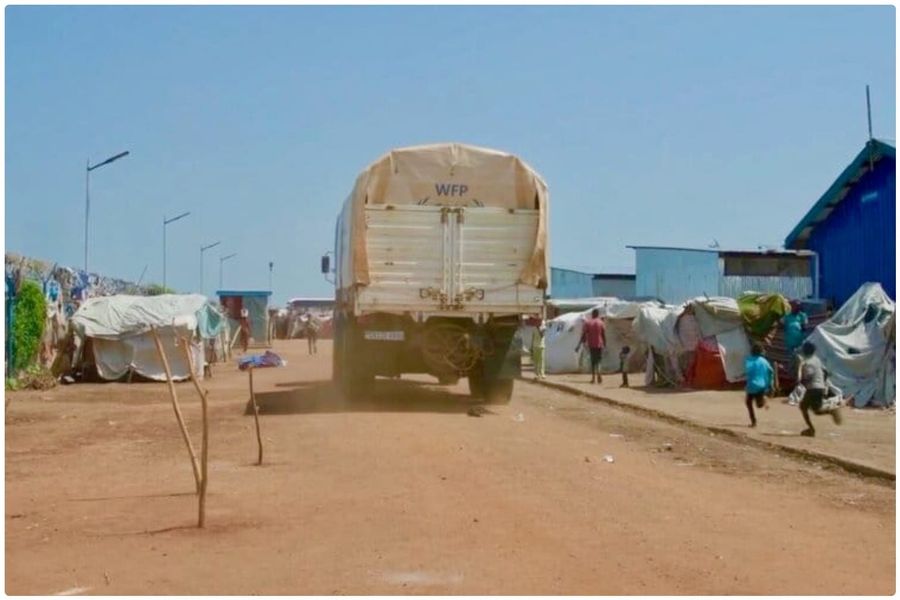
The United Nations warned when the latest offensive began that the spread of fighting could produce a “broader and more devastating conflict”. Its humanitarian coordinator in Ethiopia has reported new displacement, threats to civilians and attacks or seizures affecting aid personnel, vehicles and facilities.
The recapture of Mekelle has given the federal government an important military and political victory. It has not restored peace to northern Ethiopia. Continued airstrikes, artillery exchanges and a possible TPLF insurgency mean the battle may simply be moving away from the regional capital and into areas where monitoring civilian casualties will become even more difficult.