Haiti's powerful armed gangs are changing the way they operate, pushing deeper into the countryside and using smaller, highly mobile units to terrorise communities that lie far beyond their traditional strongholds in Port-au-Prince.
A new analysis by the Global Initiative Against Transnational Organized Crime's Haiti Observatory says the expansion represents more than gangs simply spreading out from the capital.
Instead, criminal groups are increasingly adopting hit-and-run tactics, kidnapping residents, stealing cattle, blocking roads and attacking isolated communities before withdrawing.
The strategy allows gangs to exert control without permanently occupying every town they target.
The shift is exposing a major weakness in Haiti's response to its security crisis. While police and international forces remain heavily focused on Port-au-Prince, gangs are moving through mountainous and agricultural areas where security forces have fewer personnel and less familiarity with the terrain.
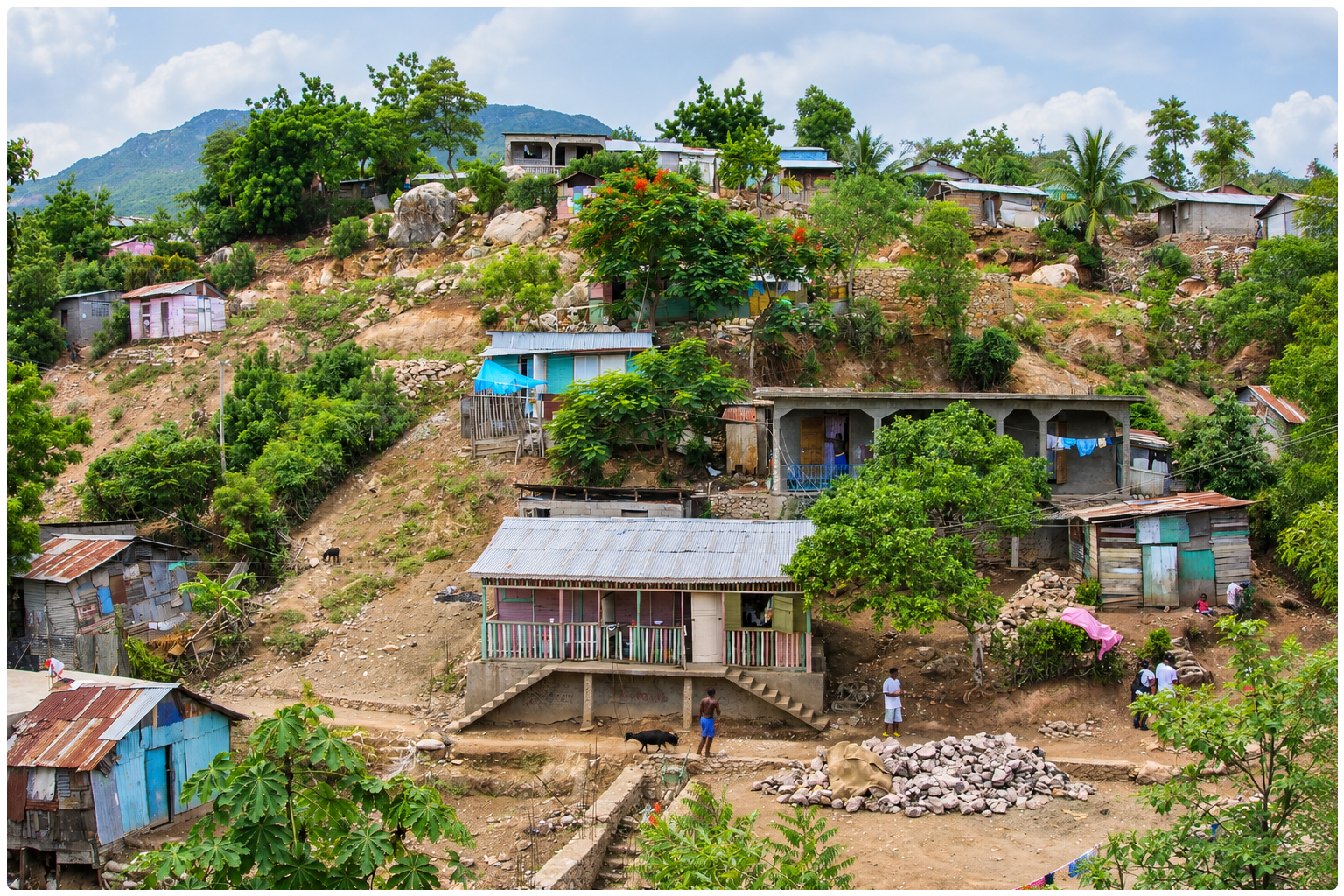
The consequences were brutally demonstrated in Kenscoff, a mountainous farming community overlooking the capital.
Around 150 heavily armed gang members attacked the area on August 23, killing 47 people and kidnapping more than 50 others.
Thirteen people attempting to escape were killed before the attackers pursued dozens of residents who had sought refuge at a church. According to the UN, 22 people were executed in the church courtyard and another 12 behind the building.
Kenscoff illustrates the new tactical problem confronting Haitian forces.
Rather than holding obvious fixed positions, gangs can operate through dispersed cells of roughly a dozen fighters, moving through ravines and high ground before launching attacks with little warning.
Security forces may control a town centre while armed groups manoeuvre around them and strike surrounding communities.
The same pattern is unfolding farther north in Artibonite, one of Haiti's most important agricultural regions.
Local gangs Gran Grif and Kokorat San Ras announced an alliance in April, while armed groups originating in Port-au-Prince have also expanded into the region.
At the end of March, Gran Grif attacked Petite Rivière and Dessalines, killing more than 70 people and displacing over 13,500.
Attackers blocked roads and bridges, restricting the movement of security forces and preventing residents from escaping. Homes were set on fire, while people attempting to flee were shot.
The gangs have since gained control over significant areas of fertile agricultural land and important transport routes.
That gives the expansion consequences beyond security.
Attacks on farmers, livestock and crops threaten food production in a country already facing severe hunger. Gang-controlled checkpoints can also restrict the movement of agricultural products and other goods between regions.
The United Nations estimates that around 1.4 million people have been internally displaced by Haiti's violence, while more than half the population faces acute food insecurity.
Yet the forces attempting to contain the gangs remain stretched.
Haiti's Gang Suppression Force, whose deployment began in May, had reached only 1,083 personnel when the Global Initiative published its report — far below the planned strength of 5,500 by December.
The Haitian National Police also lacks sufficient personnel, equipment and specialised training for operations across difficult rural and mountainous terrain.
The danger is that gangs may not need to conquer Haiti's countryside in the conventional sense.
By repeatedly attacking villages, controlling roads, extorting travellers, seizing farmland and forcing residents to flee, armed groups can gradually determine who moves, who trades and who remains in entire regions.
The Global Initiative argues that defeating this strategy will require more than additional security operations. Farmers need protection, rural economies need support, and longstanding land and community disputes need to be addressed alongside disarmament and reintegration programmes.
For years, Haiti's gang crisis was viewed primarily through Port-au-Prince, where armed groups control large parts of the metropolitan area.
That picture is becoming dangerously outdated.
Haiti's gangs are learning that they do not necessarily have to capture a town to control what happens there. They only need the ability to arrive, strike and disappear and make communities believe they could return at any moment.