India has allowed a prominent figure associated with the 1989 Tiananmen Square pro-democracy uprising to visit the country and publicly criticise China's ruling Communist Party, a politically sensitive development coming days before Chinese President Xi Jinping's expected visit to New Delhi.
The visit is notable because New Delhi has generally exercised caution around political activities involving Chinese dissidents, Tibet and other issues Beijing considers interference in its internal affairs, particularly during periods of high-level diplomatic engagement.
The Tiananmen activist used his visit to criticise the Chinese Communist Party and speak about political repression in China, according to Indian media reports. The fact that Indian authorities permitted the visit and the public remarks has consequently attracted attention because of its timing.
Xi is expected to travel to New Delhi for the BRICS summit on September 12 and 13, where he would meet Prime Minister Narendra Modi. If the visit goes ahead, it will be Xi's first trip to India since the informal Modi-Xi summit in Mamallapuram in October 2019. Beijing has supported India's BRICS presidency but has yet to formally confirm Xi's attendance.
The development is particularly striking because China has reportedly been pressing India in the opposite direction.
In August, Chinese Embassy officials had raised concerns with New Delhi about media organisations associated with Tibetan groups and Falun Gong gaining access to the BRICS summit. Beijing reportedly sought restrictions on their ability to question the Chinese delegation. India has historically allowed such organisations to operate as long as they comply with Indian laws.
The Tiananmen issue remains exceptionally sensitive for Beijing.
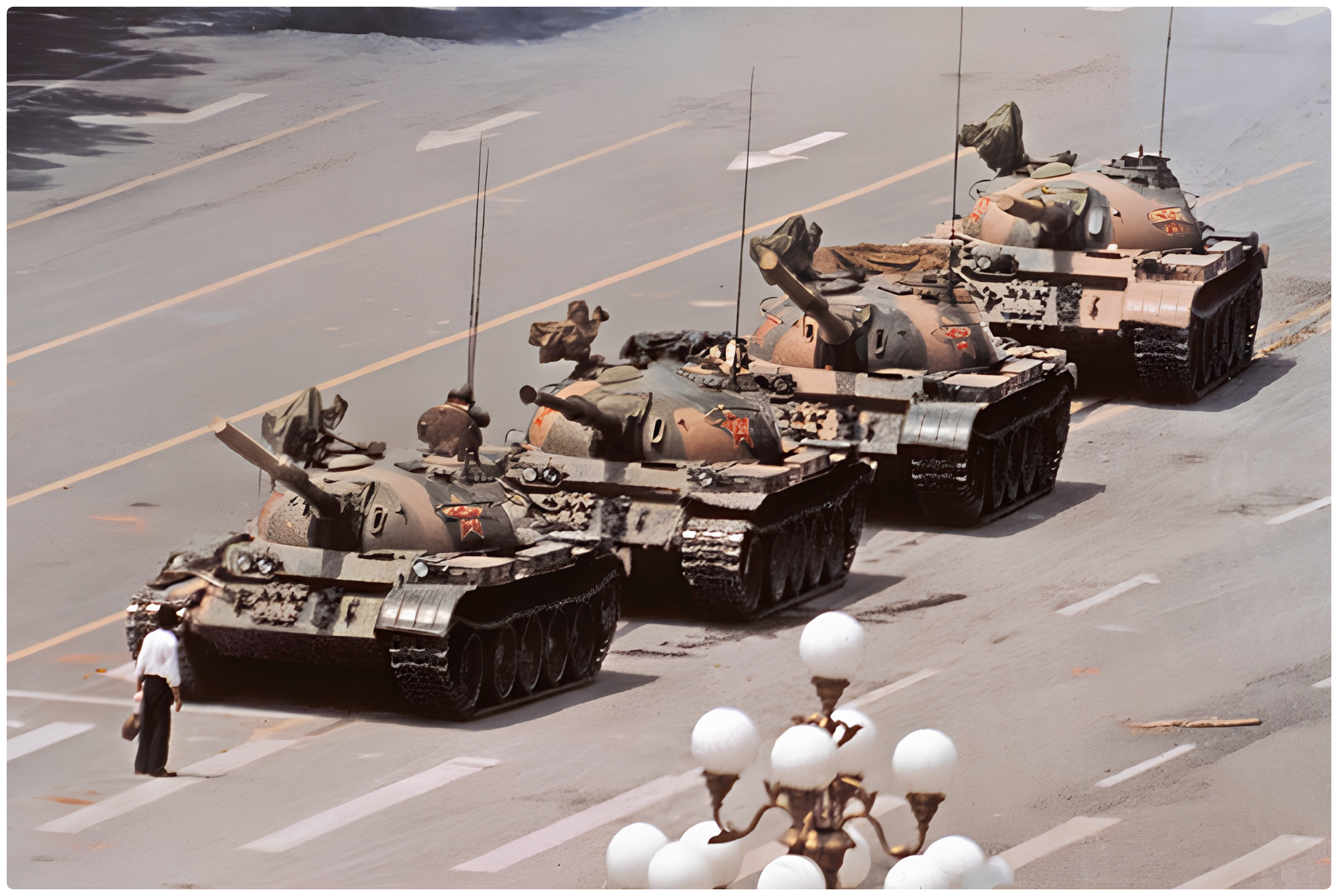
On June 4, 1989, Chinese troops and tanks moved into Beijing to suppress weeks of student-led demonstrations demanding political reform and greater freedoms. Hundreds, and possibly thousands, were killed. China has never provided a complete death toll, and public discussion and commemoration of the crackdown remain heavily restricted inside mainland China.
As recently as June, Beijing strongly criticised US Secretary of State Marco Rubio for marking the 37th anniversary of the crackdown. China's Foreign Ministry accused Washington of distorting historical facts, attacking China's political system and interfering in the country's internal affairs.
The episode comes at a delicate point in India-China relations.
Relations collapsed following the military confrontation along the Line of Actual Control in eastern Ladakh in 2020. Twenty Indian soldiers and at least four Chinese troops were killed in the Galwan Valley clash, the deadliest confrontation between the two countries in decades.
The relationship has gradually improved since India and China reached a patrolling and disengagement agreement in October 2024. Modi and Xi subsequently held their first full delegation-level talks in nearly five years in Kazan and met again in Tianjin in August 2025. India has since resumed tourist visas for Chinese nationals, direct flights have restarted and the Kailash Manasarovar Yatra has resumed.
That diplomatic process has accelerated ahead of the BRICS summit. National Security Adviser Ajit Doval and Chinese Foreign Minister Wang Yi held the 25th round of Special Representatives talks in Beijing on August 25, focusing on the boundary dispute and measures to preserve peace along the frontier.
The decision to allow a Tiananmen figure to openly criticise the Communist Party therefore introduces an unusual element into the carefully managed thaw.
It is too early, however, to conclude that the episode represents a broader change in India's China policy. New Delhi has not publicly characterised the visit as a diplomatic signal, and there is no evidence so far that it was intended to disrupt the rapprochement.
But its timing sends a noteworthy message: even as India seeks a more stable relationship with Beijing and prepares for a possible Xi visit, New Delhi does not appear prepared to automatically accommodate Chinese sensitivities over who can speak publicly on Indian soil.