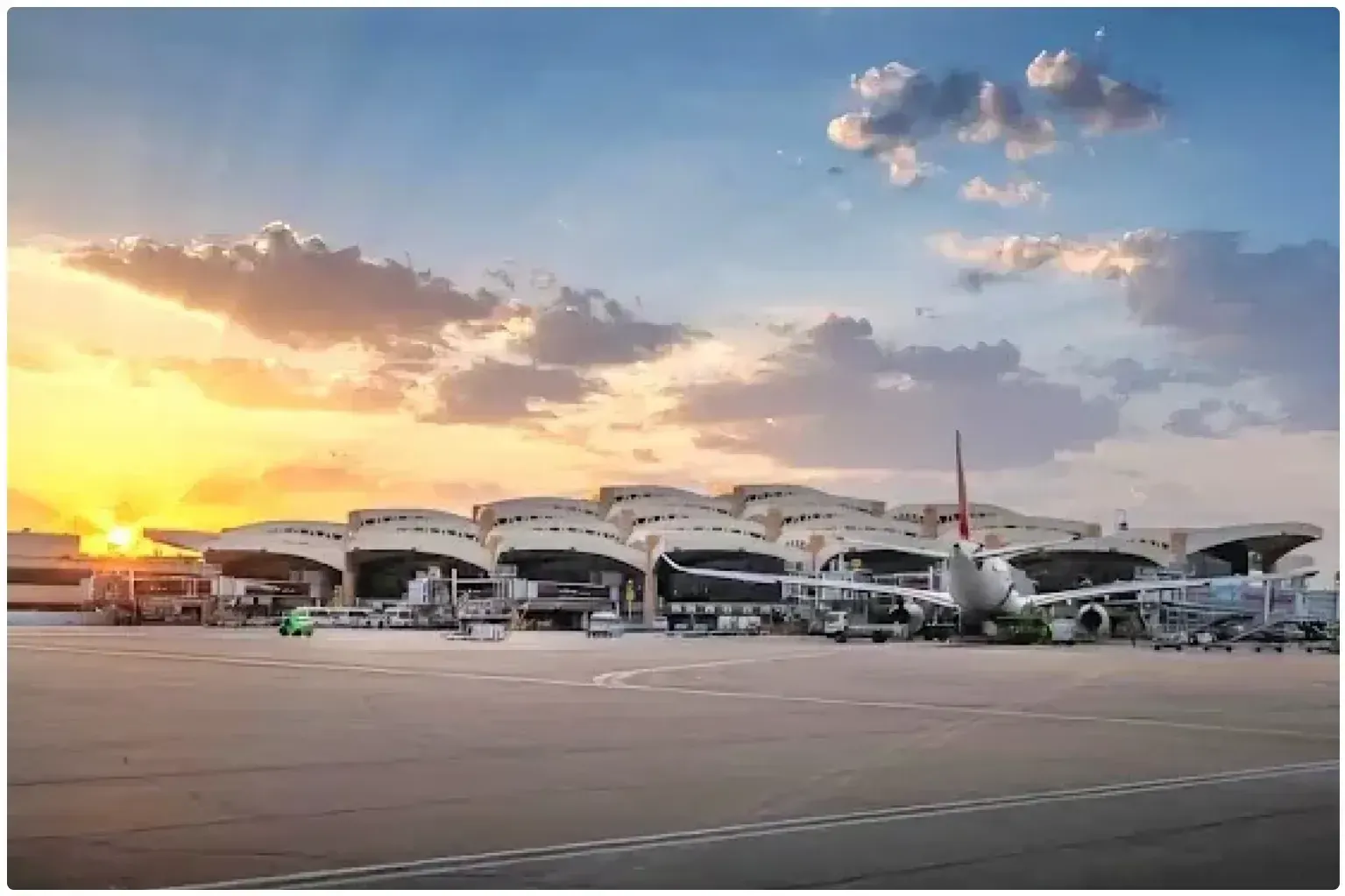
Saudi Arabia reopened two terminals at Riyadh's King Khalid International Airport on Sunday, October 25, restoring limited passenger services after a fortnight of disruption caused by deadly Houthi attacks. Flights resumed under continuing security threats, with Saudi air defences intercepting missiles and drones targeting the capital and several southern cities.
Terminal 1 was designated for domestic flights, while Terminal 2 reopened for international services operated by Saudi carriers. Airport management announced the arrangements on Saturday evening and advised passengers to confirm their bookings and flight status with their airlines before travelling.
The reopening was far from a return to normal operations. Flight-tracking data showed relatively little activity at the airport on Sunday, while international airlines continued to restrict services. Only two of the airport's five terminals were included in the reopening arrangements.
The airport had suspended operations following an October 10 attack claimed by the Houthis that killed 13 people and injured more than 300. The closure disrupted one of Saudi Arabia's principal international aviation hubs, following repeated strikes on passenger terminals and airport facilities earlier in the month.
Saudi Arabia's General Authority of Civil Aviation had extended the suspension on October 12, citing the need to complete safety inspections and establish whether airport facilities were ready to operate. The latest reopening allows some commercial services to return, although authorities have not announced when full operations will resume.
The Houthis have shown no indication of abandoning their campaign against the airport. Military spokesman Yahya Saree renewed warnings to airlines, passengers and airport employees on Sunday, describing King Khalid International Airport as a military target and urging people to avoid the facility.
The warnings accompanied another day of missile and drone attacks across Saudi Arabia. Coalition spokesman Major General Turki al-Maliki confirmed the interception of a ballistic missile heading towards Riyadh, while air defence forces also reported destroying drones and missiles targeting other areas.
In southern Saudi Arabia, falling debris from intercepted ballistic missiles injured two people in Khamis Mushait and Ahad Rafidah. The Saudi Civil Defense Directorate reported damage to three residential buildings and seven vehicles.
The danger has also exposed weaknesses in civilian preparedness. Saudi Arabia's emergency-warning system had stopped issuing military-threat alerts during several earlier airport attacks, before authorities resumed such warnings on October 12.
The continuing attacks are tied to the renewed fighting in Yemen, where Saudi-backed government forces are attempting to recover territory from the Houthis along the Red Sea coast. Saudi Arabia has expanded military operations against the group, while Houthi forces have increasingly targeted airports, energy facilities and urban areas inside the kingdom.
Reopening King Khalid International Airport allows Saudi Arabia to restore a portion of its aviation services without ending the military threat that forced the shutdown. Airlines and passengers must now make travel decisions while further attacks remain possible, and authorities have yet to establish when the airport can safely return to full capacity.