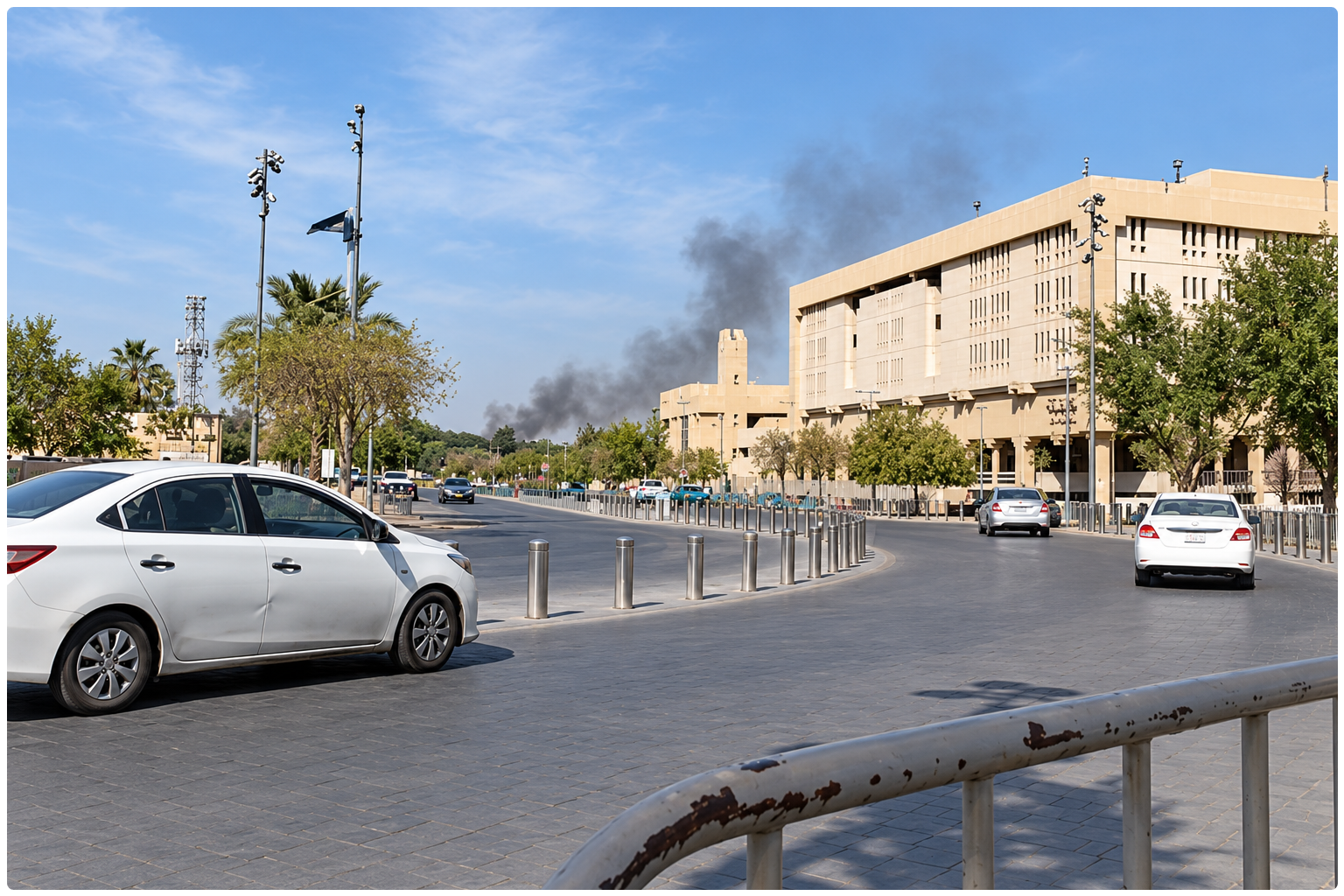
A passenger terminal at Riyadh’s King Khalid International Airport has been struck again, killing one person and injuring 11 others as repeated attacks deepen concerns over civilian aviation and regional security.
The latest projectile hit Terminal 4, which serves domestic passengers, on Sunday and started a fire inside the building. Saudi authorities identified the person killed as a Pakistani national. The identities and conditions of those injured were not immediately disclosed.
Saudi air defences also intercepted a cruise missile near the airport, while another drone was destroyed over the kingdom’s Eastern Province. The incident marked the fourth attack on King Khalid International Airport in five days, according to Saudi authorities.
Al Arabiya has published new footage from inside the terminal hit in yesterday’s attack on Riyadh’s King Khalid International Airport. https://t.co/dMofENYVkC
— ILRedAlert (@ILRedAlert) October 11, 2026
The airport had remained closed following a far deadlier strike on Saturday that killed 12 people and wounded more than 300. Some of the wounded were reported to be in critical condition, while extensive flight cancellations left passengers facing prolonged disruption.
Saturday’s victims included citizens of Saudi Arabia, Bangladesh, the United States, Jordan, Palestine, Syria, Sudan, Egypt and India. The attack was the deadliest inside a Gulf Arab country since the current regional war began and demonstrated the growing vulnerability of civilian infrastructure despite Saudi Arabia’s extensive air-defence network.
The Houthis claimed responsibility for the recent attacks and renewed their warning to airlines, airport employees and travellers against using Saudi airports. The movement accused Riyadh of continuing military operations in Yemen and said further strikes could follow.
Saudi officials have blamed the escalation on the Iran-aligned group, which has increasingly used ballistic missiles, cruise missiles and drones against airports, oil facilities and other targets. Earlier attacks on Riyadh and Abha airports had already killed three civilians and wounded dozens.
The airport campaign is closely connected to the renewed fighting inside Yemen. Saudi-backed forces have been attempting to reverse Houthi territorial gains along the Red Sea coast, including around the strategically important Bab el-Mandeb Strait. Government forces recently said they had retaken Mocha, Dhubab and surrounding coastal positions but it could not be independently verified.
Riyadh has also been preparing a wider Yemeni offensive involving more than 100,000 troops aligned with Yemen’s internationally recognised government. Continued attacks on Saudi cities could strengthen support for that campaign while increasing the likelihood of further retaliatory airstrikes.
The worsening security situation has placed Saudi Arabia’s regional partnerships under pressure. The kingdom has activated defence consultations with Pakistan and Türkiye and has reportedly sought additional air-defence assistance as repeated interceptions place strain on available missile stocks.
International concern is growing because King Khalid Airport is one of Saudi Arabia’s most important aviation hubs. Continued attacks could disrupt passenger travel, pilgrimage routes, cargo movements and the kingdom’s efforts to present Riyadh as a global business and tourism centre.
Foreign governments have issued updated security warnings, while airlines must now decide whether operations can safely resume. The United States has advised travellers to reconsider visiting Saudi Arabia because of armed conflict and the threat of missile and drone attacks.
The immediate question is whether Saudi air defences can prevent further projectiles from reaching crowded terminals. The wider danger is that repeated attacks on civilian airports could trigger a larger military response, extending the Yemen conflict further into Saudi territory and drawing additional countries into the confrontation.