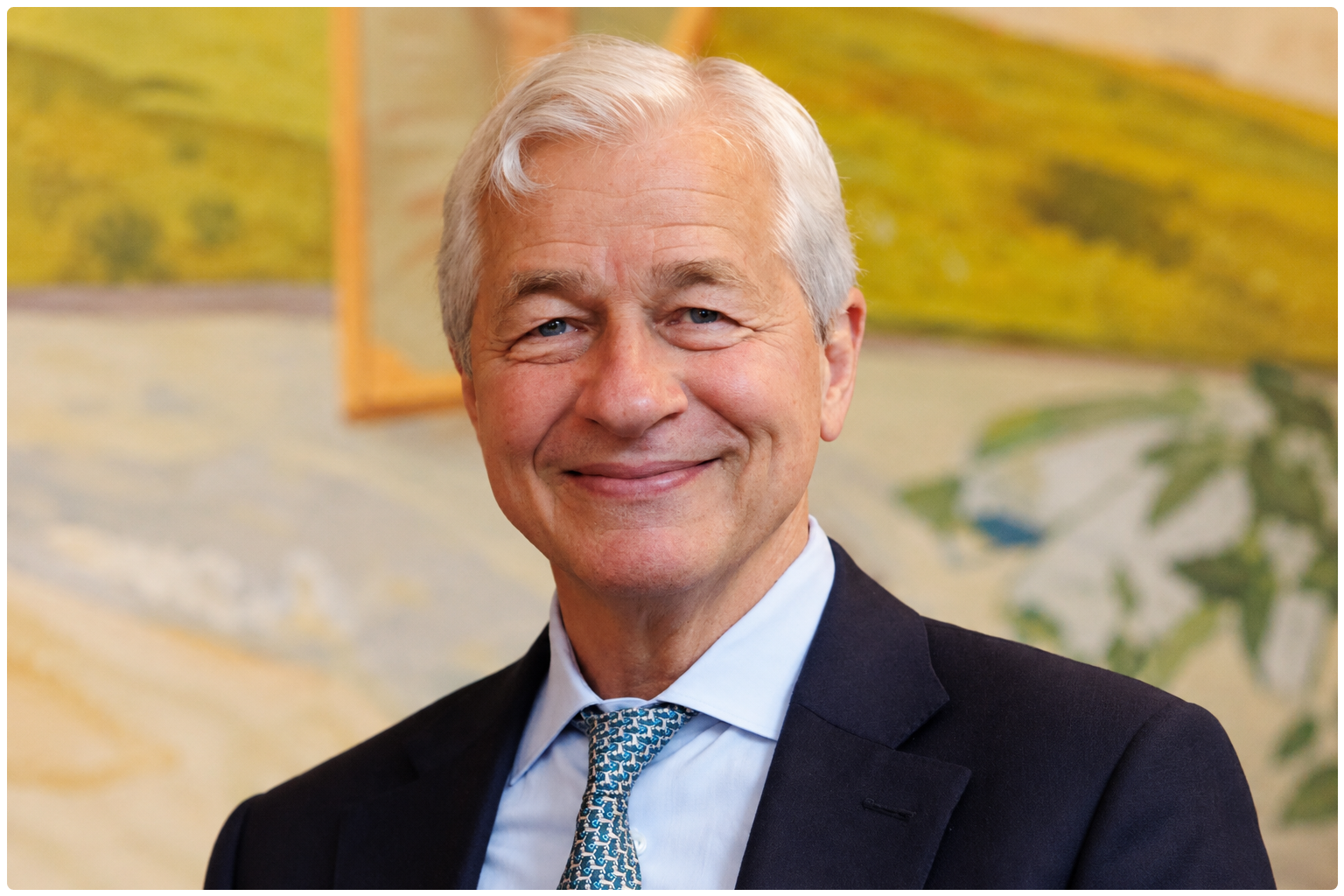
JPMorgan Chase chairman and chief executive Jamie Dimon has praised India’s economic growth and its emergence as the fastest-growing major economy, while warning that inconsistent taxation and uneven enforcement of regulations could discourage foreign investment.
Dimon pointed to India’s 7.8 per cent year-on-year growth during the April-June quarter as evidence of the country’s economic momentum. The expansion exceeded expectations and was supported by stronger manufacturing and investment, helping India maintain a considerably faster pace of growth than most large economies.
His assessment reflects the growing importance of India to international businesses seeking alternatives and additions to their existing supply chains. A large domestic market, expanding digital infrastructure and the increasing global reach of Indian companies have strengthened the country’s position as both an investment destination and a source of international capital.
However, Dimon’s praise was accompanied by a warning that growth alone would not guarantee greater foreign investment. He identified unpredictable taxation, inconsistent application of rules and restrictions faced by overseas companies as obstacles that could make businesses hesitant to commit long-term capital.
Foreign investors generally make decisions over several years and require clarity about taxation, regulation and the treatment of disputes. Sudden policy changes or differing interpretations of the same rules can increase costs even when the underlying economic opportunity remains attractive.
Dimon also praised the Reserve Bank of India’s management of the currency and its efforts to preserve financial stability. India has had to protect the rupee while managing volatile energy prices, changing global interest rates and uncertainty created by conflicts in the Middle East.
The comments come as India’s corporate sector expands its international ambitions. Indian companies have announced nearly $24 billion in overseas acquisitions during 2026, putting outbound mergers and acquisitions on course for a record year. Total Indian merger and acquisition activity crossed $100 billion during the first half of the year.
Companies are increasingly looking abroad for access to minerals, energy resources, technology and manufacturing capacity. This outward movement suggests that Indian businesses are no longer viewed only as participants in the domestic growth story but as potential global leaders with access to both equity and debt markets.
JPMorgan has also built a substantial presence in India. The bank employs more than 55,000 people in the country across technology, software development, data analytics, artificial intelligence and financial operations. India has therefore become one of the most important centres in the bank’s global network rather than simply a lower-cost support location.
The broader outlook remains positive but exposed to external pressures. India’s dependence on imported energy leaves it vulnerable to higher oil and gas prices, while inflation and increased subsidy requirements could place pressure on consumption and public finances. Despite those risks, India is expected to remain one of the fastest-growing G20 economies.
Dimon’s message was therefore supportive without being unqualified. India has the growth rate, workforce, market and increasingly confident corporate sector needed to attract more global capital. The question is whether its regulatory and taxation systems can provide the predictability investors require to participate fully in that expansion.