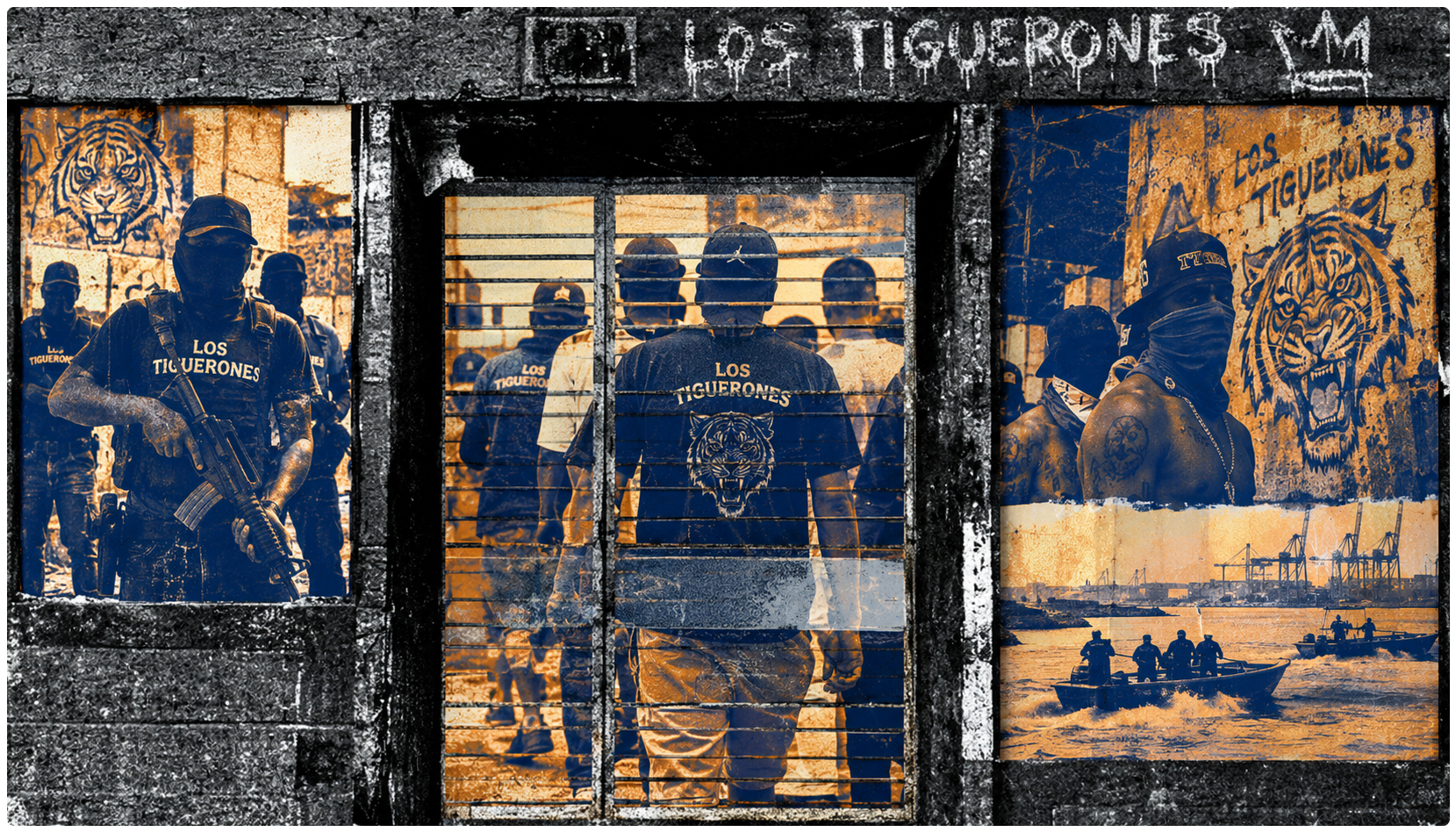
The United States has designated Ecuador's Los Tiguerones gang a foreign terrorist organisation while announcing a major expansion of security cooperation with President Daniel Noboa's government, bringing Washington more directly into Ecuador's increasingly violent war against organised crime.
US Secretary of State Marco Rubio announced the designation in Quito after meeting Noboa, describing groups such as Los Tiguerones as more than conventional criminal organisations. Washington says the gang is involved in narcotics trafficking, attacks against civilians, police and journalists, and other organised criminal activity. Los Tiguerones became internationally notorious in January 2024 when armed men stormed the studios of TC Televisión in Guayaquil during a live broadcast, brandishing guns, explosives and taking employees hostage. The images became one of the defining moments of Ecuador's security collapse and helped prompt Noboa to declare an “internal armed conflict” against the country's gangs.
The designation gives Washington additional powers to freeze assets, restrict financial networks and prosecute people who knowingly provide material support to the organisation. Los Tiguerones now joins Los Choneros and Los Lobos among Ecuadorian criminal groups Washington has formally placed on its terrorism list. The US Treasury simultaneously added Los Tiguerones to its sanctions list, identifying it as a transnational terrorist group. The move reflects a broader change in American counter-narcotics policy, under which powerful Latin American gangs and cartels are increasingly being treated not simply as law-enforcement problems but as national-security threats.
But the designation is only one part of a rapidly expanding US-Ecuador security relationship. Rubio said the Trump administration will ask Congress for another $45 million to support Ecuador's fight against drug trafficking and organised crime, alongside a separate $10 million programme targeting illegal gold mining, gang recruitment and illicit finance. Washington will also provide Ecuador with a 110-foot Coast Guard cutter and five interceptor vessels, adding to seven already delivered this year. American and Ecuadorian elite forces are now working together daily, according to Rubio, in what he described as an unprecedented level of cooperation.
That partnership is already extending into military operations at sea. The United States and Ecuador have begun conducting joint missions against suspected drug-trafficking vessels, while US Southern Command last week intercepted a vessel it said was serving as a floating refuelling station for Los Choneros. People aboard were transferred to Ecuadorian authorities before US forces sank the vessel. The operation forms part of Washington's wider campaign against maritime drug trafficking, although the use of lethal force against suspected trafficking boats elsewhere has drawn criticism from human-rights organisations and some Latin American governments.
For Noboa, American assistance arrives as Ecuador confronts a security crisis that has transformed what was once considered one of South America's safer countries. Its location between Colombia and Peru, the world's two largest cocaine-producing countries, and access to major Pacific ports have made Ecuador an increasingly valuable transit hub for international drug networks. Competition between local gangs connected to larger foreign cartels has fuelled assassinations, extortion, kidnappings and battles for control of prisons and neighbourhoods. Ecuador recorded 9,216 violent deaths in 2025, while more than 300,000 people have been displaced internally as gangs fight for territory.
Washington increasingly sees Ecuador as a model partner for its harder approach to organised crime in the hemisphere. Rubio praised Noboa's government as one of America's most aggressive partners against narcotics trafficking, while the Trump administration is building similar security relationships with friendly governments elsewhere in Latin America. The strategy is clear: treat the most powerful criminal organisations as terrorist groups, attack their finances and trafficking routes, and work directly with governments willing to use military force against them.
Whether that strategy makes Ecuador safer is the harder question. Noboa has deployed soldiers, declared repeated states of emergency and given security forces sweeping powers, yet gang violence remains deeply entrenched. Human-rights organisations have also raised concerns about abuses committed during the government's crackdown. The United States is nevertheless placing a larger bet on Noboa. What began as counternarcotics cooperation is steadily becoming something much closer to a joint security campaign, with Ecuador emerging as one of Washington's most important partners in its expanding war against Latin America's criminal networks.