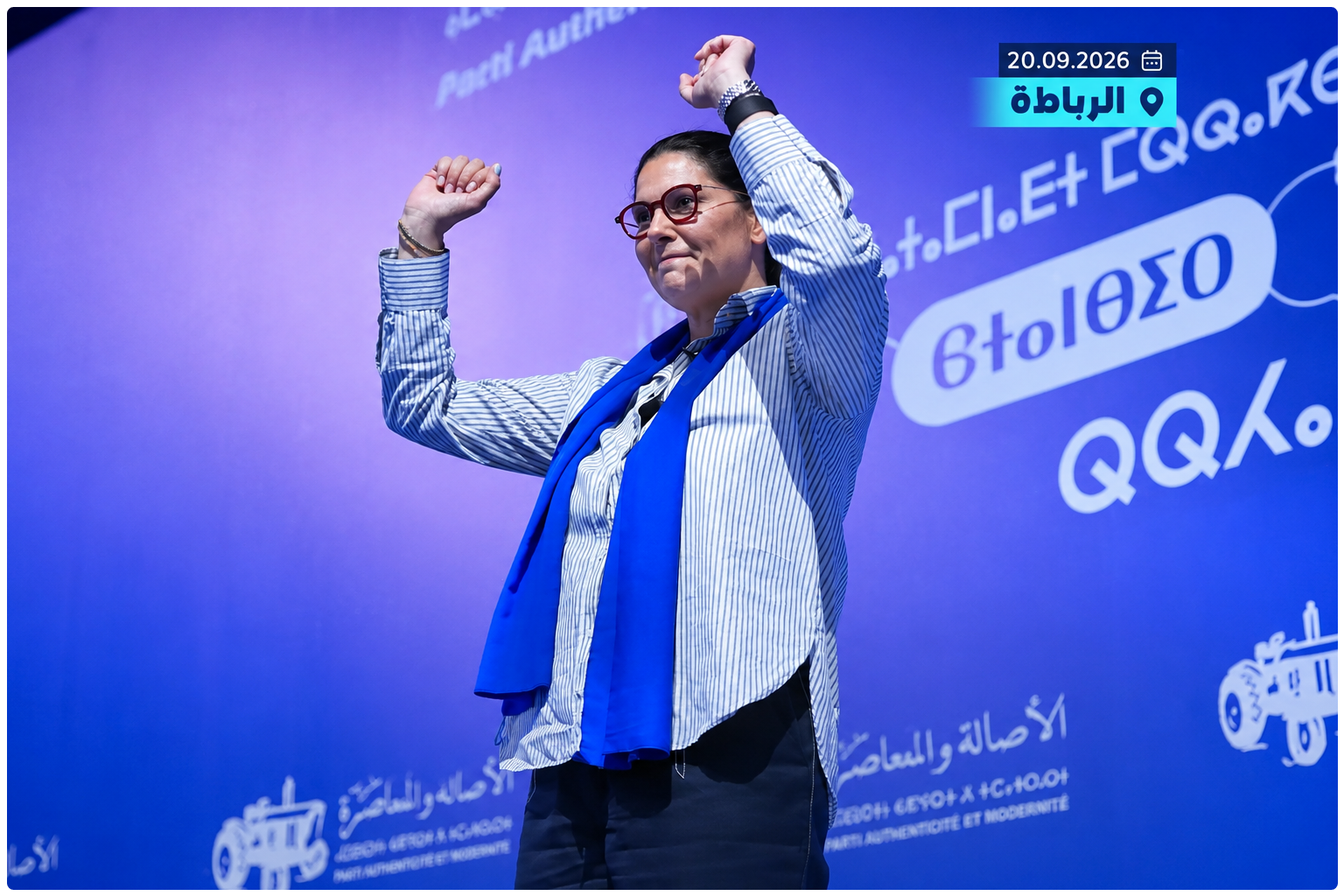
King Mohammed VI has appointed Fatima Zahra Mansouri as Morocco’s first woman prime minister, breaking a political barrier in the North African kingdom and placing her at the head of a government facing growing economic and social pressure.
The 50-year-old lawyer was asked to form a new government after the Authenticity and Modernity Party, known as PAM, won the largest number of seats in the September 23 parliamentary election. The party secured 97 seats in the 395-member House of Representatives but fell well short of the majority required to govern alone.
Mansouri must now negotiate a coalition and submit her proposed cabinet for royal approval. The National Rally of Independents finished second with 66 seats, while the Istiqlal Party won 65. The Islamist Justice and Development Party recovered from its heavy defeat in 2021 to secure 54 seats but has said it will remain in opposition.
Although the position is commonly described as prime minister, Morocco’s 2011 Constitution formally uses the title “head of government”. The constitution requires the king to appoint the officeholder from the political party that wins the most seats in parliamentary elections.
Morocco remains a constitutional monarchy in which the elected government manages domestic policy, the economy and public administration, while the king retains extensive authority over defence, foreign policy, religion and strategic state institutions. Mansouri’s appointment is therefore historic, but it does not alter the central position of the monarchy within the political system.
Her elevation follows an 18-year political career. Mansouri became mayor of Marrakesh in 2009, becoming one of the first women to lead a major Moroccan city. She later served as minister responsible for national territorial planning, urban development, housing and city policy and emerged as one of the principal figures in PAM’s collective leadership.
She now becomes only the second woman to lead a government in the Arab world, after Najla Bouden served as Tunisia’s prime minister between 2021 and 2023. Women have gradually gained greater representation in Moroccan public life, including through parliamentary quotas and appointments to ministerial and municipal positions, but executive power has remained overwhelmingly male.
The election that brought Mansouri to office also revealed considerable public disengagement. Only about six million of Morocco’s 15.8 million registered voters cast ballots, producing a turnout of approximately 38%, the lowest recorded in the country since 2007.
Her government will face immediate pressure to create jobs, increase wages and control living costs. Youth unemployment and dissatisfaction with public services have fuelled demonstrations, while large state investments linked to the 2030 FIFA World Cup have faced questions from Moroccans who want greater spending on hospitals, schools and employment.
Morocco will co-host the tournament with Spain and Portugal. Mansouri’s administration will oversee major stadium, transport and urban-development projects while attempting to ensure that the investment produces lasting benefits rather than widening regional and social inequalities.
Coalition-building will provide the first test of her authority. PAM has previously ruled alongside the National Rally of Independents and Istiqlal, but electoral losses and disagreements between the parties could complicate negotiations.
Mansouri’s appointment marks an important advance for women in Moroccan politics, but the durability of that breakthrough will depend on what follows. Forming a stable coalition is only the beginning. Her government must now turn a historic appointment into measurable progress on employment, prices, public services and political trust.