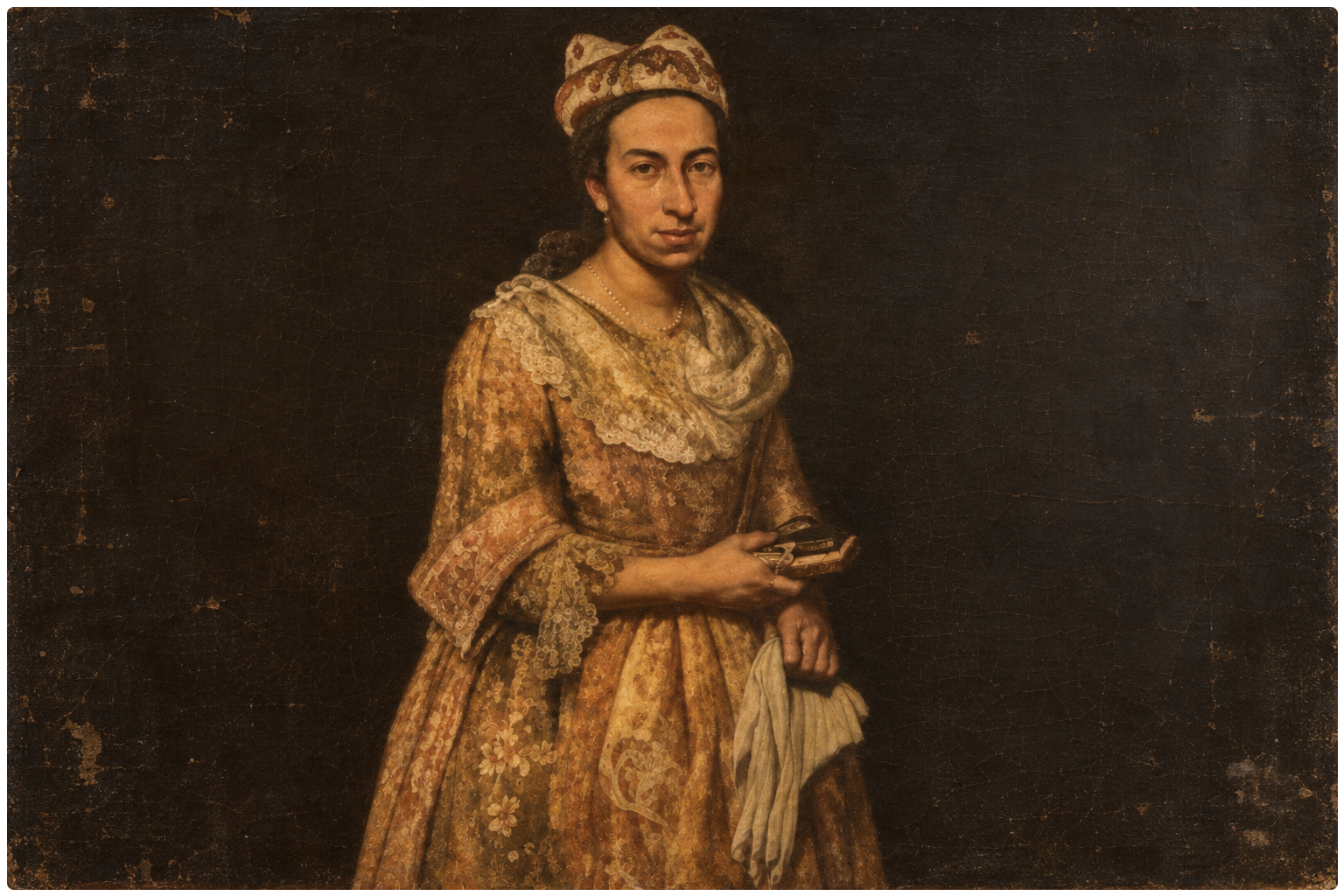
An Argentine court has approved the return of an 18th-century painting looted by the Nazis from a prominent Dutch-Jewish art dealer, bringing an extraordinary restitution case closer to an end more than eight decades after the artwork disappeared.
The painting, “Portrait of a Lady,” belonged to Jacques Goudstikker, one of Europe's leading art dealers before the Second World War. His collection included works by artists such as Rembrandt and Vermeer and comprised roughly 1,100 paintings when Nazi Germany invaded the Netherlands in 1940.
Goudstikker fled Amsterdam with his wife and young son following the invasion but died in an accident aboard a ship while escaping Europe. His extensive collection was subsequently sold under duress to Nazi officials, with a large portion acquired by Hermann Göring, one of Adolf Hitler's most powerful deputies and a prolific collector of looted art.
“Portrait of a Lady” disappeared for more than eight decades.
Its whereabouts finally emerged in August 2025 in an unlikely place: an online advertisement for a house for sale in Mar del Plata, Argentina.
Journalists from the Dutch newspaper Algemeen Dagblad were investigating Friedrich Kadgien, a senior Nazi financial official who fled Europe after the war, when they noticed the portrait hanging above a green sofa in photographs of a property belonging to his daughter, Patricia Kadgien.
The real-estate listing disappeared shortly after the newspaper published its findings. Argentine police subsequently searched the property but initially failed to locate the artwork. More than a week later, Kadgien's lawyer handed the painting over to authorities.
Friedrich Kadgien had worked as a financial adviser within the Nazi regime and handled foreign currency, precious metals and confiscated property. After Germany's defeat, he escaped first to Switzerland and later settled in Argentina, where he died in 1978 without facing prosecution for war crimes. How the painting eventually came into his possession remains unclear.
Patricia Kadgien and her husband, Juan Carlos Cortegoso, were charged with aggravated concealment after prosecutors accused them of hiding the painting despite knowing that Argentine and international investigators were searching for it.
Judge Santiago Inchausti on Friday approved an agreement under which the couple surrendered any claim to the painting and consented to its return to Goudstikker's sole surviving heir, Marei von Saher.
In exchange, the couple will avoid a criminal trial but remain under judicial supervision for two years. They are also required to make payments to a hospital in Mar del Plata and keep authorities informed about their whereabouts.
The investigation produced another unexpected development concerning the painting itself.
For decades, “Portrait of a Lady” had been attributed to Italian Baroque painter Giuseppe Vittore Ghislandi. Goudstikker's own records listed it under Ghislandi's name, and it had been exhibited as his work in Amsterdam before the war.
However, a court-ordered examination by Argentina's National Academy of Fine Arts concluded that the portrait was actually painted by Italian artist Giacomo Antonio Melchiorre Ceruti. Experts nevertheless authenticated it as the same painting that formed part of Goudstikker's collection. Its estimated value is approximately €250,000, or around $290,000.
Von Saher, who lives in the United States, has spent decades attempting to recover artworks taken from her family's collection. She has agreed to allow “Portrait of a Lady” to be exhibited temporarily in Argentina before it is transferred to her.
The case may not end with this painting. During searches of properties belonging to Kadgien and her sister, Argentine authorities seized two other 19th-century paintings as well as prints and engravings. Investigators are now examining whether any of those works were also looted during the Nazi era.
The return of “Portrait of a Lady” adds another chapter to the continuing international effort to identify and restitute hundreds of thousands of artworks and cultural objects seized, forcibly sold or displaced during Nazi persecution and the Second World War.