A Nigerian military aircraft has crashed in the southwestern state of Ondo, killing all 32 people aboard and prompting President Bola Tinubu to declare three days of national mourning.
The Nigerian Air Force ATR-42 was carrying 25 passengers and seven crew members when it went down near a naval base in Igbokoda on Monday. The aircraft had departed Benin City and was travelling to Lagos on what authorities described as a routine mission.
Air traffic controllers lost contact with the aircraft at approximately 9.13 am local time. Repeated attempts to reach the crew by radio were unsuccessful, according to Aviation and Aerospace Development Minister Festus Keyamo.
The wreckage was subsequently located near the naval installation in Igbokoda, a riverine community and the administrative headquarters of the Ilaje Local Government Area. Search-and-rescue teams from the military and other emergency agencies were deployed to the area, but no survivors were found.
32 People Aboard Crashed Military Aircraft As Locals, Emergency Services Search Igbokoda. Villagers that came to rescue are already arguing among themselves 💔 https://t.co/7978YsC7kN
— FS YUSUF (@FSYusuff) October 5, 2026
President Tinubu confirmed the deaths in an official statement issued by the Nigerian presidency. He ordered flags to be flown at half-mast across the country during the mourning period.
“This is a painful moment for our Armed Forces and for the entire nation,” Tinubu said, adding that the identities of those killed would be released after their families had been informed.
The passengers were described by the presidency as Nigerian Air Force personnel. Their ranks, individual duties and the precise purpose of their journey have not yet been disclosed.
Tinubu has directed the Nigerian Air Force to begin a comprehensive investigation into the accident. The inquiry is expected to examine the aircraft’s maintenance records, communications with air traffic control, weather conditions, crew actions and any technical failure that may have occurred before impact.
No preliminary cause has been announced. Authorities have not reported receiving a distress call from the pilots, and there is currently no evidence that the aircraft was attacked. Early reports referring to the plane as a helicopter were incorrect.
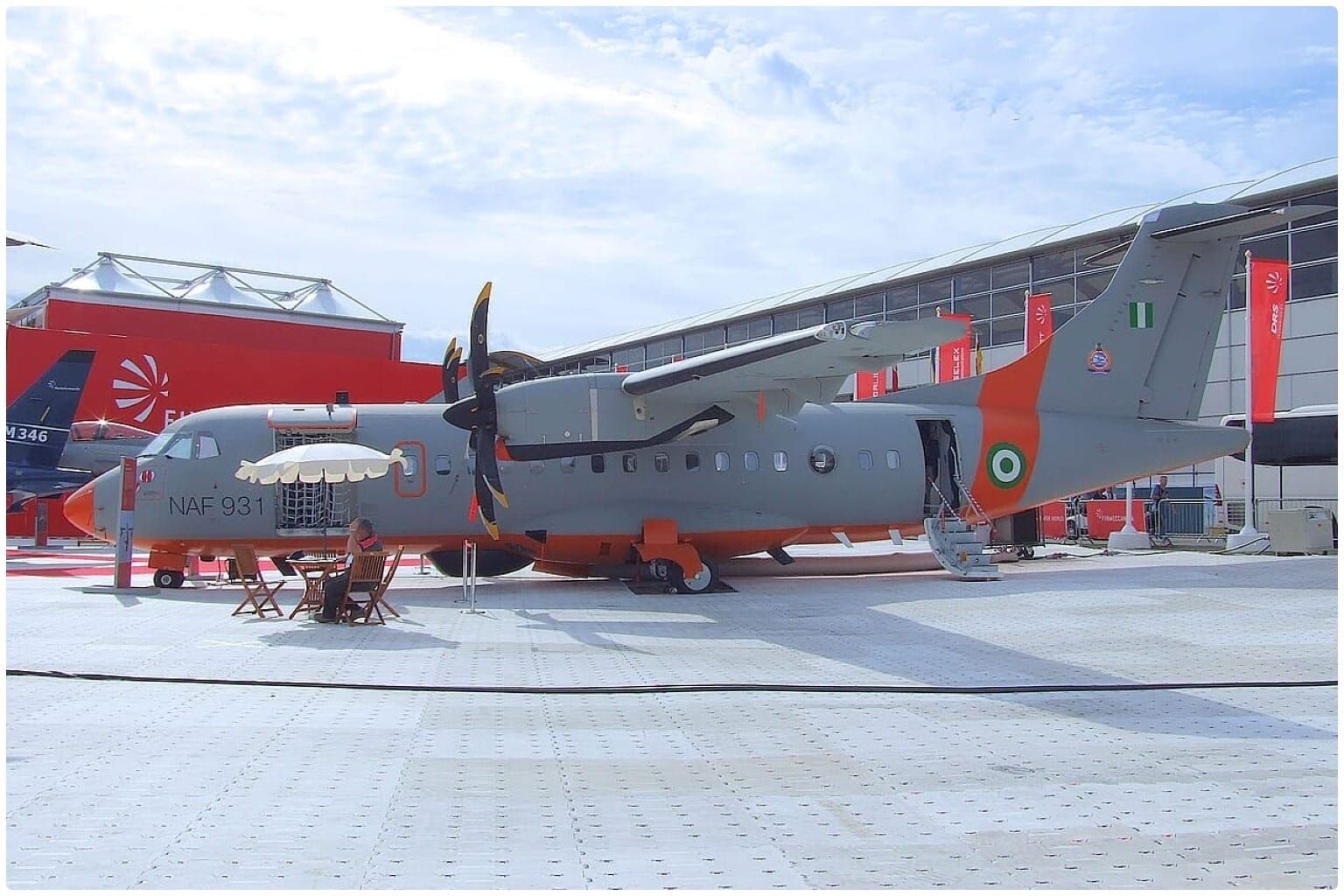
The aircraft was identified as an ATR-42, a twin-engine turboprop originally developed for regional passenger operations. Military versions can be modified for maritime patrol, intelligence gathering, surveillance, reconnaissance and personnel transport.
The Nigerian Air Force operates specially configured ATR-42 aircraft as part of its surveillance fleet. Its official account of the fleet’s development says the platform has been used to support operations against insurgency and other forms of organised crime.
The crashed aircraft was reported to carry registration NGR 931. That suggests it was not the reactivated NAF 930 aircraft highlighted by the Air Force in 2020, although investigators will need to establish the airframe’s full service, maintenance and operational history.
The civilian ATR 42-500 usually carries about 48 passengers in its standard configuration, according to technical information published by its manufacturer. Military aircraft can have significantly different internal layouts because surveillance equipment, communication systems and operator stations replace some passenger seating.
Igbokoda lies in a coastal and oil-producing part of Ondo State, surrounded by waterways, creeks and difficult terrain. Witnesses reported hearing a sound resembling thunder before the crash and seeing wreckage near the water. The location complicated the initial response, with boats used during the recovery operation.
The accident is among Nigeria’s deadliest military aviation disasters in recent years. In May 2021, army chief Lieutenant General Ibrahim Attahiru and ten other officers were killed when a military aircraft crashed while attempting to land at Kaduna International Airport during poor weather.
Nigeria has also lost combat and training aircraft during operations against Boko Haram, armed groups and criminal networks. However, the cause of each accident has varied, and the country’s previous military crashes do not establish what brought down the ATR-42 in Ondo.
Military aircraft are regulated outside the authority of Nigeria’s civil aviation agencies. Keyamo nevertheless said his ministry had offered the Air Force its full cooperation, including assistance from agencies involved in airspace management, emergency response and technical aviation expertise.
Investigators will now seek the aircraft’s flight-data and cockpit-voice recorders, if fitted and recoverable, while examining the wreckage and communications before contact was lost. Recovery teams must also formally identify the victims and return their remains to their families.
The crash has left the Nigerian Air Force facing the loss of 32 personnel in a single incident and urgent questions about what happened during a short domestic flight. Until investigators recover and analyse the available evidence, any explanation involving mechanical failure, weather or human error remains speculative.