Costa Rican economist Rebeca Grynspan has emerged as the frontrunner to become the next United Nations secretary-general after leading the latest informal vote among members of the Security Council.
Grynspan received 10 “encourage” votes, three “discourage” votes and two expressions of “no opinion” in the fourth secret straw poll conducted by the 15-member council. Guyana’s UN ambassador Carolyn Rodrigues-Birkett and Argentine diplomat Rafael Grossi followed with eight encouraging votes each.
The result does not guarantee Grynspan the position. The straw polls are non-binding and are intended to test support for the candidates before the Security Council begins the formal selection process. It is also not publicly known whether any of her three discouraging votes came from a permanent council member.
The United States, China, Russia, France and the United Kingdom hold veto power over the final recommendation. A candidate who attracts sustained opposition from any one of them is unlikely to advance, regardless of support from the council’s ten elected members.
Grynspan has nevertheless displayed consistent support across the four rounds. She led the first poll in July, was narrowly overtaken by Rodrigues-Birkett in August and returned to the top in the third and fourth votes. Her latest result also places her above the nine-vote threshold normally required for a council decision, although avoiding a permanent-member veto remains the more difficult test.
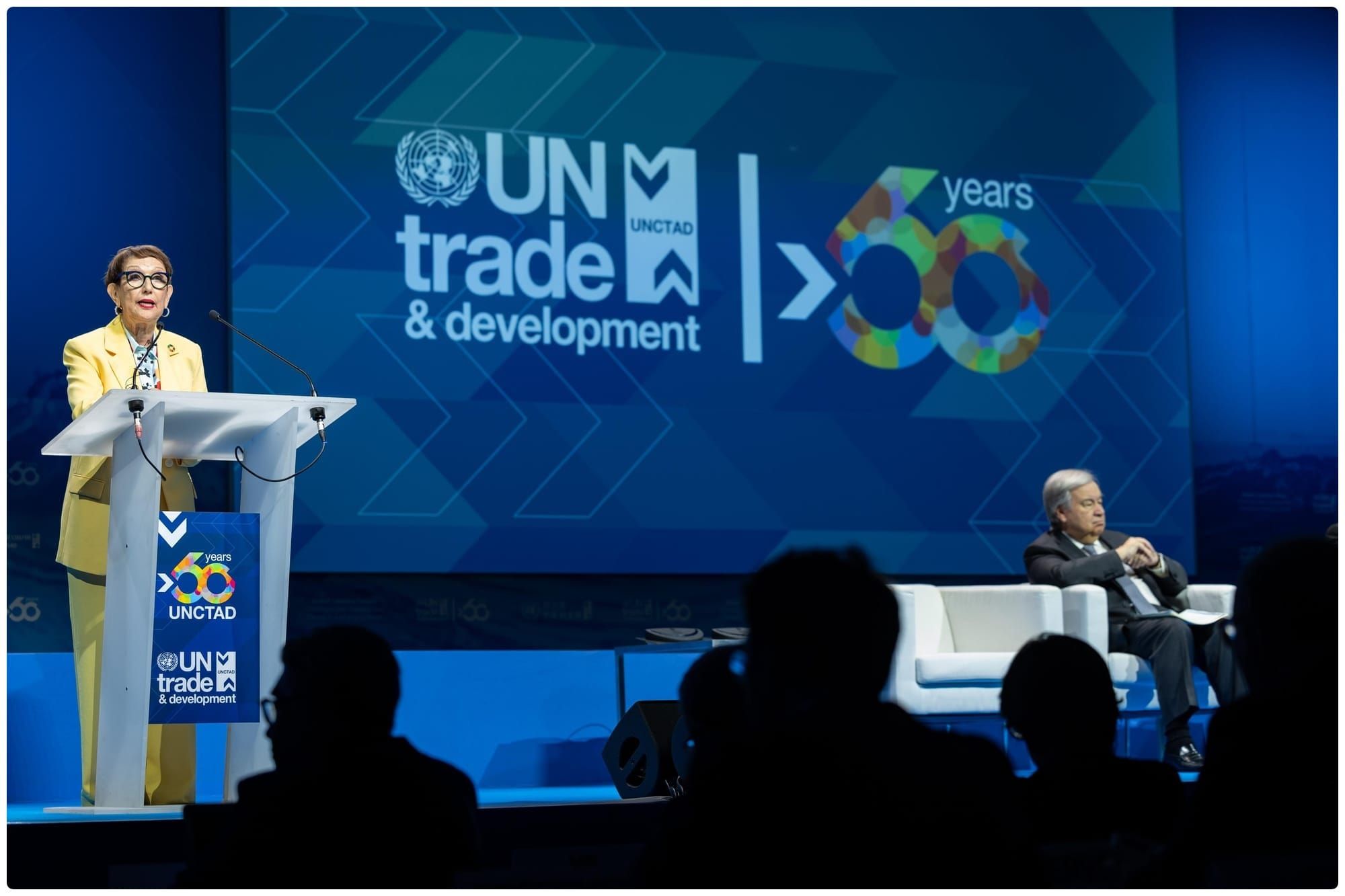
Costa Rica formally nominated Grynspan in March. She is currently secretary-general of UN Trade and Development, becoming the first woman to lead the organisation when she took office in 2021. Her earlier positions include vice-president of Costa Rica, associate administrator of the UN Development Programme and secretary-general of the Ibero-American General Secretariat.
Seven candidates remain in the contest after former Chilean president Michelle Bachelet withdrew her candidacy. Rodrigues-Birkett and Grossi remain Grynspan’s closest rivals, while additional names could still enter before the council settles on a consensus candidate.
The selection carries considerable historical significance. No woman has served as UN secretary-general since the organisation was founded in 1945. Four of the seven remaining candidates are women, increasing pressure on the Security Council to break an eight-decade pattern of male leadership.
There is also an informal expectation that the position should return to Latin America and the Caribbean. The region last held the office when Peru’s Javier Pérez de Cuéllar served from 1982 to 1991. Such regional rotation is a political convention rather than a formal rule, but it frequently influences negotiations.
The successful candidate will inherit an organisation facing severe challenges. Wars, divisions among major powers, reduced American funding and repeated deadlock within the Security Council have weakened the UN’s ability to respond to international crises. The next leader will also face demands to reduce costs, reform overlapping agencies and rebuild confidence in multilateral diplomacy.
António Guterres will step down on December 31 after completing two five-year terms. The Security Council must recommend a successor to the 193-member General Assembly, which formally makes the appointment. The new secretary-general will take office on January 1, 2027.
Grynspan currently holds the clearest advantage, but the decisive stage has not yet begun. Her prospects will ultimately depend less on leading the straw polls than on persuading all five veto-wielding powers that they can accept her.