Donald Trump wants American technology companies to build their artificial intelligence infrastructure at home, even as opposition to new data centres grows across the United States. On Friday, he threatened heavy taxes on companies that choose overseas locations, arguing that America cannot afford to surrender an industry he considers essential to its technological rivalry with China.
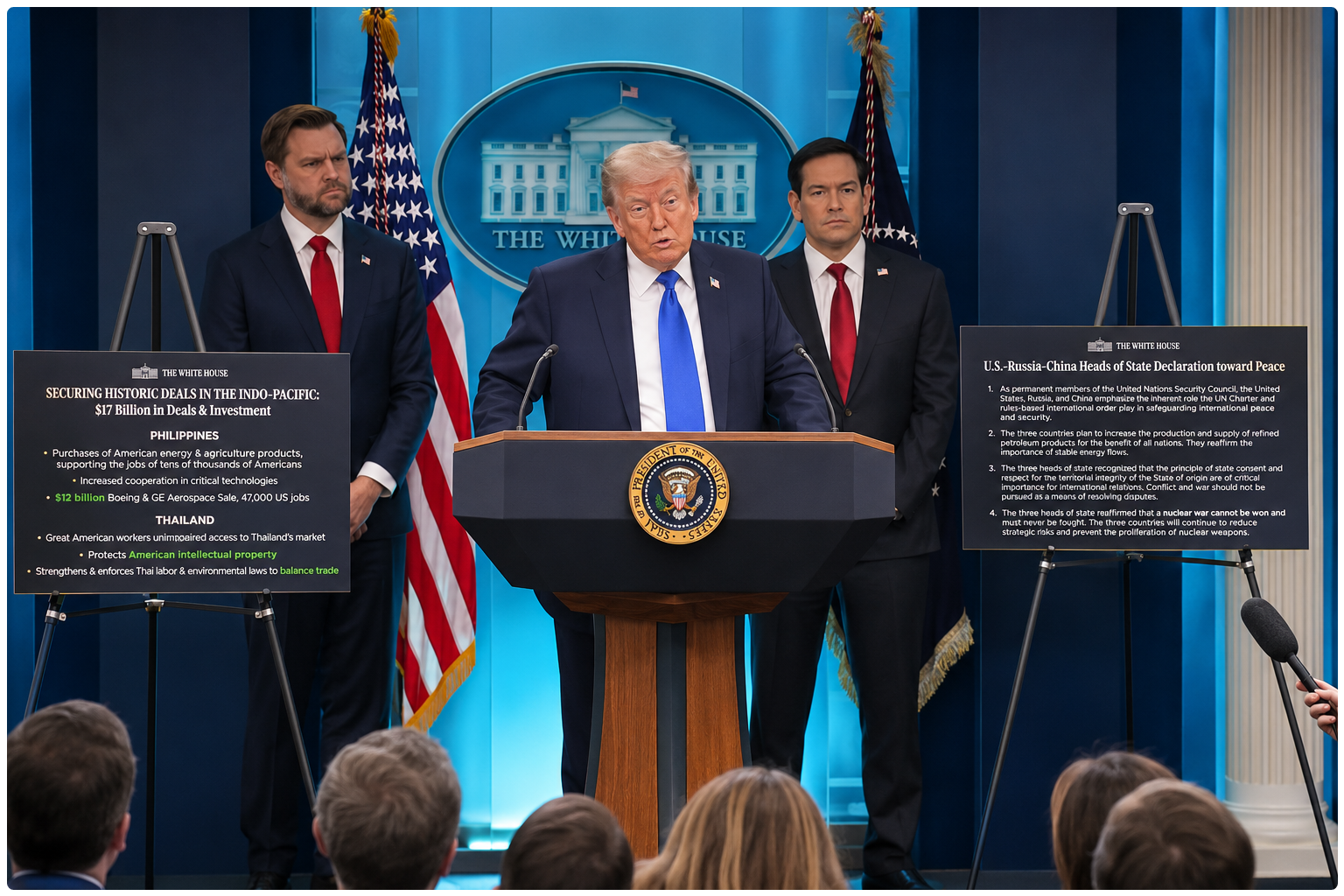
Speaking at a White House news conference on November 20, shortly after returning from Asia, Trump warned that companies constructing data centres abroad would face substantial financial penalties.
"We're not going to allow our companies to build data centers outside of our country," Trump said, according to the White House account of his remarks.
He threatened a "tremendous tax" on companies pursuing overseas projects, but provided no rate, implementation timetable or explanation of how the government would collect it.
The warning adds a punitive element to an industrial policy that has so far relied heavily on encouraging domestic construction. In July 2025, Trump signed an executive order accelerating federal permits for major data centres, including measures intended to simplify environmental reviews and support the energy infrastructure needed to operate them.
The administration believes American leadership in AI depends on controlling the facilities where increasingly powerful computing systems are trained and operated. Its concern extends beyond jobs and investment to the possibility that US-developed technology could strengthen foreign competitors.
That approach has already produced new restrictions on overseas access to advanced American AI chips, particularly where foreign data centres could allow Chinese customers to use computing power despite export controls.
Trump's latest threat would go further by penalising the location of American companies' infrastructure, potentially affecting investments in allied countries as well as competing economies.
Yet American technology firms have practical reasons to expand internationally. Data centres require reliable electricity, suitable land, substantial cooling capacity and proximity to customers. Building closer to foreign users can reduce delays and help companies comply with local data-storage requirements.
Domestic expansion faces its own difficulties. The US Department of Energy estimates that data centres could account for approximately 11.8% of American electricity consumption by 2030, placing additional pressure on power generation and transmission networks.
Communities have also challenged proposed developments over electricity costs, water consumption and land use. Similar disputes have spread internationally, with protests against data-centre construction reaching Microsoft's planned Amsterdam facility earlier this month.
Trump has urged Americans to welcome new facilities for their potential economic benefits. His proposal nevertheless places companies between an administration demanding investment at home and communities increasingly scrutinising the consequences of that investment.
Any attempt to introduce a new federal tax would also face congressional scrutiny. Under Article I of the US Constitution, Congress holds the authority to levy taxes, and Trump's threat comes just weeks before Democrats take control of both chambers following the midterm elections. The administration has yet to identify an existing legal authority that would allow it to impose such a penalty without new legislation.
Meanwhile, the companies Trump wants to keep in America are already competing for electricity, land and regulatory approvals. Penalising overseas construction would do little on its own to resolve those constraints. The president can threaten to make foreign investment more expensive, but expanding American computing capacity will still require power grids, local authorities and communities to accommodate the facilities his administration wants built.