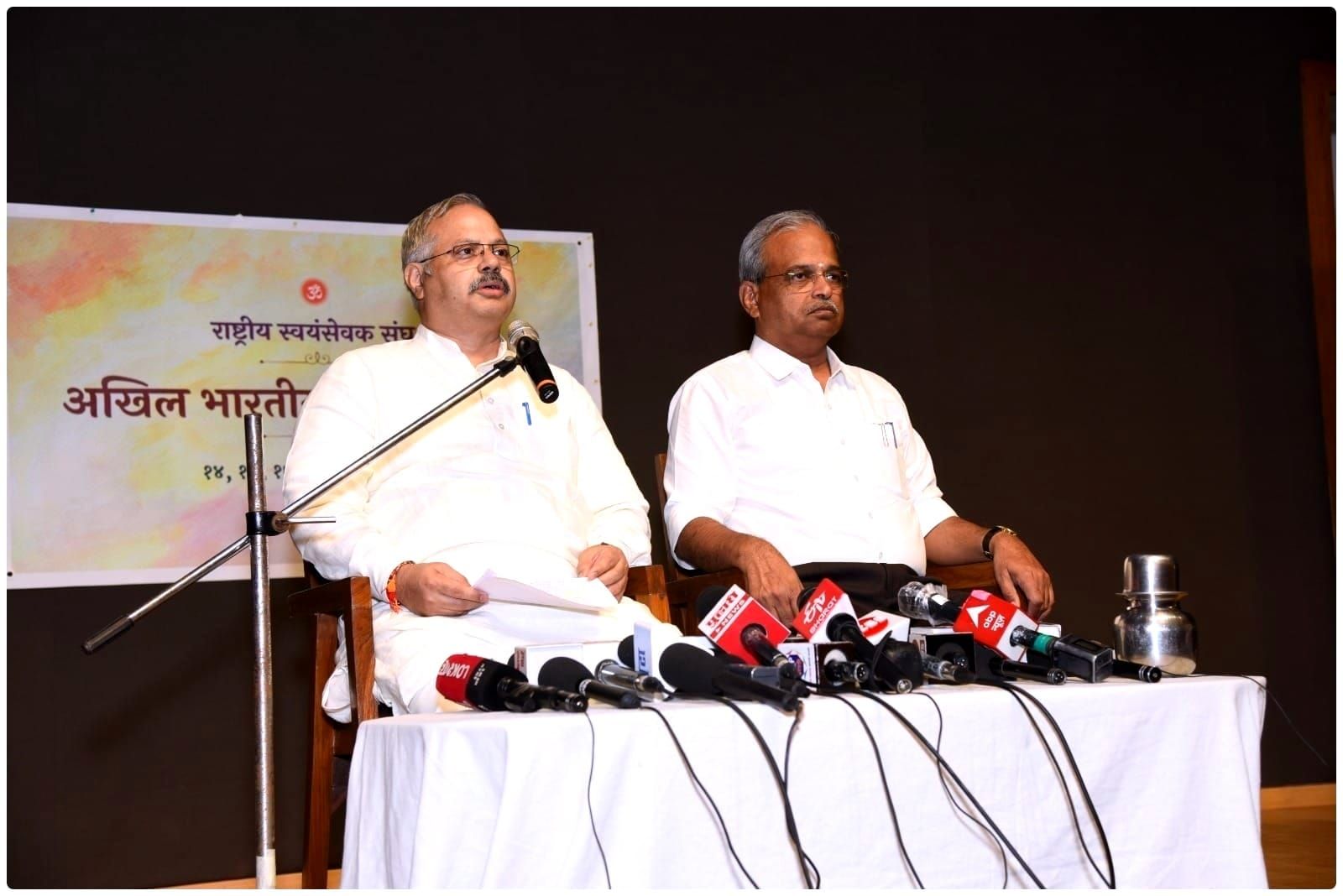
The Rashtriya Swayamsevak Sangh has called for a nationwide National Register of Citizens, arguing that identifying Indian citizens and detecting illegal entrants have become necessary for the country’s unity, integrity and security.
RSS national publicity chief Sunil Ambekar said the proposed register could help address illegal immigration, demographic changes and the inclusion of ineligible individuals in electoral rolls. He also supported granting citizenship to eligible persecuted minorities from neighbouring countries under the Citizenship Amendment Act. The demand comes as India conducts its Census and the Election Commission undertakes an intensive revision of electoral rolls.
An NRC would create a verified register of Indian citizens, allowing authorities to distinguish citizens from foreign nationals living in the country without valid documentation. Supporters argue that such a system is essential because illegal entrants can obtain forged documents, access welfare programmes and, in some cases, enter electoral rolls.
The issue is particularly significant along India’s 4,096-kilometre border with Bangladesh, which passes through West Bengal, Assam, Meghalaya, Tripura and Mizoram. Large stretches consist of rivers, agricultural land and densely populated settlements, making round-the-clock surveillance difficult despite fencing, floodlights and technological monitoring.
Undocumented migration from Bangladesh has been debated for decades, particularly in Assam and West Bengal. However, the exact number of illegal Bangladeshi nationals living in India remains unknown. The Union government has previously told Parliament that such migration is clandestine and that no accurate nationwide estimate is available.
The absence of a reliable figure has strengthened the argument for a formal identification process. Without a verified register, authorities must rely on fragmented police investigations, immigration records and individual document checks, making coordinated enforcement and lawful repatriation more difficult.
The security dimension has become more prominent as relations between New Delhi and Dhaka remain strained following the 2024 removal of Sheikh Hasina, who subsequently took refuge in India. Her presence, Bangladesh’s extradition demands and concerns over growing Chinese influence have complicated bilateral relations.
Indian and Bangladeshi border forces agreed in June to expand coordinated patrols, intelligence sharing and action against trafficking, smuggling and transnational criminal networks. India also asked Dhaka to verify the nationality of more than 2,860 people suspected of being undocumented Bangladeshi nationals so that the legal repatriation process could proceed.
For NRC supporters, the changing regional environment makes citizenship verification a national-security requirement rather than solely a political issue. An unidentified population can create opportunities for document fraud, organised crime, human trafficking and infiltration by hostile networks. It can also place additional pressure on land, employment and public services in vulnerable border districts.
India has so far conducted a full NRC exercise only in Assam, where the final list published in 2019 excluded about 1.9 million applicants. Their exclusion did not automatically make them foreigners, as individual cases remained subject to tribunals and judicial review.
A nationwide exercise would be considerably larger and would require clear documentation rules, accessible appeals and protection for genuine citizens whose records are incomplete. The RSS maintains that the process should identify illegal entrants while ensuring that eligible refugees receive citizenship under existing law.
The renewed demand places the NRC back at the centre of India’s citizenship debate. With undocumented migration difficult to quantify and the eastern border exposed to changing political and security conditions, the central question is whether India can manage its borders effectively without first establishing a reliable record of who its citizens are.