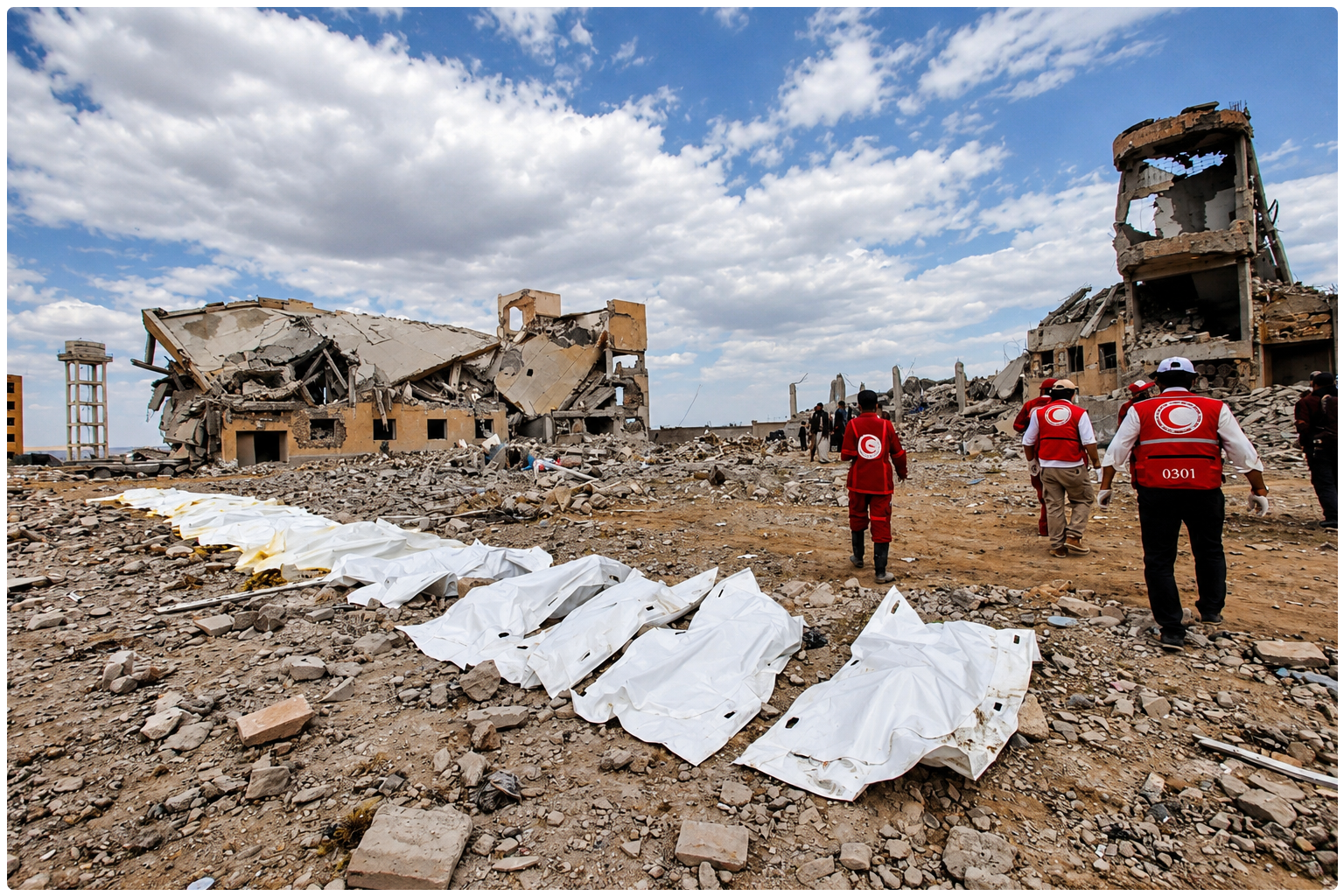
A crowded market in northern Yemen was struck by airstrikes on Wednesday, October 28, leaving at least 14 people dead, including three children and two women, according to Houthi-controlled health authorities. The attacks reportedly hit shops, nearby homes and a fuel station in Al-Hazm, the capital of Al-Jawf governorate, with local officials accusing the Saudi-led coalition of carrying out the bombardment.
The health ministry initially reported 13 people killed and 16 injured. By Wednesday night, ministry spokesman Anis al-Asbahi had raised the reported death toll to 14, with 15 others injured. The casualties have not been independently verified, and Saudi Arabia has not publicly acknowledged responsibility for the strikes.
According to the ministry's initial account of the attack, the market was busy with shoppers when aircraft struck the surrounding area. The bombardment reportedly damaged commercial premises, residential buildings and a nearby fuel station, leaving the authorities assessing damage across several civilian locations.
The Houthi administration condemned the attack and accused Saudi Arabia of deliberately targeting civilians. Government spokesman Omar al-Bukhaiti warned that the deaths would not go unanswered, while authorities in Sanaa called for international action against the coalition.
Today, Saudi Arabia committed a major crime in Al-Jawf province, bombing a popular market and wounding and killing more than thirty citizens. But because we are poor, no one will speak about them, and no one will condemn Saudi Arabia except for the free people. https://t.co/mn4m8Xyo6X
— ابراهيم ناجي Ibrahim Naji (@Ibrahim___Yemen) October 28, 2026
Saudi Arabia has previously described its military campaign as necessary to suppress Houthi missile and drone attacks against the kingdom. In an October 26 statement, coalition spokesman Major General Turki al-Maliki said Saudi-led forces had destroyed missile storage tunnels, launchers and military equipment in Houthi-controlled territory. The statement did not address Wednesday's attack on Al-Hazm.
Al-Jawf has remained an active conflict zone during the renewed fighting between the Houthis and forces aligned with Yemen's internationally recognised government. The province lies northeast of Sanaa and borders Saudi Arabia, giving it military importance for both sides.
The reported market deaths follow airstrikes on homes and industrial facilities in Sanaa and Hodeidah earlier this month, when Houthi authorities reported at least 15 people killed. In Dhamar, three children from the same family were reportedly killed in another attack attributed to Saudi aircraft.
The renewed hostilities have also reached civilian infrastructure inside Saudi Arabia, with Houthi missiles and drones repeatedly targeting airports and energy facilities. Both sides have continued military operations despite diplomatic efforts to contain the fighting.
During his October 9 briefing to the United Nations Security Council, Special Envoy Hans Grundberg warned that Yemen had returned to full-scale war. He called on the parties to distinguish military objectives from civilian locations and take precautions to protect people caught in the fighting.
The reported destruction at Al-Hazm raises questions about the targets selected and the precautions taken before the strikes. No independent investigation has established whether military personnel or equipment were present in the area, and the coalition has not publicly explained the intended objectives of the operation.
For the families affected, the immediate consequences extend beyond the deaths and injuries. Damage to market stalls, shops and fuel supplies threatens livelihoods in a province where years of conflict have already disrupted trade and access to essential services.