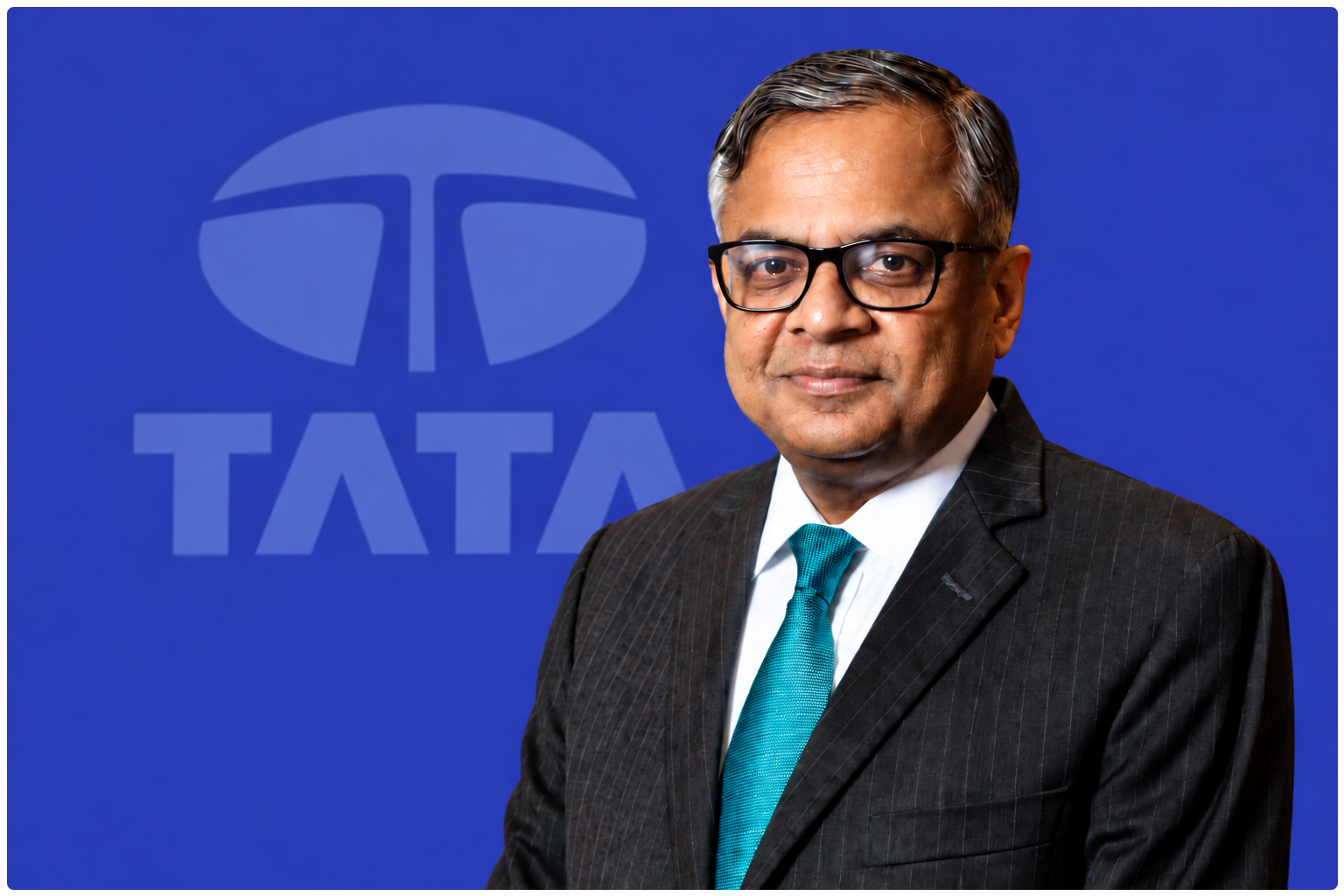
Tata Sons has reappointed N. Chandrasekaran as executive chairman for another five years, reversing what had appeared to be an impending leadership transition at the heart of India’s largest business group.
The board approved the fresh term at a meeting on September 17, extending Chandrasekaran’s tenure beyond February 2027, when his current term was due to end. The decision comes just weeks after Chandrasekaran had informed the board that he did not intend to seek another term, making the extension a significant U-turn for both him and Tata Sons.
Chandrasekaran has led Tata Sons since 2017 and oversees a sprawling group with interests ranging from software and automobiles to aviation, steel, semiconductors and consumer businesses. His new term would be his third five-year stint at the holding company and provides continuity at a time when Tata is dealing with several major strategic and regulatory challenges.
The decision was not unanimous. Tata Trusts chairman Noel Tata opposed the reappointment, arguing that it went against Chandrasekaran’s own earlier decision to step down and the Trusts’ acceptance of that move. Tata Trusts, which collectively controls about two-thirds of Tata Sons, has historically played a decisive role in the governance of the holding company.
The disagreement has opened up a larger debate over governance within the Tata Group. Sources reported that Noel Tata also raised concerns over whether the reappointment complied with Tata Sons’ Articles of Association, which contain provisions governing the role of Trust-nominated directors in key decisions. That dispute could become increasingly important if the Trusts choose to challenge the board’s decision.
The reappointment also comes as Tata Sons faces mounting pressure over a possible stock market listing. The Reserve Bank of India has classified Tata Sons as an “upper-layer” non-banking financial company, bringing it under rules that could require it to list. Earlier this week, the RBI filed a caveat in the Bombay High Court after rejecting Tata Sons’ attempt to surrender its NBFC registration, ensuring the central bank would be heard if the company challenges the requirement.
The board has now also taken steps toward a possible listing, according to reports, marking a major shift for a company that has long resisted going public. A Tata Sons IPO would be one of the most consequential corporate listings in India, given the holding company’s stakes in Tata Consultancy Services, Tata Motors, Tata Steel, Air India and several other major businesses.
Markets reacted positively to the leadership decision. Shares of several Tata Group companies rose after news of Chandrasekaran’s extension emerged, with investors appearing to welcome continuity at the top during a period of regulatory and strategic uncertainty.
Chandrasekaran’s new term therefore does more than settle the immediate question of who will lead Tata Sons after 2027. It places him at the centre of what could become one of the most important periods in the group’s recent history, as Tata navigates a possible listing, internal governance tensions and major investments across aviation, semiconductors, electric vehicles and other businesses.