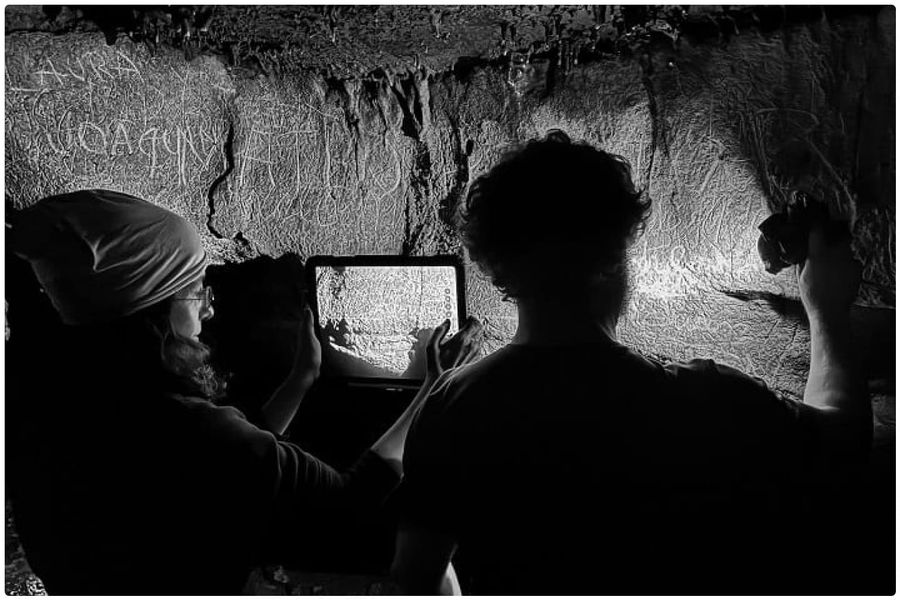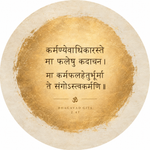
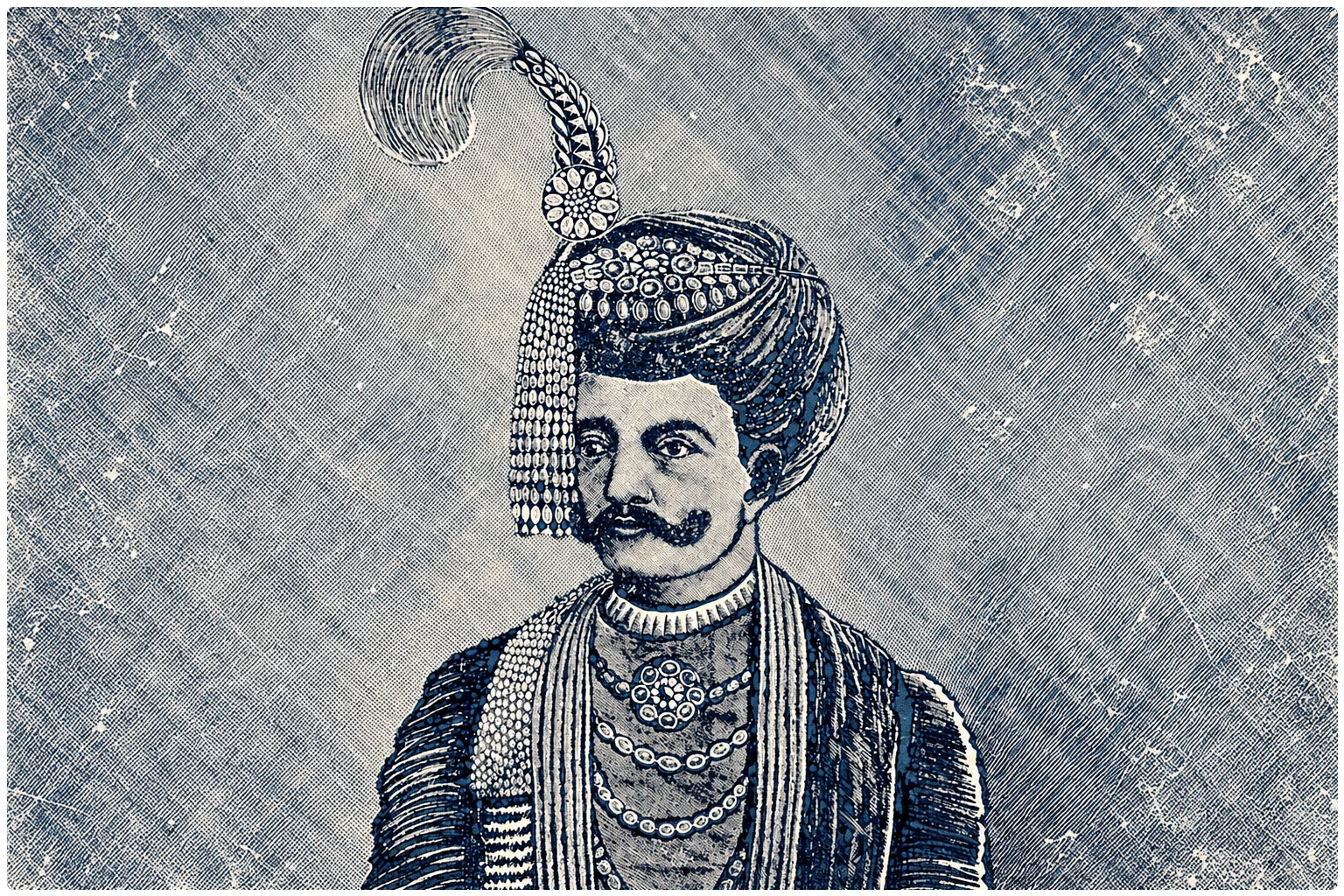
In the ruins of Hampi, stone remembers what history has forgotten. The bazaars are empty now. The royal pavilions have lost their roofs. Grass grows through courtyards where ambassadors once waited beneath silk canopies, and the Tungabhadra moves quietly past granite hills. Yet everywhere in temple towers, broken gateways, enormous platforms and inscriptions cut into rock there remains the outline of a civilisation that once appeared indestructible.
At the height of that civilisation stood a man named Krishnadevaraya.
He ruled Vijayanagara for only about twenty years, from 1509 to 1529. But within those two decades, he defeated rebellious chiefs, broke the power of rival kingdoms, captured forts considered unconquerable, marched across the eastern Deccan, humbled the Sultan of Bijapur and presided over one of the most extraordinary periods of literary and architectural creation in the whole of India.
Poets compared him with the greatest rulers of legend. Inscriptions proclaimed him the conqueror of enemy kings. Generations remembered him as Andhra Bhoja, the great patron of Telugu learning; Kannada Rajya Rama Ramana, lord of the Kannada realm; and Mooru Rayara Ganda, the king who stood above three crowned rulers.
He was a warrior who wrote poetry about longing. A conqueror who understood irrigation. A devout Vaishnava who patronised institutions across religious traditions. A king celebrated in inscriptions as divine, but remembered in folklore as human enough to be corrected by a clever poet.
Tuluva Dynasty
Krishnadevaraya was a son of Tuluva Narasa Nayaka, the formidable military commander who became the real power behind the Vijayanagara throne during one of the empire’s most dangerous periods.
The word Tuluva pointed to the family’s ancestral connection with Tulunadu, the Tulu-speaking coastal country stretching across what is now southern coastal Karnataka and northern Kerala. Narasa Nayaka belonged to a military family of Tulu origin that had entered imperial service. His father, Ishvara Nayaka, had also served as a commander, but it was Narasa who transformed the fortunes of the family.
He rose under Saluva Narasimha, first as a military commander and eventually as the man entrusted with holding the empire together. After Saluva Narasimha’s death in 1491, his young sons nominally inherited the throne, but real authority increasingly rested with Narasa Nayaka. He commanded the army, suppressed rebellions, confronted the Gajapatis and the Bahmani powers, and recovered territories that were slipping from imperial control. He carried titles that identified him as commander-in-chief, chief minister and protector of the realm. Although he did not formally proclaim himself emperor, he governed Vijayanagara in everything but name.
The dynasty is therefore called Tuluva because the family that seized its throne had come from the Tulu-speaking coastal region. By Krishnadevaraya’s time, however, the family belonged to a far larger and profoundly multilingual imperial culture. The court operated across Kannada, Telugu, Sanskrit and Tamil traditions, and Krishnadevaraya himself would become one of the greatest poets in Telugu literature.
Krishnadevaraya’s mother was Nagalamba, also remembered as Nagamba. His exact year and place of birth remain disputed, and dependable contemporary sources tell us almost nothing about his childhood. Much of what is confidently repeated today about his early adventures, conversations with teachers and signs of greatness supposedly visible from infancy belongs to later imagination rather than verifiable history. But the adult king gives us clues about the education of the boy.
He developed a formidable command of languages and literary traditions. He composed in Telugu, Sanskrit, moved within a multilingual court and ruled regions in which Kannada, Telugu and Tamil flourished. He was trained in warfare, administration, religious thought and the codes of kingship. His later writing reveals an intelligent being interested not merely in conquest, but in ports, taxation, agriculture, espionage, diplomacy and the obligations of a ruler toward ordinary cultivators.
When Narasa Nayaka died in 1503, Krishnadevaraya’s elder half-brother, Vira Narasimha, eventually took the throne and formally established the Tuluva line as Vijayanagara’s ruling dynasty. A famous story, preserved in the later chronicle associated with the Portuguese writer Fernão Nuniz, claims that the dying ruler ordered the minister Saluva Timmarasa to blind Krishnadevaraya so that the throne could pass to his own young son. Timmarasa supposedly presented the eyes of a goat instead, saving the prince and clearing his path to the crown.
Some historians have questioned it because inscriptions do not indicate an open rupture between the brothers. The tale may preserve a memory of succession anxiety, Or the story may have grown with each retelling. What can be said with confidence is that by 8 August 1509, Vira Narasimha was dead and Krishnadevaraya was king.
The Making of an Emperor
Inscriptions surrounded Krishnadevaraya with the language of power. He was the destroyer of enemy kings, the protector of dharma and the sovereign whose victories reached from southern rivers to the country of Kalinga.
One of the few surviving descriptions of his appearance comes from the Portuguese visitor Domingo Paes, who saw him around 1520. Paes described a man of medium height, fair complexion and powerful build “rather fat than thin” with marks of smallpox on his face. He was cheerful in disposition, respected foreign visitors and received them with courtesy. More importantly, Paes considered him an exceptionally able and just ruler.
Krishnadevaraya was known for physical discipline. He rode, trained with weapons and led from the front. Kingship, for him, was not performed only from a jewelled throne. It was performed on horseback, inside military camps, before fortified walls and among soldiers who had to believe that their ruler would share the dangers he demanded of them.
The city over which he ruled astonished its visitors. Paes described Vijayanagara to be as large as Rome and extraordinarily well supplied. Its wider metropolitan landscape contained agricultural fields, reservoirs, temples, residential quarters, workshops and bazaars. Foreign merchants brought horses through ports connected to Arabia and Persia. Precious stones, fine cloth, spices and metals circulated through its markets. Soldiers, mendicants, dancers, merchants, diplomats, priests and artisans lived within an urban world protected by successive lines of fortification.
Krishnadevaraya’s early campaigns were directed toward consolidating the empire. He subdued opposition in the south, including the powerful chief of Ummattur, and brought strategic territories around the Kaveri under firmer control.
These campaigns revealed a pattern that would define his reign. He did not remain in the capital while his commanders collected victories in his name. He accompanied armies, supervised sieges and presented himself as the centre of military action.
War in sixteenth-century southern India was not a procession of heroic sword fights. It was an enormous operation involving food, water, pack animals, siege equipment, cavalry horses, elephants, artisans, camp followers and intelligence networks. A king who led such an army had to manage a moving city. Krishnadevaraya understood this. His campaigns were acts of logistics as much as courage.
His most sustained eastern war was against Prataparudra Deva, the powerful Gajapati ruler of Odisha. The Gajapatis controlled a chain of strongholds extending deep into the Telugu region. To break their position, Krishnadevaraya had to take those forts one by one.
Udayagiri near Nellore was among the most formidable.
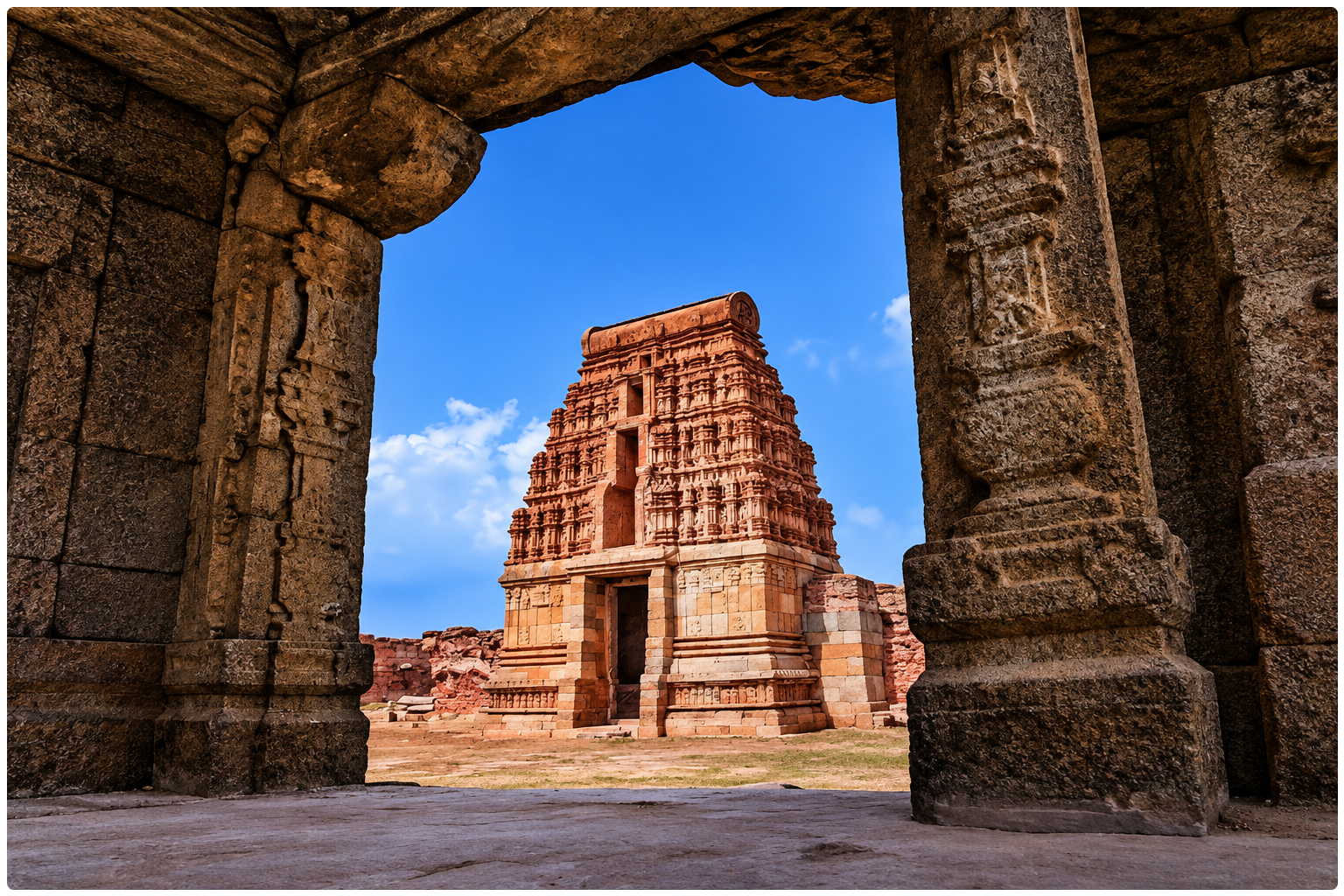
The fortress rose above the surrounding land, guarded by steep approaches and a narrow path that defenders could hold against a much larger force. It could not be taken by a dramatic cavalry charge. It had to be isolated, starved and methodically weakened.
The siege continued for many months. Indian chroniclers remember Krishnadevaraya ordering the difficult route widened so that his forces could approach more effectively. Supply lines were cut. The noose around the fortress tightened. The fortress eventually fell in 1514.
Victory did not end the campaign. Vijayanagara’s army advanced toward Addanki, Vinukonda, Bellamkonda, Nagarjunakonda. Kondavidu, another powerful Gajapati stronghold fell in 1515, and members of the Gajapati royal family and nobility were captured.
Krishnadevaraya pushed through the Telugu regions toward Kalinga. His victories were recorded in inscriptions and marked with gifts to temples. He made repeated visits to Tirumala, where he gave thanks for his success in battle, transforming military success into a public expression of divine favour.
The eventual settlement was reinforced through marriage. Krishnadevaraya married Prataparudra’s daughter, a Gajapati princess remembered in different traditions as Jaganmohini or Annapurna Devi. As part of the settlement, some territory north of the Krishna River was restored to Prataparudra. Krishnadevaraya knew when to turn victory into peace.
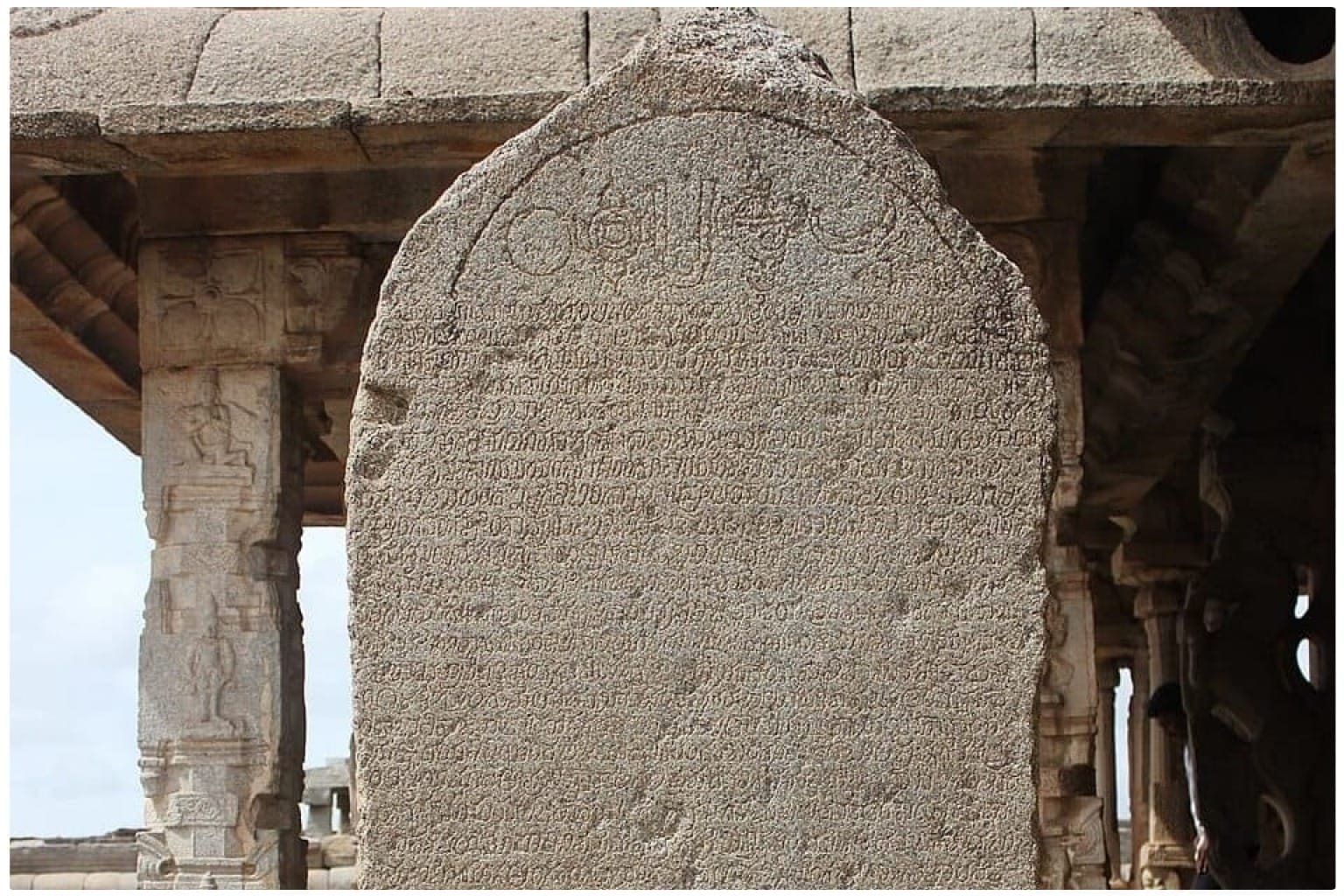
Amuktamalyada
During the eastern campaigns, Krishnadevaraya stopped at the temple of Maha Vishnu at Srikakulam on the banks of the Krishna.
There, according to the account placed within his own poem, a god entered the emperor’s dream.
Vishnu appeared before him in radiant splendour and commanded him to compose the story of Andal, the poet-saint whose love for the divine was so complete that she wore the garlands intended for God before they were offered.
The emperor asked which language he should write in. The divine voice told him to write in Telugu. From this inspiration emerged Amuktamalyada—“The Giver of the Worn Garland.”
It is difficult to imagine a greater contrast. The king laying siege to mountain fortresses was also writing of devotion, beauty and separation. The man whose inscriptions celebrated the capture of enemy princes entered the emotional world of Andal, a young woman consumed by her longing for God.
The poem is sensuous and observant. It notices bodies, seasons, flowers, food, villages and the smallest movements of human feeling. But within its devotional story, Krishnadevaraya also placed a philosophy of kingship.
A ruler, he wrote, must strengthen agriculture and protect cultivators. He must encourage merchants and make his ports attractive to foreign traders. He must ensure that horses, elephants and other valuable goods reach his kingdom rather than the kingdoms of his enemies. He must select ministers carefully, examine information from more than one source and prevent taxation from destroying prosperity. The sword may conquer territory, but only governance can keep it.
These passages reveal the mind behind the campaigns. Krishnadevaraya understood that forts depended on armies, armies depended on horses and revenue, and revenue depended on people being able to cultivate and trade. Power began not at the palace gate but in the field, the market and the port.
He was not a warrior who happened to patronise poets. He was a poet himself .
Krishnadevaraya’s reign became one of the great literary ages of southern India.
Allasani Peddana, honoured in tradition as the father of Telugu poetry, stood foremost among the poets of the court. His Manucharitramu carried Telugu literary expression into new realms of sophistication. Nandi Timmana composed the Parijatapaharanamu. Dhurjati gave poetic immortality to Kalahasti. Other scholars worked in Telugu, Kannada, Sanskrit and Tamil across the emperor’s dominions.
Later tradition gathered eight great Telugu poets around Krishnadevaraya and called them the Ashtadiggajas, the eight mighty elephants believed to support the eight directions of the world.
Among them the fascinating character was Tenali Ramakrishna.
In story after story, Tenali exposes frauds, punctures vanity, defeats rival scholars and escapes danger through intelligence. He even corrects the king. Krishnadevaraya may be the most powerful man in the empire, but he is not beyond laughter or argument.
These tales do more than entertain. They bring the emperor down from the inaccessible height of inscriptions. They place him inside a court where wit and intelligence can defeat power.
The emperor became greater, not smaller, because folklore allowed him to be challenged.
The Siege of Raichur
By 1520, Krishnadevaraya had defeated southern rebellions and broken the Gajapati hold over the Telugu region. One great contest remained.
Raichur stood between the Krishna and Tungabhadra rivers in a fertile and bitterly disputed region. Vijayanagara and the Deccan sultanates had fought over this fertile land for generations. The fort was more than a military position. It was a symbol of a ruler who commanded the frontier.
At the time, Raichur was held by Ismail Adil Shah of Bijapur.
Krishnadevaraya marched with a colossal army. Portuguese accounts give troop numbers so enormous that modern historians treat them cautiously. Medieval chroniclers frequently exaggerated armies to communicate majesty. But the descriptions leave no doubt about the scale of mobilisation. The king’s encampment resembled a thriving city. Merchants sold food, cloth, livestock, jewellery and precious stones. Craftsmen worked inside the camp. There were streets, markets and vast numbers of animals and attendants.
Vijayanagara’s army besieged Raichur while Adil Shah advanced to relieve the fortress. The sultan’s forces possessed effective field artillery and cavalry. When the armies met, the first shock appears to have shook part of Vijayanagara’s line. Men fell back under pressure.
This was the moment on which Krishnadevaraya’s legend was built.
According to the narrative preserved by Nuniz, the king rallied his soldiers and committed himself to the fight. Rather than accepting disorder, he drove the army back into battle. The counterattack broke the Bijapur force and pushed it toward the Krishna River. In the confusion of retreat, large numbers were killed or drowned.
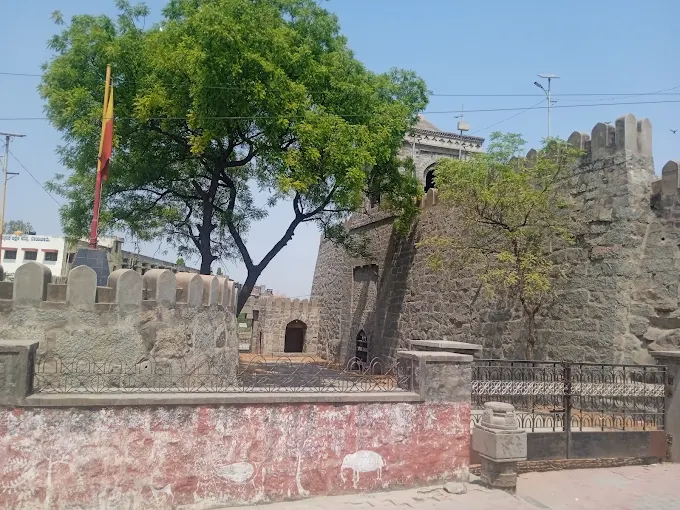
Raichur remained behind its walls, but its fate had been decided. The siege tightened until the fortress surrendered. Krishnadevaraya entered in triumph.
The victory transformed his prestige. A powerful Deccan sultan had been defeated in open battle, and one of the most coveted fortresses in southern India had fallen. The king’s response afterward revealed both the magnificence and the severity noticed by Paes. He treated the inhabitants of Raichur with a measure of reassurance, but his political demands upon Adil Shah were deliberately humiliating. He reportedly declared that conquered lands might be restored if the sultan came before him and kissed his foot. Ismail Adil Shah fled the battlefield.
Krishnadevaraya marched farther into Bijapur territory, demonstrating that the victory at Raichur had not exhausted his army. For Vijayanagara, this was the hour of maximum confidence. The imperial banners had crossed rivers, climbed fortified hills and advanced into the lands of rival kings.
The Strategist
Krishnadevaraya understood that conquest alone could not sustain an empire. His reign was marked by temple construction, royal endowments, irrigation projects and the strengthening of urban and sacred centres. The Balakrishna image brought from Udayagiri was installed in a new temple at Vijayanagara.
He made lavish gifts at Tirumala, where bronze images of Krishnadevaraya and his queens still stand with folded hands before Venkateswara. The image is revealing. Outside, inscriptions proclaimed imperial greatness. In front of Lord Venkateswara, the emperor represented himself as a devotee.
Though personally devoted to Vishnu, he ruled over a religious landscape in which Vaishnava, Shaiva, Jain and other institutions formed part of the empire’s social world. The philosopher Vyasatirtha became one of the great intellectual figures associated with his court. Religious institutions under imperial patronage were not only places of worship. They supported learning, managed land, employed communities, developed settlements and connected the authority of the king with the everyday life of the countryside.
Krishnadevaraya’s state was also connected to a wider oceanic world. Vijayanagara depended heavily on imported warhorses because the subcontinent’s climate made the breeding of large numbers of high-quality cavalry animals difficult. Portuguese control of maritime routes and Goa therefore mattered to imperial strategy.
The king dealt pragmatically with Portuguese traders. Their horses, firearms and maritime connections were valuable, but he did not become their subordinate. He used commerce to strengthen power on land.
Even his poetry emphasised this point: welcome merchants, offer them security and ensure that the goods essential to war enter your ports rather than those of your enemies.
Behind the warrior stood an economic strategist.
The Grief
The last years of Krishnadevaraya’s life were darker.
For all his victories, the emperor faced the question that has unsettled dynasties throughout history: who would succeed him?
His young son Tirumala was elevated as heir but he died, reportedly after a brief illness. Nuniz’s account says that poison was suspected and that the great minister Timmarasa who had served Krishnadevaraya from the beginning was accused along with members of his family. Timmarasa and his son were blinded.
Whether every detail survives accurately is difficult to establish, but the episode became part of the historical memory of Krishnadevaraya’s reign. The story brings Krishnadevaraya’s life into a tragic circle. At the beginning of his rise, Timmarasa had supposedly saved the prince from blindness. Near the end, the grieving emperor condemned that same minister to lose his eyes.
Later accounts also suggest that he came to regret his action deeply: the king discovered that Timmarasa was innocent. He was broken by what he had done. The emperor who had judged battlefields with such precision had allowed grief to overwhelm judgment inside his own palace.
In his final years Krishnadevaraya appears to have suffered serious illness. He nominated his half-brother Achyutaraya as successor, attempting to preserve stability after his death.
He died in 1529, or possibly very early in 1530 according to differing chronologies.
The empire did not collapse with him. It remained a formidable power for decades. But it never again possessed quite the same combination of military authority, personal kingship and cultural confidence.
The Ruin
History remembers Krishnadevaraya in many ways.
The inscriptions remember a universal conqueror.
The Portuguese remember a powerful, approachable and occasionally furious king, ruling a city whose wealth seemed almost unbelievable.
Telugu literary history remembers the poet-emperor who gave classical literature one of its great works.
Temple traditions remember a devotee.
Folklore remembers the royal companion of Tenali Rama.
Modern political memory often turns him into a symbol of regional pride, Hindu power, linguistic achievement or ideal kingship.
What ever your interpretation may be, one thing is certain. His rule was not always gentle. He was a ruthless vanquisher of his foes: Forts were starved, countries were invaded, rivals were humiliated and conquered territories bore the cost of his imperial ambition. Krishnadevaraya belonged to a world in which kings were expected to defeat, dominate and display their power.
But he was more than a conqueror. What made him exceptional was not that he stood outside his age, but that he mastered so many dimensions of it.
He could understand the symbolic power of a temple image and the practical value of a foreign horse. He could order an assault on a fortress and compose poetry of delicate emotional intensity. He could reduce enemies to submission, then use marriage and diplomacy to stabilise what he had won. He could present himself as God’s chosen king while writing that a ruler’s strength ultimately came from the prosperity of his subjects.
Perhaps that is why his memory outlived his empire.
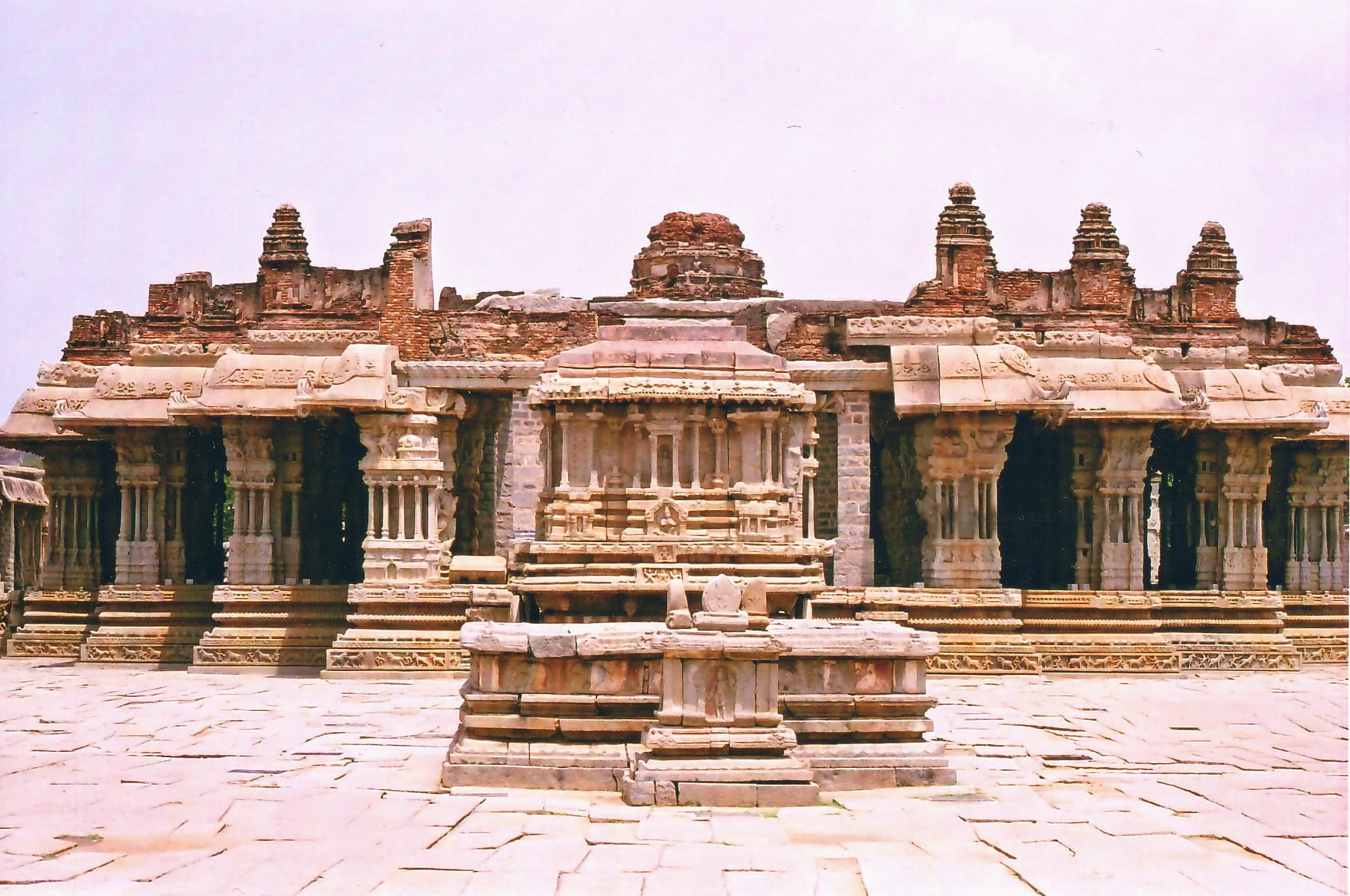
Today, visitors walk through Hampi’s ruins and try to imagine the city before its destruction: painted pillars, crowded markets, caparisoned elephants, the metallic rhythm of workshops, temple bells and a royal procession moving beneath fluttering banners.
Somewhere within that city rides a powerfully built man with smallpox scars on his face.
He is returning from another campaign. The gates open. Poets prepare their verses. Petitioners wait. Merchants calculate what peace will bring. Soldiers shout his titles. In the temples, lamps are lit.
For one suspended moment, neither the king nor the people around him know that their city will one day become a field of magnificent ruins.
They know only that Krishnadevaraya has returned victorious and that, while he lives, Vijayanagara seems capable of defeating time itself.