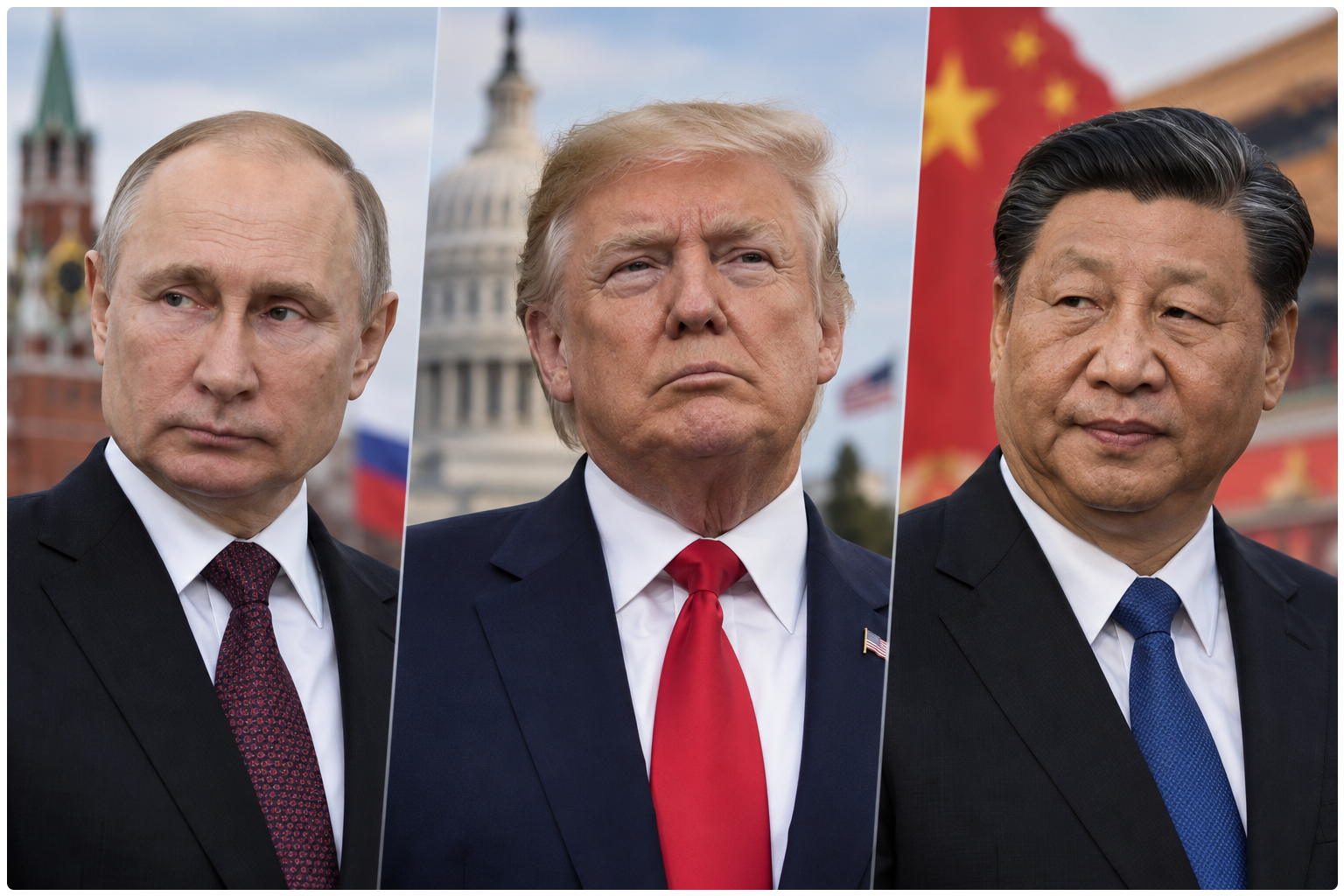
For the first time in more than half a century, Washington and Moscow are operating without a binding treaty limiting their strategic nuclear arsenals. Donald Trump now wants China brought into negotiations for a new agreement. But persuading Beijing to accept restrictions alongside two countries possessing vastly larger nuclear stockpiles may prove considerably harder than getting them to the negotiating table.
Speaking in an interview with Newsmax on October 15, Trump said the United States was discussing denuclearisation with both Russia and China, presenting the conversations as an opportunity to reduce the world's most powerful nuclear arsenals.
“I'd love to denuclearize if possible, but we're actually talking to Russia about that, and we're talking to China about that denuclearization,” Trump said.
He also claimed China could catch up with American nuclear capabilities within five years. The president offered no details about the format of the discussions, proposed reductions or whether Moscow and Beijing had agreed to begin formal negotiations.
Washington has been pursuing the idea for several months. During Chinese President Xi Jinping's September 24 visit to the White House, Trump proposed trilateral arms control negotiations involving all three powers.
Beijing's account of the meeting was considerably more restrained. The Chinese Foreign Ministry's official summary spoke of strengthening strategic stability and managing differences, without announcing an agreement to join nuclear arms negotiations.
Trump's proposal arrives eight months after the expiration of New START, the last treaty placing legally binding limits on deployed American and Russian strategic nuclear weapons.
Signed in 2010, the agreement restricted each country to 1,550 deployed strategic warheads under its counting rules and established mechanisms for inspections and information exchanges. The US State Department's treaty record confirms that the agreement was extended in 2021 for five years, taking it to February 2026.
Russia had already suspended its participation in 2023, ending treaty-mandated data exchanges and inspection arrangements. Its eventual expiration removed the remaining legal limits at a time when both powers were modernising their arsenals.
China presents a different negotiating problem. According to the Stockholm International Peace Research Institute's 2026 assessment, Russia and the United States together possess approximately 83% of the world's stockpiled nuclear warheads. China has an estimated 620 weapons, although its arsenal is expanding faster than those of other nuclear powers.
Beijing has historically resisted joining American-Russian arms control arrangements while such a large disparity exists. China would be negotiating from a position of numerical inferiority, with Washington demanding limits on a force substantially smaller than its own.
For Moscow, any new arrangement would have to address its security concerns and the wider deterioration in relations with Washington. Russia's continuing war in Ukraine has made sustained arms control diplomacy even more difficult.
Trump appears convinced that direct engagement with Xi and Putin can succeed where established negotiations have stalled. He has already raised nuclear reductions with Xi, and his administration is seeking a broader framework than the bilateral agreements that governed American-Russian competition for decades.
Whether those conversations produce anything enforceable will depend on concessions that none of the three governments has publicly offered. For now, the United States is proposing a new nuclear order without having secured agreement on how negotiations should begin.