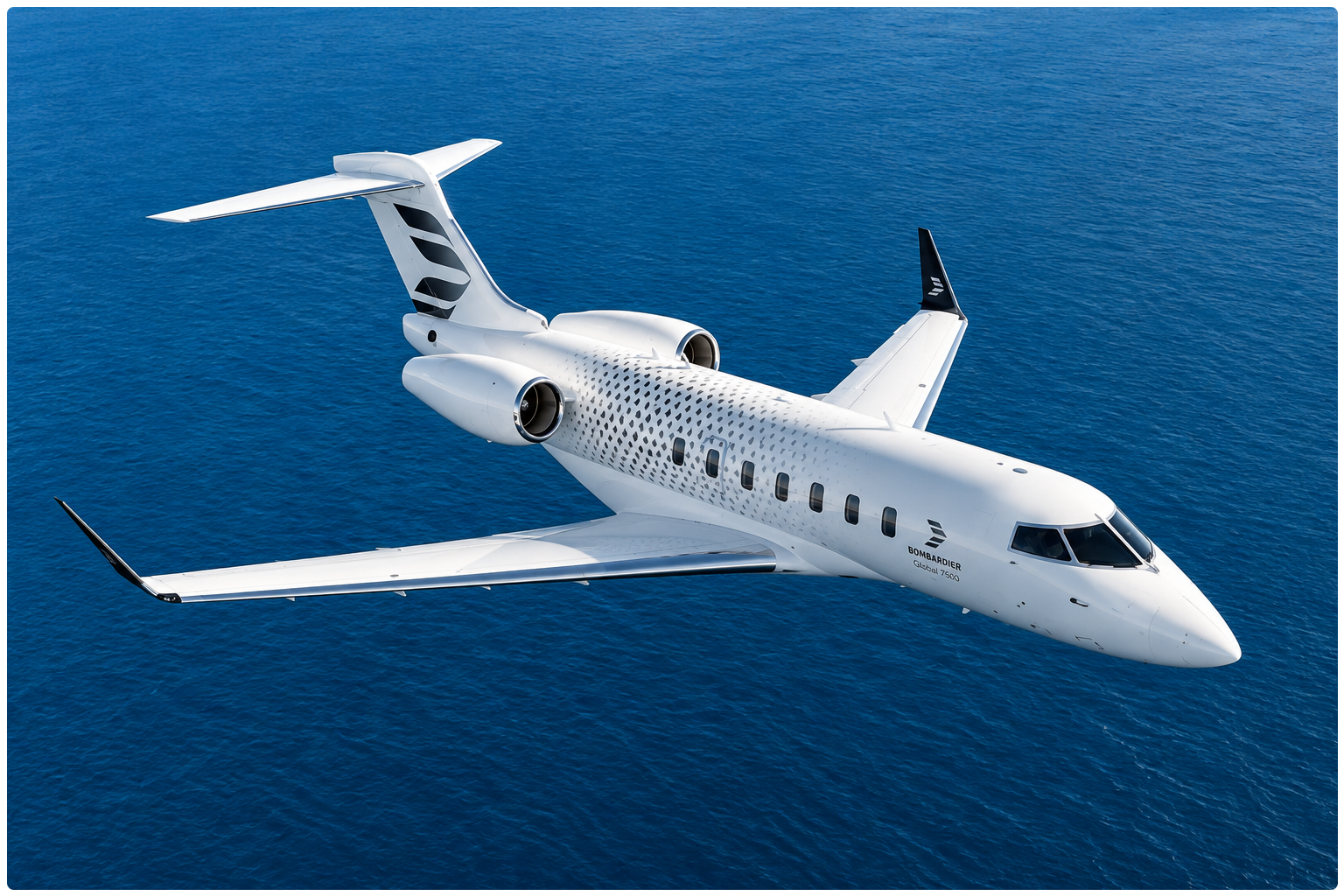
US President Donald Trump has threatened to block Canadian aircraft manufacturer Bombardier from selling jets in the United States unless it moves production south of the border, dramatically escalating an already bitter trade dispute between Washington and Ottawa.
“NO MORE SELLING BOMBARDIER IN THE UNITED STATES!” Trump wrote on Truth Social on Monday.
“If they want our Market, they must build here, and stop treating America like a ‘piggybank’,” he added.
Trump claimed that more than half of Bombardier's revenue comes from the United States and accused Canada of unfairly restricting American companies, including Gulfstream Aerospace, one of Bombardier's biggest competitors in the business-jet market.
The threat came just hours before Canada imposed a new round of retaliatory tariffs on American products.
The measures took effect at 12:01 a.m. on Tuesday and cover roughly C$27.6 billion, or US$20 billion, worth of annual US imports. Tariffs ranging between 15% and 50% have been imposed across hundreds of products, including steel, dairy products, appliances, agricultural equipment, pulp and paper products and electronics.
Ottawa says the measures are designed to match US tariffs “dollar for dollar.”
The Canadian government announced the retaliation after Washington imposed 50% tariffs on approximately C$27.6 billion worth of Canadian products beginning August 22.
The latest confrontation follows the collapse of negotiations between the two countries last month, extending a trade conflict that has now lasted roughly 18 months.
Bombardier has emerged as one of Trump's most prominent corporate targets.
The Montreal-based manufacturer produces some of the world's best-known business jets, including the Challenger and Global families, and the United States is its most important market.
But Bombardier is also deeply integrated into the American economy.
The company employs around 3,500 people in the United States, works with approximately 2,800 American suppliers and spends more than $2.5 billion annually in the country. It operates a defence business in Wichita, Kansas, is expanding wing production in Texas and has invested in its American maintenance and service network.
That integration could make any attempt to exclude Bombardier from the US market more complicated than Trump's declaration suggests.
Bombardier aircraft also use major American components, including engines, while the company operates within the highly integrated North American aerospace supply chain.
The White House has not explained what legal mechanism Trump would use to prevent Bombardier aircraft from being sold in the United States.
It is also not the first time Trump has threatened the Canadian manufacturer.
In January, he threatened to decertify Bombardier's large-cabin aircraft and impose a 50% tariff on new Canadian-made jets unless Canada certified aircraft produced by American rival Gulfstream.
Those measures were not ultimately implemented.
Trump has now revived the dispute, again accusing Canada of blocking Gulfstream from its market.
The wider US-Canada relationship has deteriorated sharply.
Trump has separately threatened to raise tariffs on Canadian cars, trucks and automotive parts to 50%, a move that could severely disrupt an industry whose supply chains cross the border repeatedly during vehicle production.
Canadian Prime Minister Mark Carney has adopted an increasingly confrontational response.
Last week, Carney told Washington to “stop doing memes, stop throwing shade and stop trying to be tough” and instead become serious about reaching a trade agreement.
Despite the increasingly hostile rhetoric, Canada's economic exposure remains substantial. Nearly 68% of Canadian exports go to the United States, making access to the American market crucial for industries ranging from automobiles and energy to agriculture and aerospace.
But Canada also possesses economic leverage of its own. The United States depends heavily on Canadian supplies of oil, electricity, fertiliser and other commodities, while decades of economic integration mean tariffs can quickly raise costs for businesses and consumers on both sides of the border.
For Bombardier, Trump's latest threat introduces another layer of uncertainty.
The company has continued to grow despite earlier tariff threats, reporting a 6% increase in quarterly revenue to $2.15 billion.
Whether Trump follows through on his threat to exclude Bombardier aircraft remains unclear. But by singling out one of Canada's most prominent manufacturers just as Ottawa's retaliatory tariffs take effect, the president has signalled that the US-Canada trade fight could be entering an even more confrontational phase.