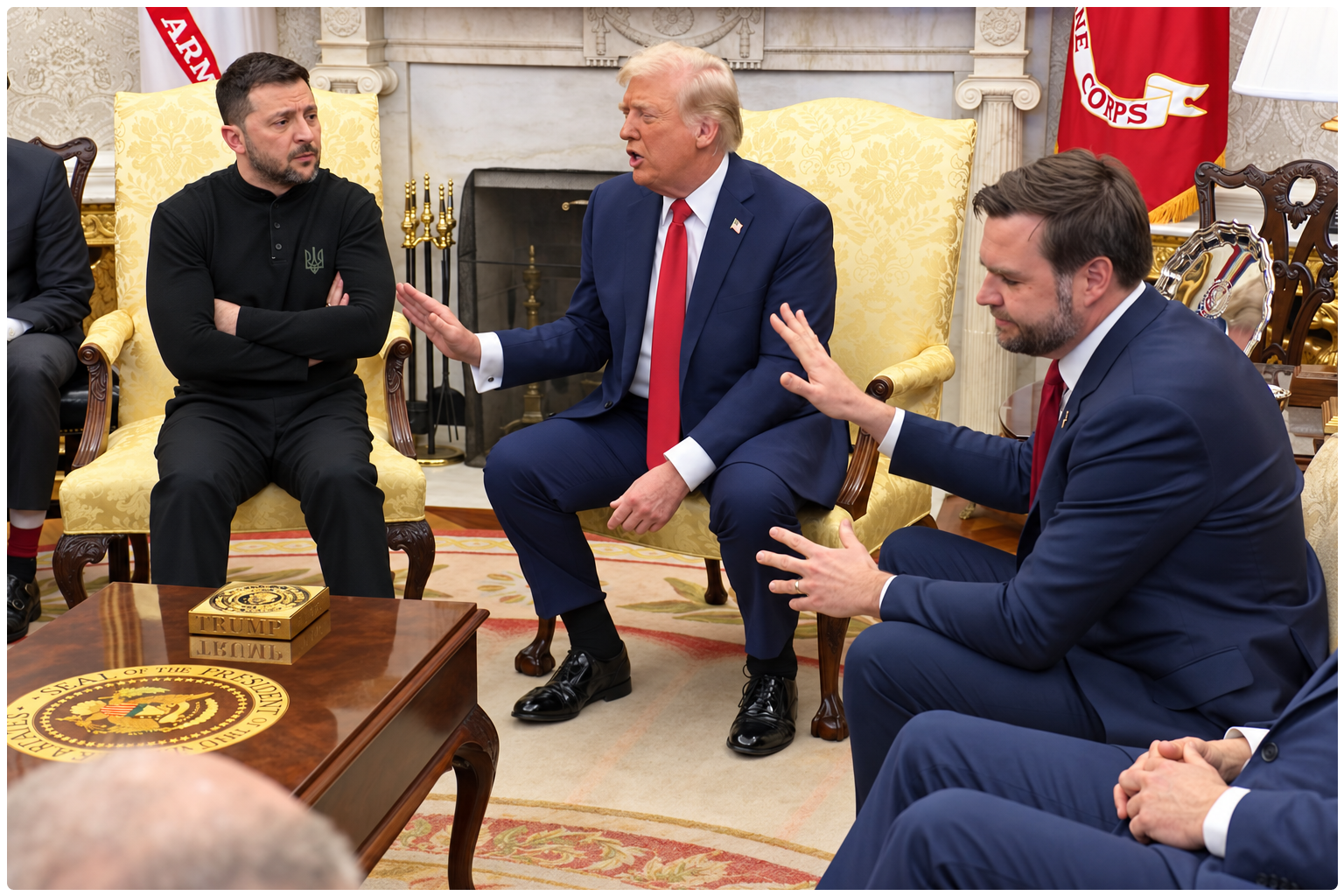
Donald Trump has accused Volodymyr Zelenskyy of being more difficult to negotiate with than Vladimir Putin, as a bitter dispute over Ukrainian attacks on Russian oil refineries threatens to undermine Washington's relationship with Kyiv. The American president wants the strikes stopped to ease pressure on global fuel prices. Zelenskyy says Ukraine cannot be expected to spare Russian energy facilities while Moscow continues destroying its own.
“I’m not a big fan of Zelenskyy,” Trump said in a Newsmax interview aired on October 15, adding that he found the Ukrainian leader harder to deal with than Putin. He also condemned Ukraine's renewed refinery attacks as a “disgrace”, accusing Kyiv of making fuel more expensive for consumers worldwide.
The exchange marks another deterioration in a relationship that appeared to be recovering only weeks ago. In September, Zelenskyy had spoken warmly about his dealings with Trump, describing their discussions on ending the war as evidence of renewed diplomatic momentum.
That optimism has since collided with Trump's determination to bring down energy prices before the November 3 midterm elections.
On October 9, Washington authorised transactions involving Russian-origin diesel, easing restrictions intended to limit Moscow's energy revenues. The decision followed an arrangement with Putin to release additional diesel supplies onto international markets, despite Russia's continuing offensive in Ukraine.
Trump subsequently announced an energy ceasefire between Russia and Ukraine. Kyiv welcomed the possibility of a reciprocal halt and temporarily suspended strikes on Russian refineries. But Russian attacks on Ukrainian power facilities continued.
In an October 12 address, Zelenskyy described Russian drones striking Ukrainian energy infrastructure almost immediately after Trump's ceasefire announcement. He questioned how Ukraine could be expected to maintain restraint when Russia was not doing the same.
By October 15, Ukrainian forces had resumed attacks on Russian refineries, including a facility in the Ryazan region. Zelenskyy rejected the idea that Ukraine should abandon a military tactic aimed at reducing the revenues and fuel supplies supporting Russia's war.
The disagreement now reaches beyond public criticism. Zelenskyy has said Washington threatened to restrict intelligence sharing unless Kyiv stopped attacking Russian oil facilities. Ukraine has also experienced disruptions to satellite communications services used by its military, raising concerns about its ability to coordinate operations and defend against Russian attacks. The precise circumstances behind those disruptions remain disputed.
For Kyiv, the prospect of losing American intelligence or military support is considerably more serious than another hostile statement from Trump. Ukraine depends on Western assistance for air defence, surveillance and advanced weapons while Russia continues targeting its cities and power grid.
Zelenskyy has spent the week seeking stronger European commitments. During talks with NATO Secretary General Mark Rutte, he pressed for additional air defence systems and ammunition. At the European Council meeting on October 16, he urged European governments to maintain sanctions against Moscow and help Ukraine withstand another winter of Russian bombardment.
Trump still wants to negotiate an end to the war, but his latest confrontation with Zelenskyy has weakened trust in Washington's approach. The president is pressing Ukraine to limit attacks on Russian energy infrastructure while permitting Russian diesel to return to international markets.
Zelenskyy has refused to accept those terms without reciprocal Russian restraint. Neither president has shown much willingness to concede, leaving European governments increasingly responsible for preventing their disagreement from becoming a deeper rupture in Western support for Ukraine.