The war in Ukraine has reached one of the most remote and economically important corners of Russia for the first time, after Ukrainian drones travelled nearly 3,000 kilometres to strike the country's Arctic gas heartland in northern Siberia.
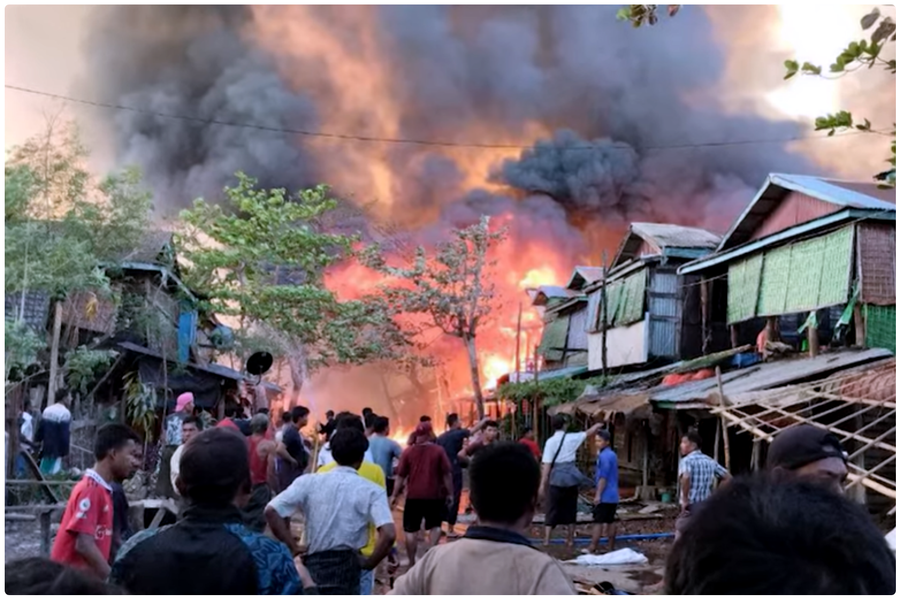
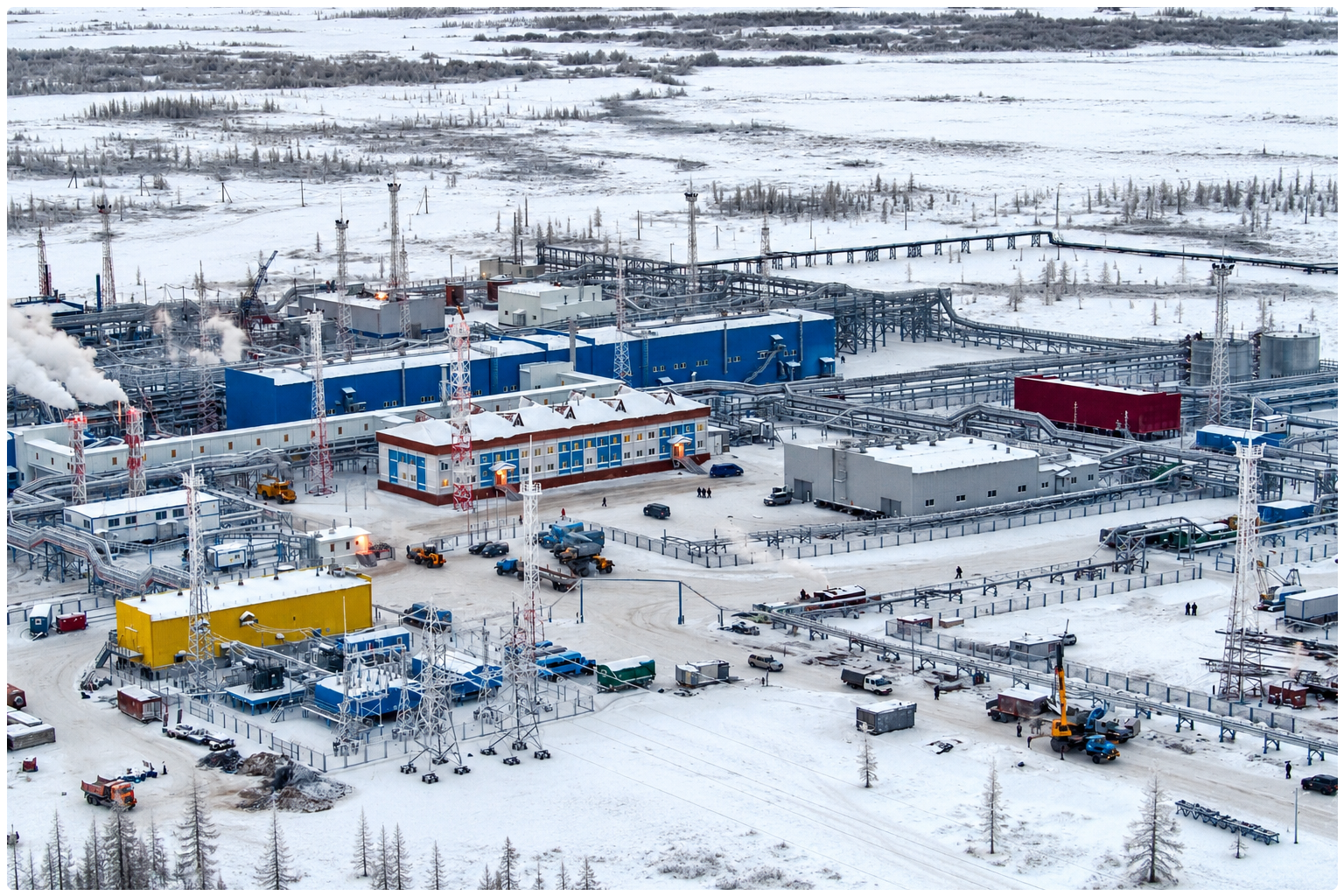
A drone attack on September 9 caused a fire at an industrial facility in Novy Urengoy, a city so important to Russia's energy industry that it is often described as the country's unofficial gas capital. Dmitry Artyukhov, governor of the Yamalo-Nenets Autonomous Okrug, confirmed the attack and said there were no deaths or injuries, although he did not initially identify the facility. Ukraine's Special Operations Forces later said its drones had struck the Novy Urengoy Gas Condensate Treatment Plant as well as the Purovsky Condensate Processing Plant, describing the operation as its deepest strike inside Russia since the beginning of the war.
The distance is what makes the attack extraordinary. Novy Urengoy lies roughly 2,800 to 3,000 kilometres from the Ukrainian border, deep inside northwestern Siberia and far beyond the Russian regions that have become accustomed to Ukrainian drone attacks. Until now, Moscow could reasonably treat Yamal as a protected rear area. The region sits north of the Arctic Circle in places, thousands of kilometres from the battlefield and behind an enormous depth of Russian territory. Ukraine has now demonstrated that distance alone may no longer provide that protection.
And Yamal is not an ordinary target. The Yamalo-Nenets region is the heart of Russia's natural-gas industry, containing around 57% of the country's gas reserves and producing roughly 80% of its natural gas. Gazprom estimated in 2020 that the region contained about 26.5 trillion cubic metres of gas resources, enough to satisfy total global gas demand for more than six years at the time. The Novy Urengoy facility alone has a design capacity of around 19.5 million tonnes of raw material annually, while Ukraine said the Purovsky plant processed 13.4 million tonnes of gas condensate in 2025.
For decades, gas from Yamal helped bind Russia economically to Europe. Pipelines carried enormous quantities westwards, generating revenue for Moscow while supplying European homes and industries. That relationship fractured after Russia's full-scale invasion of Ukraine in 2022, but Yamal remains fundamental to the country's energy system and state finances. Ukraine's strategy has increasingly focused on precisely that vulnerability. Refineries, oil depots, pipelines and export infrastructure deep inside Russia have repeatedly come under attack as Kyiv attempts to reduce Moscow's energy revenues and force Russia to spend more money defending facilities hundreds or even thousands of kilometres behind the front.
The September 9 operation suggests that campaign is entering a new phase. Ukrainian drones have already demonstrated increasingly impressive ranges, but reaching Yamal means Russian planners must now contemplate defending energy infrastructure across a vastly larger geographical area. Protecting a refinery several hundred kilometres from Ukraine is difficult enough; protecting oil and gas facilities scattered across a country stretching through 11 time zones is an entirely different problem. Every additional air-defence system deployed around an Arctic gas plant is also a system that cannot be deployed somewhere else.
The actual damage from the latest strikes remains unclear, and there is no evidence yet that they have seriously disrupted Russian gas production. That distinction matters. A spectacular long-range strike does not automatically translate into major economic damage. But strategically, Ukraine has already demonstrated something significant: an industrial complex almost 3,000 kilometres from its border can no longer assume the war is somewhere far away.
For most of the conflict, Russia's enormous geography has been one of its greatest strategic advantages. Its military could fight in Ukraine while much of the industrial infrastructure sustaining that war remained safely buried inside the world's largest country. The flames reported in Novy Urengoy challenge that assumption. Ukraine may not be able to cripple Russia's gas industry with a handful of drones, but it has shown Moscow that even in the Arctic, there may no longer be such a thing as a completely safe rear.