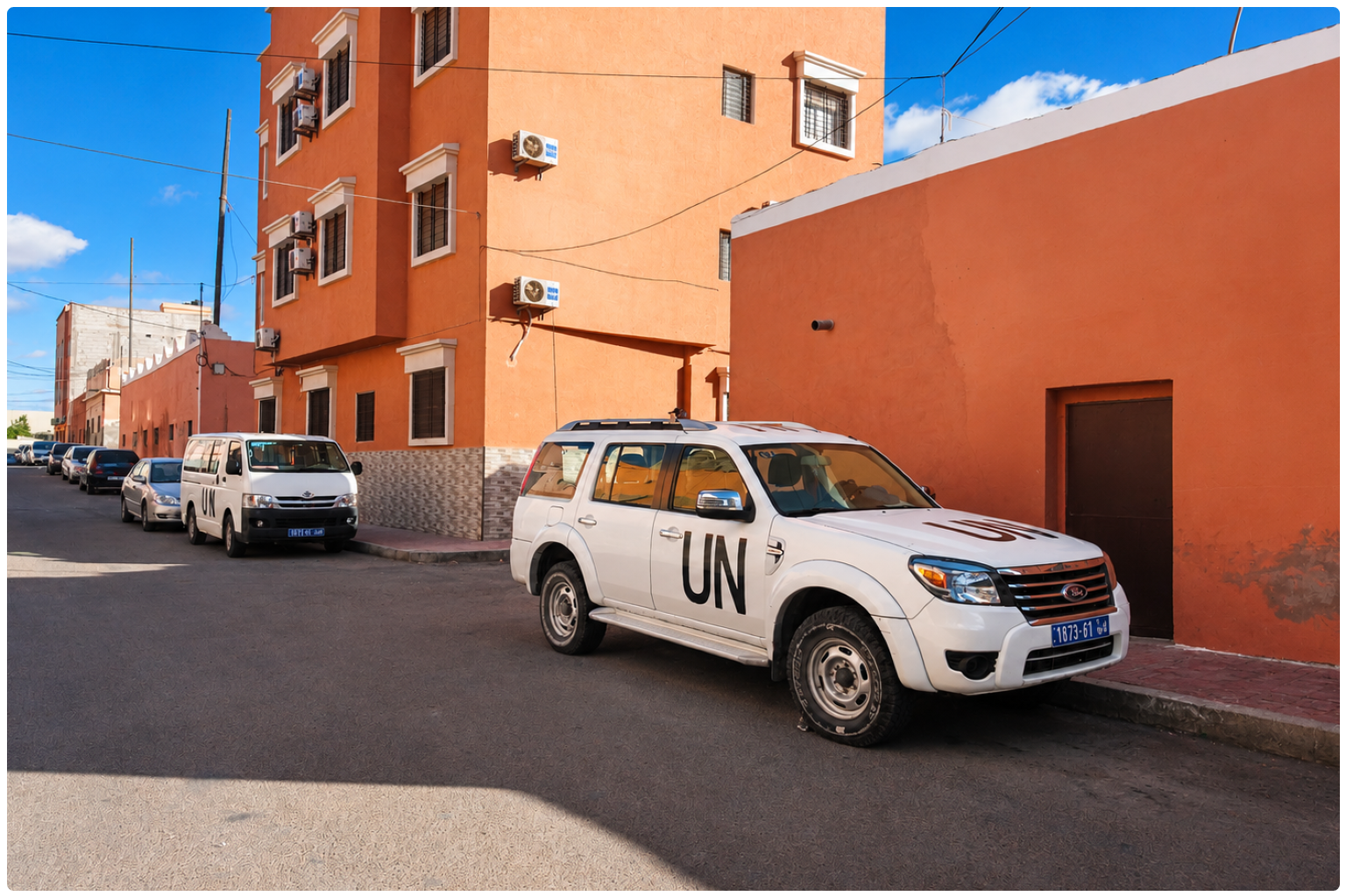
A United Nations mission established to oversee a referendum on Western Sahara's future has closed without ever conducting the vote. After 35 years of monitoring ceasefire arrangements and maintaining a presence in the disputed territory, the UN Mission for the Referendum in Western Sahara (MINURSO) formally ceased peacekeeping operations on November 1, following the Security Council's failure to renew its mandate.
The United Nations confirmed the closure on Sunday, with Secretary-General António Guterres warning of the risk of renewed hostilities. The mission will now begin an orderly withdrawal of personnel and equipment, bringing an end to one of the UN's longest-running peacekeeping operations. The organisation has stressed that its diplomatic efforts to resolve Western Sahara's political status will continue.
For Morocco, which administers most of the territory, the mission's closure represents an important diplomatic development. Rabat has long argued that autonomy under Moroccan sovereignty offers the most practical settlement. The Polisario Front, which seeks independence for Western Sahara, maintains that any agreement must allow the Sahrawi population to determine its future, including the possibility of an independent state.
The collapse of the mandate followed a confrontation between Washington and Moscow at the Security Council on October 30. Russia vetoed an American resolution that would have renewed and restructured MINURSO while placing Morocco's autonomy proposal at the centre of negotiations. A competing Russian draft proposing a conventional one-year extension also failed to secure enough votes.
Morocco welcomed the non-renewal as a significant development in the territory's diplomatic history. Algeria, which supports Polisario and hosts Sahrawi refugee communities around Tindouf, criticised the outcome and accused Washington of favouring Morocco. Polisario expressed concern that the Security Council's failure had weakened the international framework for resolving the dispute.
MINURSO's origins lie in the 1991 settlement arrangements, when Morocco and Polisario agreed to a ceasefire under a United Nations and Organisation of African Unity peace plan. The mission was intended to monitor the truce and help organise a referendum. Disputes over voter eligibility prevented the referendum, and the ceasefire broke down in 2020.
The territory itself has remained contested since Spain's withdrawal in 1975. Morocco established control over most of Western Sahara, while Polisario declared the Sahrawi Arab Democratic Republic, recognised by the African Union and several countries. The International Court of Justice's 1975 advisory opinion found that historical ties presented by Morocco did not establish territorial sovereignty sufficient to override the Sahrawi people's right to self-determination.
The mission's withdrawal removes a longstanding channel for observing military activity and maintaining communication between opposing forces. Although its effectiveness had been constrained by political disagreements and restrictions on movement, its presence offered an international mechanism for monitoring developments in an increasingly tense territory.
The Security Council's 2025 resolution had already identified Moroccan autonomy as a potentially feasible outcome while maintaining the requirement for a mutually acceptable settlement providing for self-determination. With peacekeeping operations concluded, negotiations continue under the UN Secretary-General's Personal Envoy, Staffan de Mistura.
Western Sahara now enters a period without the international peacekeeping presence established alongside the 1991 ceasefire. The referendum that gave MINURSO its name was never held, and neither Morocco's sovereignty claims nor the Sahrawi independence movement's demands have been settled by the mission's departure.