A weapon that identifies a target, decides when to engage and fires without another command from a human operator presents an increasingly immediate question for military planners: how much judgement can be delegated to a machine?
Governments meeting in Geneva this week must decide whether that question requires a new international treaty. The United States, Russia and Israel are resisting proposals to begin negotiations on legally binding restrictions on autonomous weapons, placing them at odds with a large group of countries seeking stronger international safeguards.
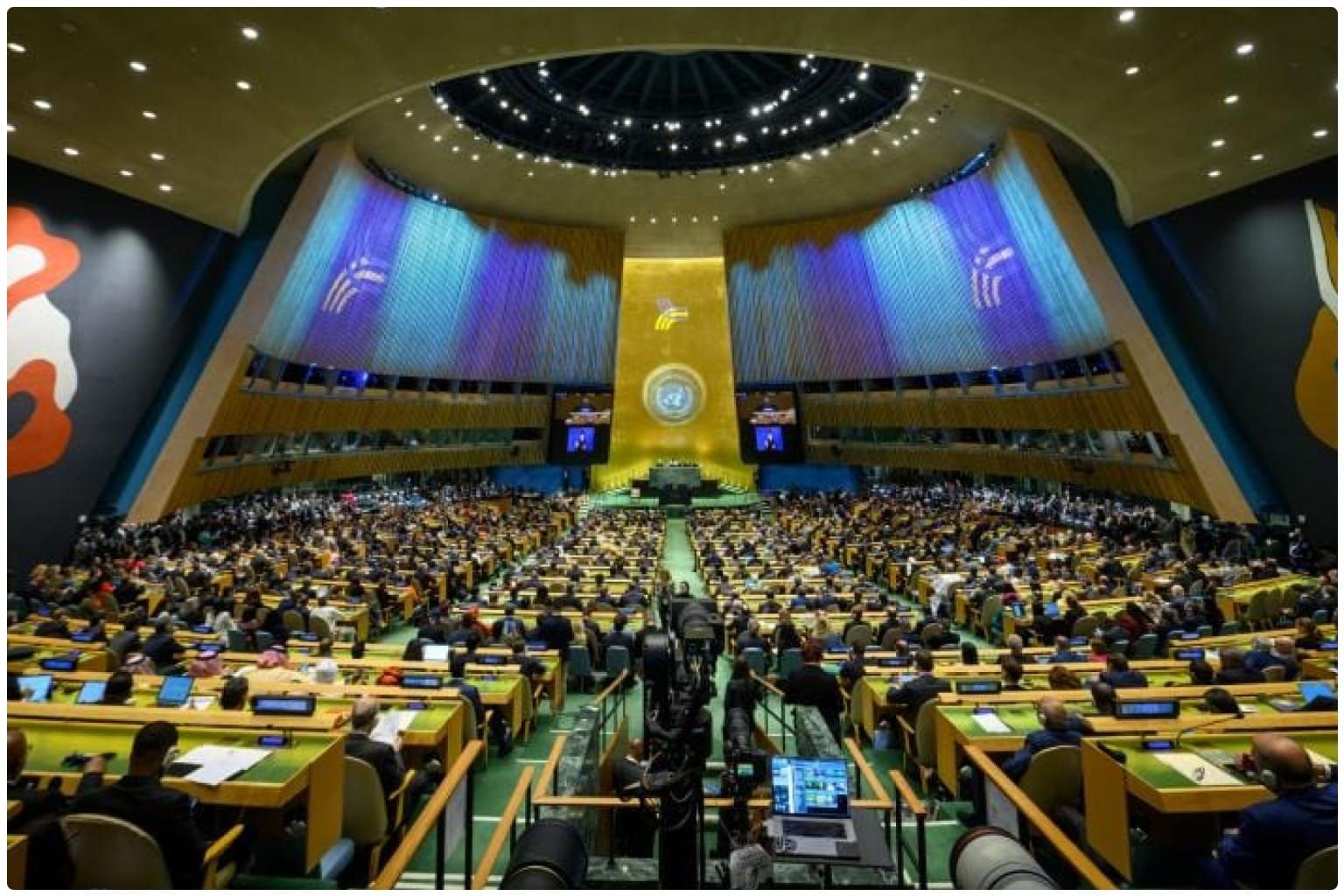
The disagreement has emerged at the seventh review conference of the Convention on Certain Conventional Weapons (CCW), convened by the United Nations from November 16 to 20. The convention has 128 participating states and provides a framework for prohibiting or restricting weapons considered excessively injurious or indiscriminate.
Washington favours developing non-binding guidelines rather than negotiating a treaty. Its proposal envisages five years of discussions towards voluntary measures, reflecting the American position that existing international humanitarian law already governs the development and use of autonomous weapons.
Russia has also resisted legally binding restrictions. Israel opposes the proposed treaty approach, while Britain, France and Germany support negotiations that would leave the eventual legal status of an agreement undecided.
The alternative advanced by the conference chair would give governments two years to negotiate a binding protocol. Its supporters want clear prohibitions on weapons whose effects cannot be adequately predicted or controlled, alongside restrictions on other systems capable of selecting and attacking targets independently.
Military autonomy is not synonymous with artificial intelligence or unmanned aircraft. A remotely piloted drone remains under human control when an operator selects its target and authorises an attack. An autonomous weapon, by contrast, can perform those critical targeting functions after activation without further human intervention.
The United Nations' explanation of autonomous weapon systems identifies human judgement, predictability and compliance with international humanitarian law as central concerns.
Those concerns have become more pressing as military forces incorporate automated target recognition, navigation and engagement functions into weapons operating on land, at sea and in the air. AI-assisted systems have already appeared in contemporary conflicts, although their degree of autonomy varies considerably.
In September, a UN expert group agreed on elements that could form the basis of an international instrument. The agreement did not settle whether the resulting rules should be legally binding.
The International Committee of the Red Cross argues that existing humanitarian law, while applicable to autonomous weapons, does not sufficiently address their particular risks.
In its November 13 appeal ahead of the Geneva conference, ICRC President Mirjana Spoljaric urged governments to establish enforceable limits before increasingly autonomous weapons become widely deployed.
The organisation is not seeking a prohibition on every autonomous system. Its proposed framework would ban unpredictable weapons and autonomous systems designed to target people directly, while restricting the operating conditions of others.
The Geneva negotiations will determine whether governments move from more than a decade of discussions towards treaty drafting, continue developing voluntary standards or adopt a compromise containing both approaches.
Any agreement will also have to address a practical problem: identifying who is accountable when a weapon's targeting decisions produce unlawful harm without a human selecting the specific target.