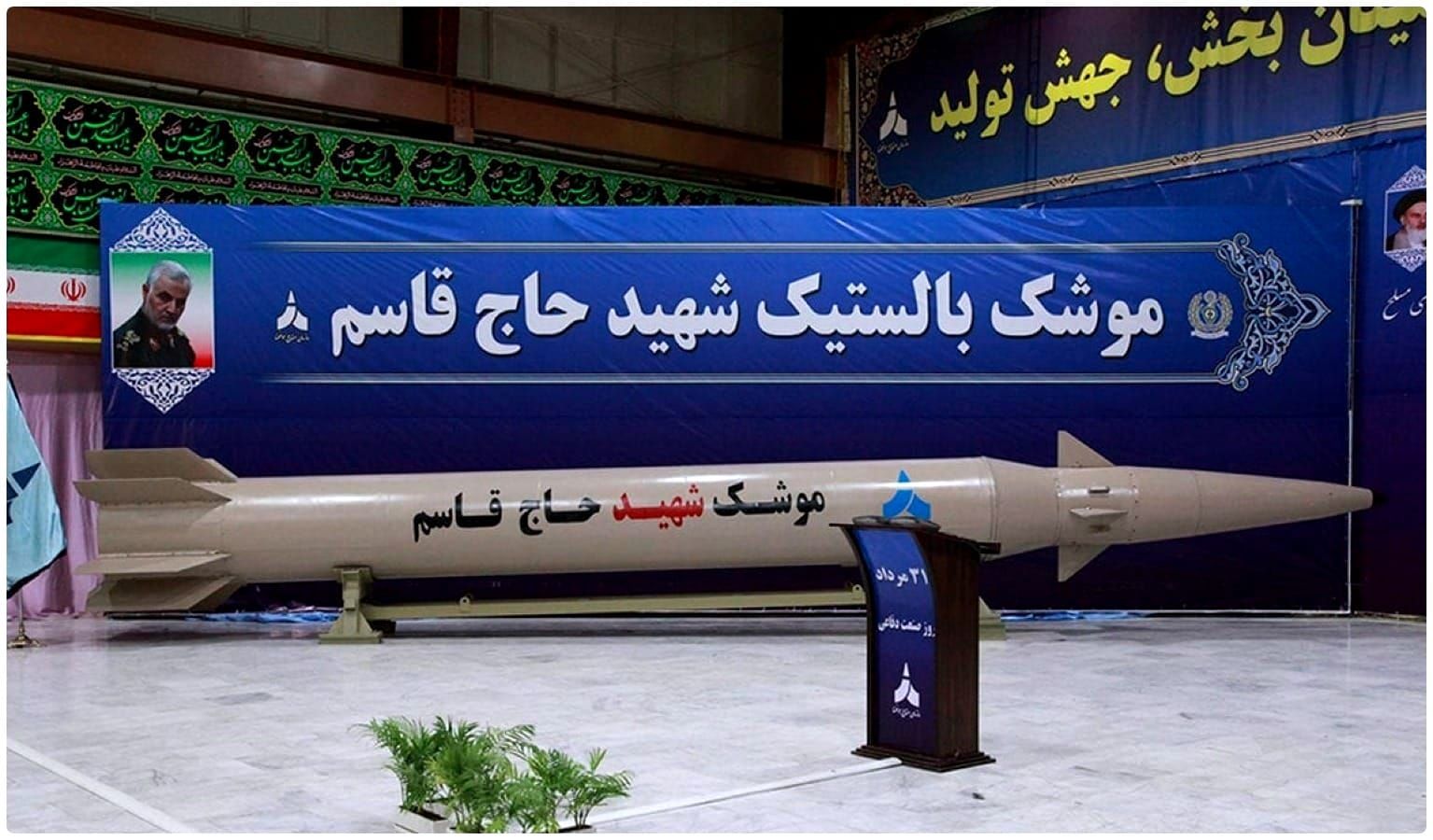
The United States has sanctioned 13 individuals and companies accused of helping Iran acquire weapons, electronics and dual-use components for its missile, drone and military-aircraft programmes.
The measures were announced jointly by the US Treasury and State departments. Ten targets were designated by the Treasury, while the State Department sanctioned another three entities accused of supporting Iranian military procurement and transporting weapons and related material.
The network identified by Washington stretches across Iran, China, Hong Kong, Pakistan, Russia, Saudi Arabia and Türkiye. American officials allege that the people and companies involved acted as intermediaries, suppliers and transport facilitators for Iran’s Ministry of Defense and Armed Forces Logistics, known as MODAFL.
MODAFL is responsible for weapons research, production and procurement for Iran’s armed forces. It also oversees organisations involved in developing ballistic missiles and unmanned aerial vehicles.
Among those sanctioned is Seyyed Asghar Alizadeh Tabatabai, whom the Treasury described as MODAFL’s representative in Beijing. Washington alleges that he coordinated the purchase of complete weapons systems and dual-use components from China on Iran’s behalf.
The Treasury also targeted the Iran-based Kavoshcom Asia R and D Group and several people and companies connected to it. Kavoshcom allegedly procured electronic connectors and other components for the Iran Aircraft Manufacturing Industrial Company, which produces military aircraft and drones.
US authorities said the company also supplied electronics to the Shahid Bakeri Industrial Group, an organisation involved in Iran’s solid-fuel ballistic missile programme. A Hong Kong company, EC Mojo Technology, was accused of supplying electronic components for Kavoshcom’s procurement operations.
The sanctions also cover Waseem Pasha Tajammal, chairman of the Pakistan-based Cavalier Group, and three companies under his control in Pakistan, Saudi Arabia and Türkiye. Washington alleges that Tajammal used his business network to procure and distribute weapons for MODAFL.
Separately, the State Department designated one Iranian entity and two Russian entities accused of facilitating military purchases and transporting arms to and from Iran. The designations were announced on the first anniversary of the reimposition of United Nations restrictions covering Iran’s nuclear, missile and conventional-arms activities.
The sanctions were imposed under an executive order targeting proliferators of weapons of mass destruction and their delivery systems. Any property belonging to those designated that falls within US jurisdiction must be frozen. American individuals and companies are generally prohibited from conducting transactions with them.
Foreign banks and businesses could also face secondary sanctions if they knowingly facilitate significant dealings for the targeted network. This threat can restrict access to dollar transactions and the American financial system even when the companies involved have no direct operations in the United States.
The measures form part of Operation Economic Outcast, a campaign launched in August to identify the financial channels, procurement networks and transport routes used by Iran to sustain its military programmes and evade existing restrictions.
Iran has developed extensive overseas purchasing networks because sanctions and export controls prevent it from openly obtaining many advanced components. These networks frequently rely on front companies, intermediaries and products that have both civilian and military applications.
The latest action may disrupt individual suppliers and financial channels, but Iran has repeatedly rebuilt procurement networks after earlier sanctions. Its wider effect will therefore depend on enforcement by banks, exporters and governments in the countries where the targeted companies operate.