The United States has struck five Iranian oil tankers near two of Iran's most strategically important energy hubs, dramatically escalating its campaign against Tehran's oil trade as the confrontation between the two countries spreads deeper into the Persian Gulf and Gulf of Oman.
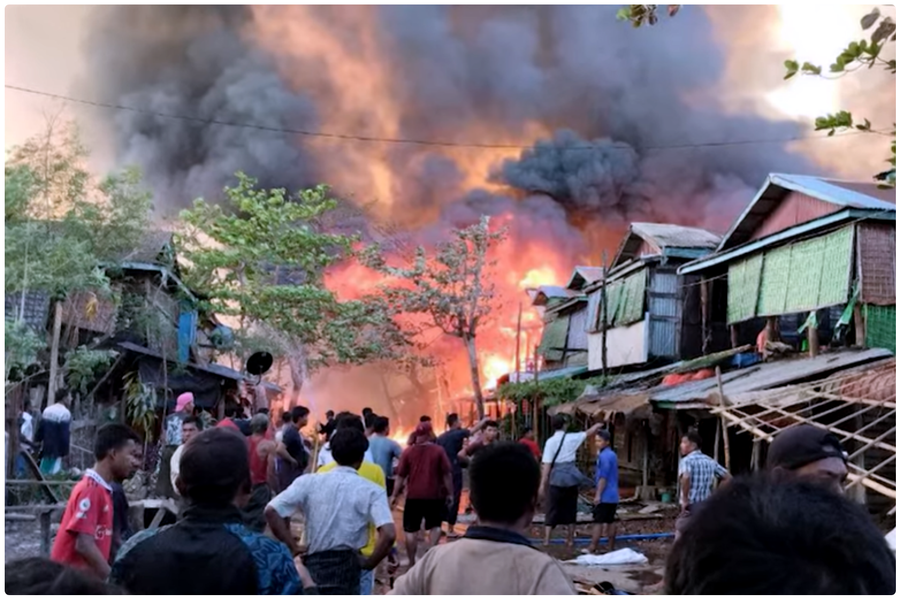
Explosions were first reported around Kharg Island and the southern Iranian port of Jask on Tuesday, prompting speculation that Iran's oil infrastructure itself may have come under attack.
But subsequent statements from the US military and Iranian media indicate that the targets were oil tankers operating offshore rather than the Kharg oil terminal itself.
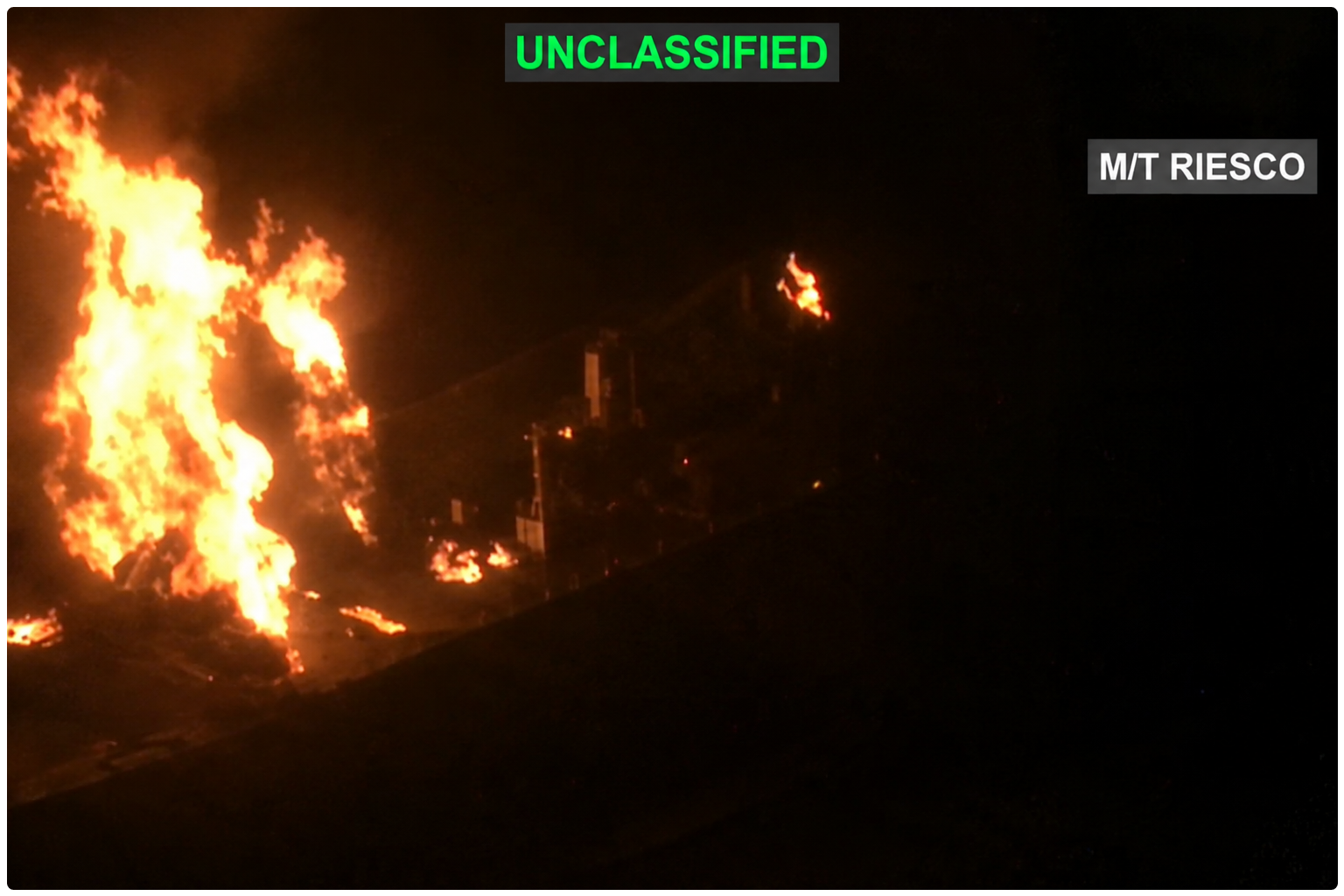
US Central Command said American forces struck five Iranian tankers after the Islamic Revolutionary Guard Corps attempted to hit a US Navy warship with ballistic missiles twice over the previous two days.
According to CENTCOM, the American vessel successfully avoided the attacks and no US personnel were injured.
Four tankers were targeted in the Gulf of Oman, while a fifth was struck near Kharg Island.
CENTCOM identified the vessels as the M/T Kaviz, M/T Charminar, M/T Horizon 1, M/T Riesco and M/T Derya.
The US military said crews were instructed to abandon the vessels before they were attacked and described the tankers as part of a multibillion-dollar network used to generate funds for the IRGC and Iranian-backed groups across the region.
Iranian reporting broadly confirmed attacks on tankers near both strategic locations.
Tasnim reported that a small Iranian tanker was struck roughly four nautical miles from Kharg Island. Iranian state broadcaster IRIB later reported attacks on two tankers near Jask, with crews evacuating towards shore in lifeboats.
No immediate casualties were reported.
The location of the strikes makes them particularly significant.
Kharg Island is the beating heart of Iran's oil export system. Located in the Persian Gulf, the terminal handles the majority of the country's crude exports and has long been regarded as one of the most strategically sensitive pieces of Iranian infrastructure.
Jask occupies a different but equally important position.
The port sits east of the Strait of Hormuz on the Gulf of Oman. Iran has spent years developing Jask and an associated pipeline precisely because they provide Tehran with a potential route for exporting oil without sending every barrel through the Strait of Hormuz.
That means the latest American strikes have occurred around both ends of Iran's oil-export geography: Kharg inside the Persian Gulf and Jask outside Hormuz.
The attacks are part of a rapidly accelerating cycle of retaliation.
Iran has attempted to strike American naval vessels with ballistic missiles and says it has attacked a US military base in Jordan. Tehran has also threatened tankers around Kuwait and Bahrain.
The United States, meanwhile, has increasingly targeted the maritime networks that allow Iran to continue exporting oil.
The effect is already being felt far beyond the battlefield.
Brent crude climbed to around $99 a barrel on Wednesday, approaching the psychologically important $100 mark as traders priced in the possibility of further disruption to Middle Eastern energy supplies.
Shipping through the Strait of Hormuz is also deteriorating.
Preliminary Kpler data showed that only six commodity vessels passed through Hormuz on Tuesday, compared with a 10-day average of around 12.
The danger now is that the conflict moves from attacks on individual tankers towards attacks on the infrastructure that keeps the Gulf's energy system functioning.
Kharg Island would represent an entirely different level of escalation.
Destroying or seriously damaging its export terminal could severely restrict Iran's ability to sell crude and would strike directly at one of Tehran's most important sources of revenue.
So far, there is no confirmation that Washington has crossed that threshold.
But the latest attacks have brought American missiles within miles of the facility.
And that proximity matters.
The confrontation between Washington and Tehran is increasingly becoming an economic war fought with military weapons: Iran threatening shipping lanes and regional energy facilities while the United States targets the tankers that keep Iranian oil moving.
Kharg and Jask now sit dangerously close to the centre of that battlefield.