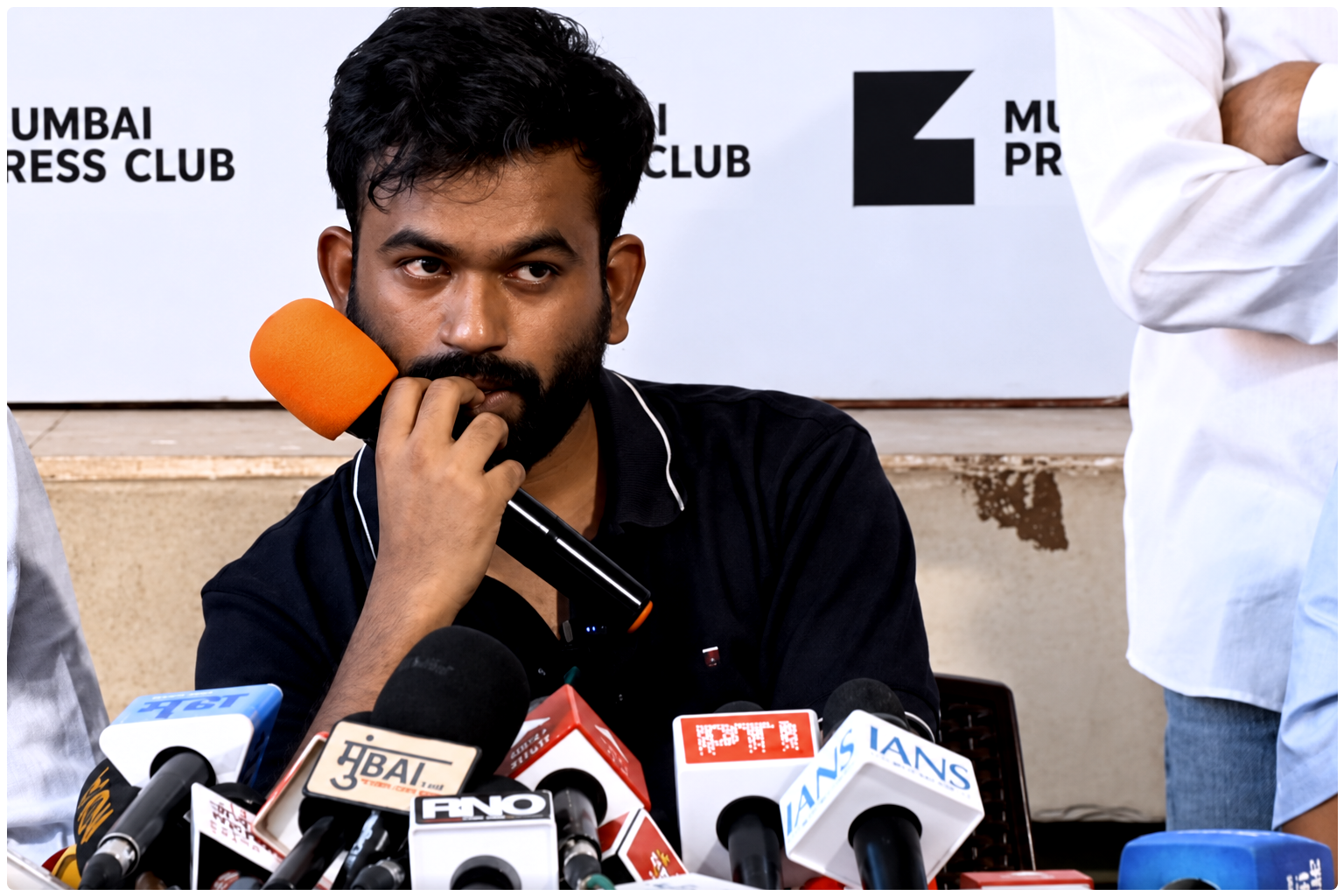
Cockroach Janta Party founder Abhijeet Dipke has triggered an admissions debate by arguing that students with high marks may have benefited from expensive schools, private coaching and educated parents, and should therefore not present their scores as products of merit alone.
Let us examine this argument at face value. India does not provide every child with an equal starting point. A student with reliable electricity, private tuition, educated parents and financial security possesses advantages unavailable to someone studying in an understaffed rural school. Any serious education policy must recognise this inequality.
But recognising unequal opportunity is entirely different from treating achievement itself as suspicious. Dipke’s argument crosses that line when it reduces high scores to privilege and diminishes the discipline of students who spend years preparing for intensely competitive examinations.
Coaching staff cannot take an examination on behalf of a student. Educated parents cannot write the answers. Money may purchase better books, quieter rooms and experienced teachers, but it cannot automatically create concentration, resilience or academic ability. Thousands of affluent students fail despite receiving every conceivable advantage. At the same time, students from ordinary families regularly succeed through determination and sacrifice.
The one who doesn’t even know the definition of merit was protesting for fair education. Absolute clownery! https://t.co/wbOglLP1aZ
— Anuradha Tiwari (@talk2anuradha) October 1, 2026
Dipke’s reasoning takes a structural truth and turns it into an accusation against individuals. Instead of asking how poorer students can receive better preparation, it asks successful students to defend their success. Instead of expanding opportunity, it attempts to devalue the achievement of those who performed well.
That is not social justice. It is the politics of resentment.
A country does not progress by teaching its highest-performing students that their work is morally compromised. It progresses by building more capable schools, expanding scholarships and ensuring that talent from every caste and income group receives the opportunity to compete. The objective should be to produce more high achievers, not to discredit those who already exist.
The difference between equality of opportunity and equality of outcome is crucial. A just state must work to ensure that children are not denied education because of caste, poverty, geography or disability. But it cannot guarantee that every student will achieve identical results. People differ in aptitude, interest, effort and discipline. Pretending otherwise does not eliminate inequality. It merely makes honest evaluation impossible.
The lives of B.R. Ambedkar and Jawaharlal Nehru illustrate why social background cannot be used as a mechanical explanation for academic performance.
Nehru grew up in a wealthy household, received private tutoring, attended Harrow and graduated from Cambridge with an honours degree in natural science. Ambedkar confronted severe caste discrimination, passed his matriculation examination in 1907 and later earned advanced qualifications from Columbia University and the London School of Economics.
There is no authoritative, like-for-like set of examination marks that allows the two men to be responsibly ranked. They studied different subjects under different institutions and assessment systems. But even if Ambedkar had achieved higher marks at a comparable stage, that would not mean he possessed greater privilege than Nehru.
It would demonstrate the opposite of Dipke’s deterministic argument. It would show that human ability cannot be calculated from family background and that people can overcome enormous disadvantages through intelligence, opportunity and extraordinary determination. Circumstances influence performance, but they do not completely dictate it.
Ambedkar himself did not respond to exclusion by demanding that academic excellence be treated as fraudulent. He pursued education with relentless seriousness and regarded knowledge as a means of emancipation. His life is evidence that society must remove barriers while continuing to recognise achievement.
Dipke is entitled to defend reservation, criticise unequal access and demand better government schools. These are legitimate political positions. India’s public education system requires urgent investment, examination leaks must be punished and deserving students need meaningful financial assistance.
But portraying meritorious students primarily as beneficiaries of privilege turns necessary reform into a contest of moral guilt. It divides young Indians into categories of presumed victimhood and presumed advantage before examining their individual capabilities.
India cannot become a developed country while treating excellence as an embarrassment. It needs doctors who understand medicine, engineers who can build, scientists who can innovate and administrators capable of making sound decisions. Standards matter because the consequences of incompetence are eventually paid by ordinary citizens.
Meritocracy does not mean ignoring inherited disadvantage. It means widening access to opportunity and then evaluating people through transparent, demanding and consistent standards. The answer to a child receiving poor schooling is to improve that child’s school, not to insist that another child’s marks are meaningless.
Dipke’s rhetoric risks creating divisions that India cannot afford. Young people should not be encouraged to view another student’s success as proof of oppression. They should demand fair examinations, better institutions and the freedom to rise as far as their ability and effort can take them.
Privilege should be confronted where it purchases unfair access, manipulates admissions or protects incompetence. It should not become a permanent accusation directed at anyone who performs well.
A nation that converts excellence into evidence of guilt will not become more equal. It will simply become more hostile to achievement, more divided by resentment and less capable of rewarding the people whose commitment could carry it forward.