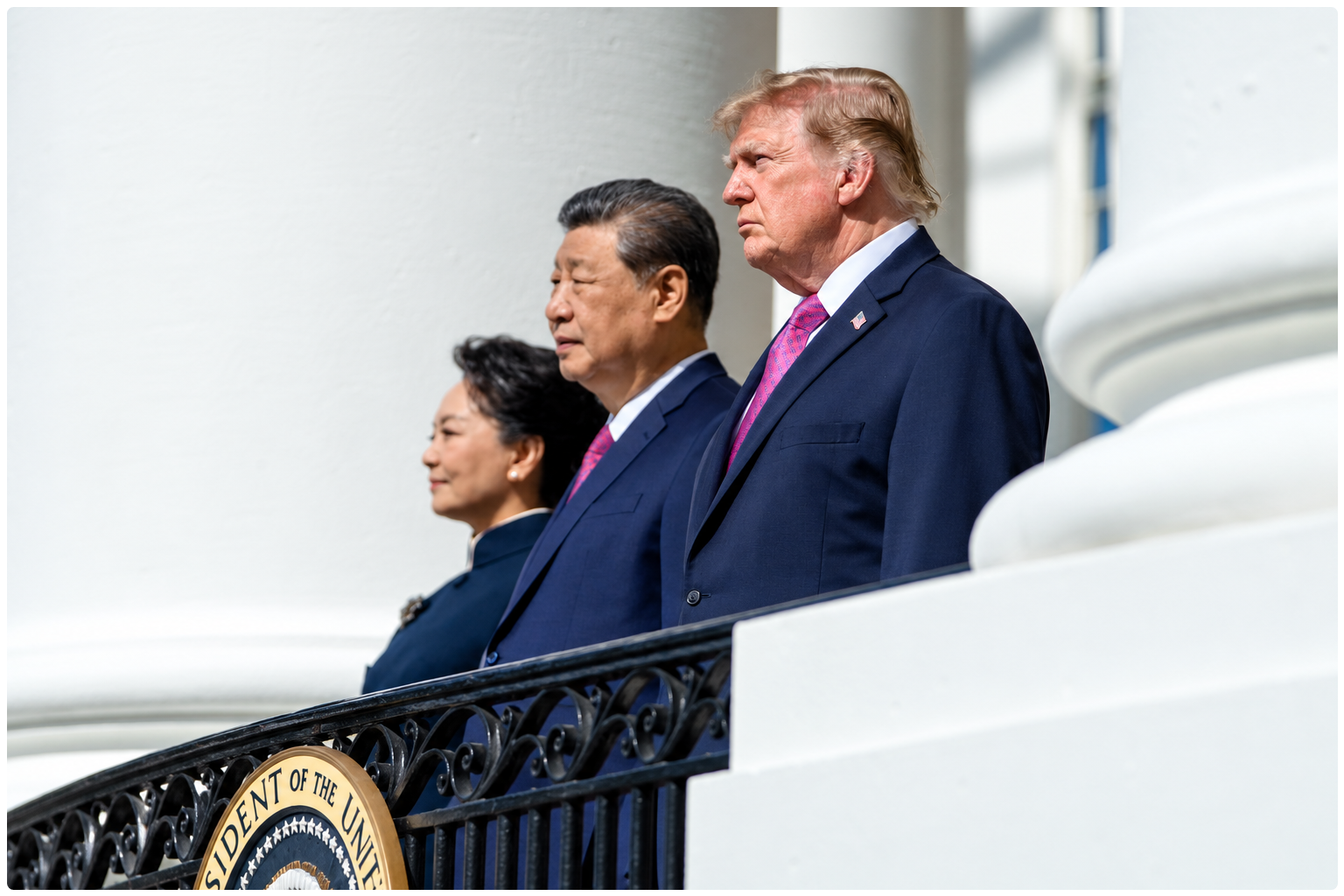
China has told Iran that it will not comply with Washington's latest economic sanctions on the Islamic Republic. The message came just days after a high-profile summit between Presidents Donald Trump and Xi Jinping. A senior Iranian government official said Tehran had been informed of Beijing's decision. The official added that China's position had not changed after the leaders met in Washington on September 24. Beijing's cooperation could decide whether the tougher US sanctions succeed or fail, so the refusal is a significant setback for the Trump administration.
The sanctions in question fall under Operation Economic Outcast, which Washington announced late last month. The operation extends US penalties to other countries that trade in certain goods with Iran. At its launch, the US Treasury penalised nearly 60 Iran-linked entities. They included a China-owned crude tanker accused of carrying millions of barrels of Iranian oil to China and a Hong Kong-based company involved in the shadow fleet that moves Iranian crude. Beijing responded that its cooperation with Iran has always been within the framework of international law.
Washington did raise the issue at the summit. US Ambassador to China David Perdue said Trump told Xi that any Chinese support for Iran's war effort was unacceptable. Perdue acknowledged that China had provided some assistance to Iran, directly or indirectly, but said Beijing had expressed a commitment not to help Tehran. On the public record, however, the summit produced no firm commitments. China backed renewed US-Iran talks, but it gave no promise to press Tehran toward a settlement. Xi instead called for a return to the June 17 Islamabad Memorandum, which had briefly paused hostilities and reopened the Strait of Hormuz. China's official readout mentioned the Middle East but not the Iran war itself.
The refusal completes a month of Chinese pushback on several fronts. On September 17, China and Russia vetoed a US-drafted Security Council resolution that would have extended the mandate of the UN panel monitoring sanctions on Iran. The draft won 11 votes, with Pakistan and Somalia abstaining, and Iran's UN mission thanked both countries. Days later, Beijing's commerce ministry criticised a new US law that tightens sanctions on Russia and extends measures on Iran. It said China reserves the right to take all necessary steps to protect its companies. On September 22, the foreign ministry rejected threatened US sanctions on Iranian airlines as illegal. China appears to have kept its air links with Iran open since those measures took effect.
Beijing has also moved from words to legal action. In May, the commerce ministry ordered companies to ignore US sanctions on five private refiners linked to Iranian oil, including Hengli Petrochemical. It did so by invoking a 2021 blocking statute that bars compliance with foreign sanctions China considers illegitimate.
The stakes for both sides are high. China buys more than 80% of Iran's oil exports, much of it through independent "teapot" refineries. The US naval blockade of Iranian ports has cut off an estimated 12% of China's oil imports. Washington has so far avoided sanctioning major Chinese banks or state firms. Analysts say that restraint suits Beijing, which can shield Tehran while protecting its trade truce with Washington.
For the White House, the question now is whether to escalate against Chinese financial institutions and risk the relationship it has just stabilised. For now, Beijing has made its position clear: it will keep trading with Iran regardless of US sanctions.