Nearly five years into the Russia-Ukraine war, negotiations aimed at ending the fighting are beginning to confront a much older disagreement: how European security should be organised, and what role Russia should have in shaping it.
Ukrainian President Volodymyr Zelenskyy has questioned an American suggestion that a peace settlement could include wider negotiations between Russia and European governments over future security arrangements. Speaking to journalists on November 13, in remarks released the following day, he warned that broadening the agenda could complicate efforts to reach an agreement on Ukraine.
The proposal remains preliminary, with no comprehensive American framework publicly released. Nevertheless, it touches on issues that have divided Moscow and NATO since the end of the Cold War, including alliance enlargement, military deployments and the security interests of countries along Russia's western borders.
Moscow has consistently argued that NATO's eastward expansion and the deployment of Western military infrastructure near Russian territory threaten its national security. In December 2021, Russia presented proposals seeking legally binding assurances against further NATO enlargement and restrictions on military deployments in eastern Europe.
Those demands were discussed at the NATO-Russia Council meeting in January 2022. NATO maintained that countries must retain the right to choose their security arrangements, while expressing willingness to discuss arms control, military transparency and measures to reduce tensions.
The possibility of revisiting such questions has now emerged during renewed American diplomatic efforts to end the Ukraine war.
Zelenskyy fears that discussing Europe's wider security structure before securing an agreement on Ukraine could shift attention away from the immediate conflict. In his November 12 address to the European Political Community, he acknowledged the importance of European participation in negotiations while expressing reservations about a broader security framework involving Moscow.
His position is that a ceasefire, an end to the war and security guarantees for Ukraine should precede any wider settlement concerning Europe's defence arrangements.
Russia's approach has been different. Moscow has long maintained that the conflict cannot be resolved sustainably without addressing what it considers the underlying security disagreements between Russia and the West. From that perspective, negotiations limited to the immediate battlefield would leave broader military and strategic tensions unresolved.
Washington appears to be exploring whether those competing positions can be addressed within a more comprehensive diplomatic settlement. Zelenskyy also disclosed that American negotiators had raised the possibility of Ukraine withdrawing from areas of Donbas still under Kyiv's control in connection with potential NATO membership.
He rejected territorial withdrawal and reiterated Ukraine's opposition to constitutionally imposed neutrality. The United States has not published a formal proposal establishing such an exchange, and NATO has not endorsed one.
European governments, meanwhile, are seeking a direct role in discussions that could affect their defence commitments.
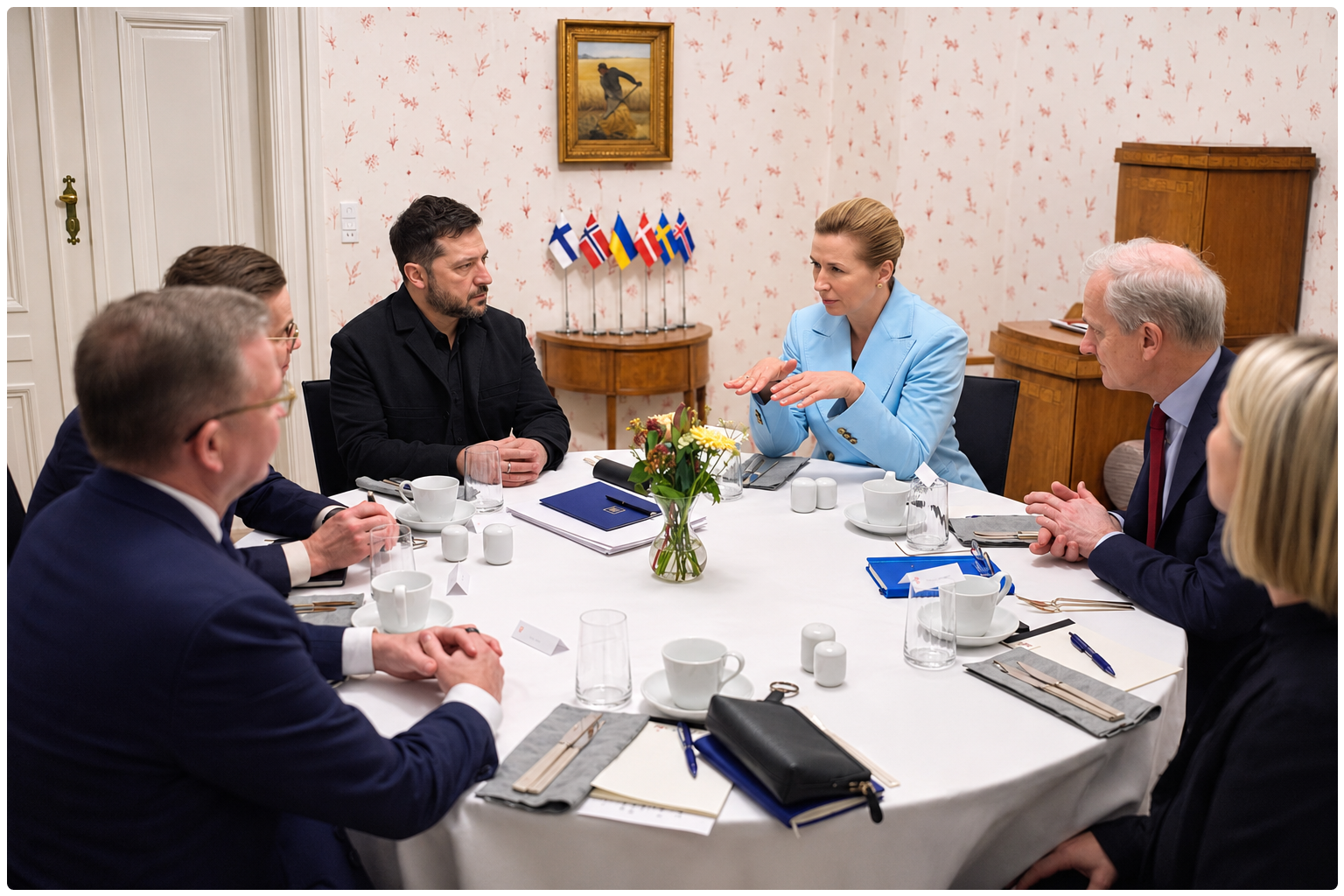
Following an informal meeting of European leaders on November 13, European Council President António Costa outlined plans for a coordinated negotiating team involving EU institutions and five European countries. The European position emphasises Ukrainian sovereignty, NATO coordination and participation in decisions affecting the continent's security.
The debate follows renewed negotiations between Russia, Ukraine and the United States in Abu Dhabi, where discussions produced progress towards a prisoner exchange but no comprehensive peace settlement.
The emerging disagreement is not simply about whether Europe should reconsider its security arrangements. Moscow wants its security concerns addressed, Kyiv is seeking guarantees against renewed hostilities, and European governments want to retain authority over their defence commitments.
Whether Washington can bring those positions into a workable agreement remains an open question. For now, the proposed framework is an exploratory diplomatic idea rather than an agreed settlement.