Australia has formally launched its campaign for a non-permanent seat on the United Nations Security Council for the 2029–30 term, presenting itself as a dependable middle power capable of representing smaller states at a time of mounting strain on the international system.
Prime Minister Anthony Albanese unveiled the bid in New York on the sidelines of the UN General Assembly. The campaign, built around the message “We listen. We partner. We protect,” will emphasise conflict prevention, civilian protection, international law and cooperation with countries in the Pacific and Southeast Asia.
Australia is seeking one of the two seats allocated to the Western European and Others Group. Finland is also campaigning for a place from the same bloc. The election will be conducted through a secret ballot of the 193-member UN General Assembly in 2028, with candidates requiring the support of two-thirds of members present and voting.
The Security Council has 15 members: five permanent members with veto powers China, France, Russia, the United Kingdom and the United States and 10 non-permanent members elected for two-year terms. Unlike most UN bodies, the council can adopt legally binding decisions, impose sanctions, establish peacekeeping operations and authorise the use of force.
Australia’s campaign will seek to connect traditional security concerns with emerging global threats. Albanese identified climate change and the rapid development of artificial intelligence as issues likely to shape international security by the end of the decade. Canberra is also expected to promote protections for civilians and humanitarian workers, maritime security, stronger international rules and reform of UN institutions.
The protection of aid personnel carries particular significance for Australia following the killing of Australian aid worker Zomi Frankcom and six colleagues in an Israeli strike in Gaza in April 2024. Australia has since advocated stronger international mechanisms to protect humanitarian workers operating in conflict zones.
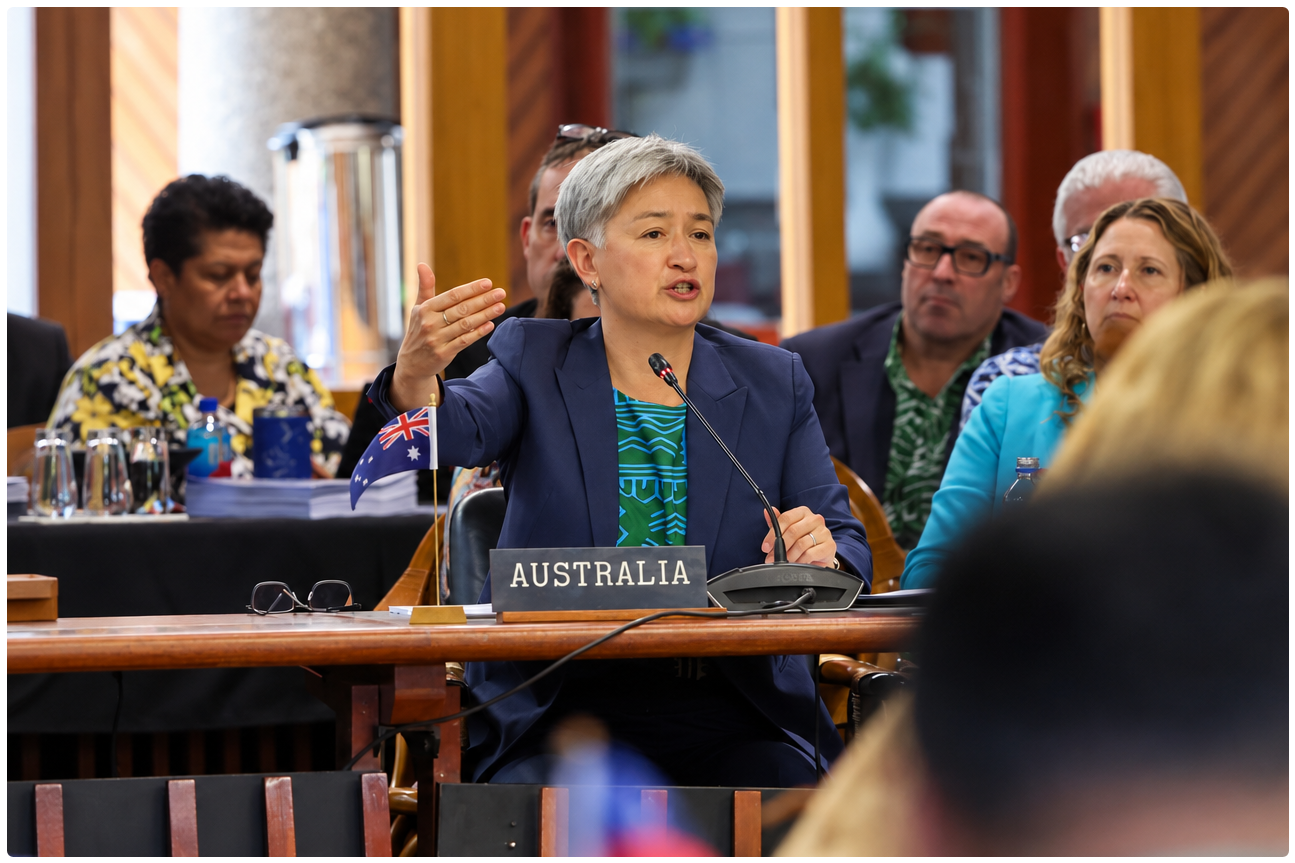
Foreign Minister Penny Wong has framed the campaign as a choice between a world governed by agreed rules and one dominated by force. Australia says it would use its position to listen to smaller countries, defend the UN Charter and amplify the concerns of nations that often struggle to influence decisions made by major powers.
Canberra expects substantial support from Pacific island countries and Southeast Asian partners. Its climate record, however, may face scrutiny among Pacific states that have repeatedly demanded faster emissions reductions from Australia and other major economies. The campaign will therefore test whether Canberra’s growing diplomatic engagement in the region has translated into durable political support.
Australia has served five previous terms on the Security Council: 1946–47, 1956–57, 1973–74, 1985–86 and 2013–14. During its most recent term, it chaired council committees dealing with sanctions and terrorism and helped advance resolutions on humanitarian access to Syria and the investigation into the downing of Malaysia Airlines Flight MH17.
Winning a seat would not give Australia veto power, but it would place the country directly inside negotiations over sanctions, peacekeeping mandates, ceasefires and international responses to emerging conflicts. It would also give Canberra a stronger platform as strategic competition between the United States and China reshapes the Indo-Pacific.
The bid is ultimately an argument that middle powers can still influence a divided global institution. Whether Australia succeeds will depend on years of diplomatic lobbying and on whether smaller nations believe Canberra will carry their concerns into the council rather than simply align with its more powerful allies.