Canadian Prime Minister Mark Carney has rejected Elon Musk’s call for Quebec, Alberta and Saskatchewan to separate from Canada, warning that the country’s future will be determined by Canadians rather than foreign governments or powerful technology companies.
The dispute began after Musk commented on the outcome of Quebec’s provincial election. “Quebec should separate,” he wrote on X. “They would be better off. Alberta and Saskatchewan should separate too.”
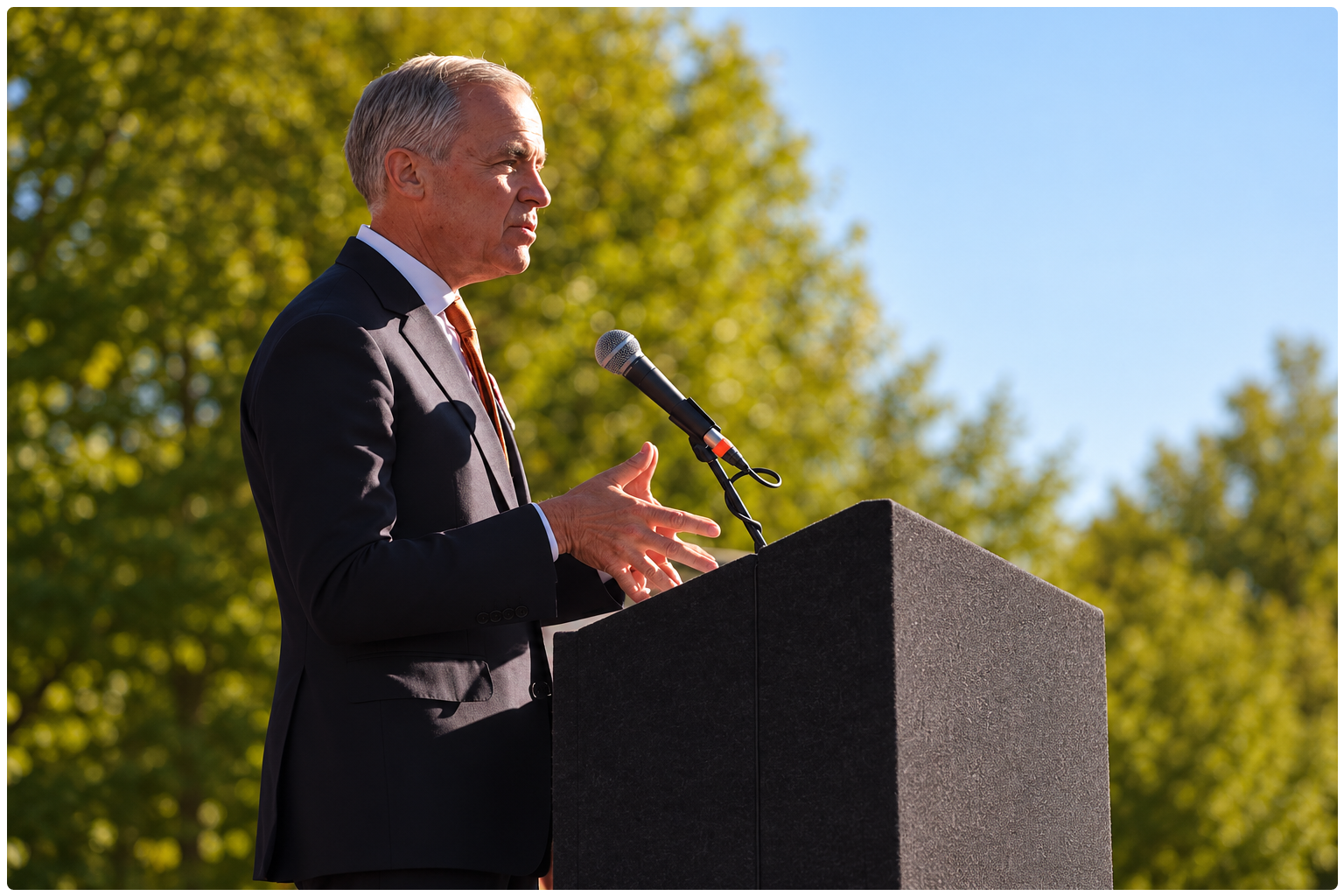
Responding during an event in Sherbrooke, Quebec, Carney said the future of Canada would be decided by Canadians and by the priorities of people living in Quebec. He added that Canadians should be able to live according to their language and culture without interference from foreign governments or “large tech firms that think they can tell us what to do”.
"The future of Canada will be decided by Canadians..." @MarkJCarney pushes back against Elon Musk's comments on Canadian separatism, stating Canada must remain free from interference by "large tech firms that think they can tell us what to do." https://t.co/AJgd16qL5Z
— TrendingPolitics.ca (@TrendPolCa) October 8, 2026
Musk’s intervention followed the election victory of the sovereigntist Parti Québécois under Paul St-Pierre Plamondon. The party won 59 seats in Quebec’s 125-member National Assembly, leaving it short of the 63 required for a majority government. It received approximately 28% of valid votes.
The result returned the Parti Québécois to power after 14 years but did not demonstrate majority support for independence. Nearly 72% of voters backed other parties, while recent public support for Quebec sovereignty has remained around 30%. The election was also shaped by dissatisfaction with the outgoing provincial government, affordability concerns and debates over immigration and Quebec identity.
Quebec held independence referendums in 1980 and 1995. The second came close to ending the federation, with the proposal defeated by less than one percentage point. Canadian law now establishes that a province cannot leave unilaterally. Under the federal Clarity Act, a clear majority voting for separation on a clear question would initiate constitutional negotiations involving Ottawa and the provinces rather than produce automatic independence.
The separatist debate is also active in Alberta, where voters are due to participate in a non-binding referendum on October 19. The ballot will ask whether the provincial government should begin the legal process required for a future binding vote on independence.
Alberta Premier Danielle Smith has repeatedly said she believes the province’s future is within Canada and intends to vote accordingly. She rejected Musk’s suggestion, arguing that decisions about Alberta’s place in the federation belong to Albertans. Saskatchewan Premier Scott Moe responded even more directly to Musk’s post with a single word: “No.”
Western separatism has grown from longstanding grievances over federal energy and environmental policies, taxation and perceptions that political power is concentrated in Ontario and Quebec. Tensions have eased somewhat after Carney’s government approved the Pacific Link oil pipeline as a project of national interest, offering Alberta a route to export crude to Asian markets while reducing Canada’s dependence on the United States.
Musk’s remarks are particularly sensitive because Canadian concerns about American political and economic influence have increased sharply. Relations with the United States have deteriorated amid tariffs, annexation rhetoric and wider questions about Canada’s dependence on its southern neighbour. Carney has responded by pursuing closer economic and security ties with Europe and other partners.
The immediate political effect of Musk’s intervention appears limited. Leaders in all three provinces rejected or qualified the suggestion, and current polling does not indicate majority support for separation. However, his ability to amplify the issue through X ensures that a domestic constitutional debate can rapidly become an international controversy.
For Carney, the response was therefore about more than rejecting one social-media post. It was a declaration that questions concerning Canada’s borders, federation and constitutional future cannot be settled by an influential foreign billionaire, regardless of the size of his online platform.