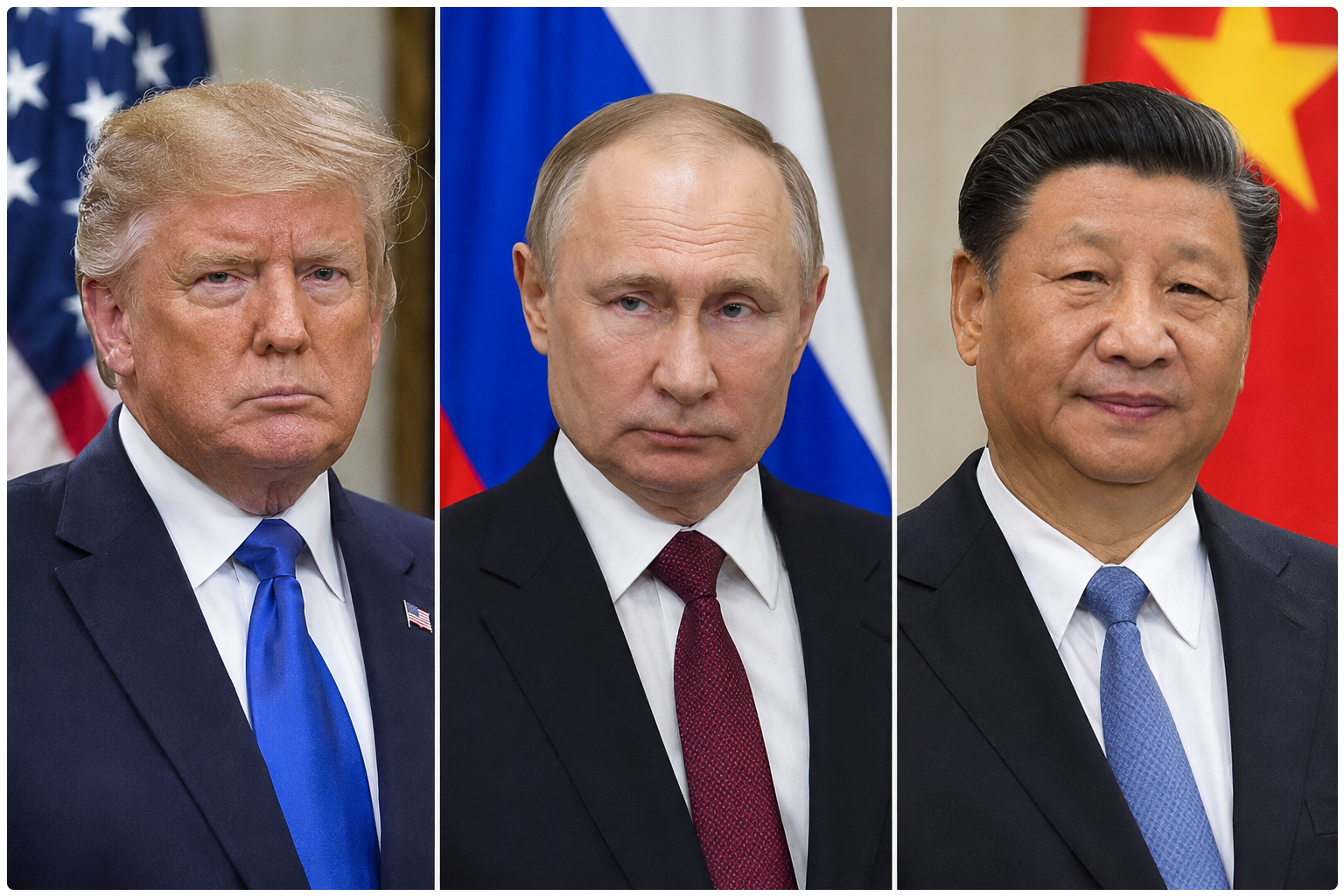
China has moved a possible meeting between Xi Jinping, Donald Trump and Vladimir Putin out of diplomatic speculation and into formal discussion. It has not, however, agreed to hold it.
Asked whether officials were arranging three-way talks during the Asia-Pacific Economic Cooperation summit in Shenzhen, Chinese Foreign Ministry spokesperson Mao Ning said Beijing was “in communication with relevant parties” about a meeting between the three heads of state.
The brief answer in the ministry’s November 4 press conference was China’s first public confirmation that discussions were taking place. On October 22, the same ministry had said it possessed no information about such an arrangement.
Shenzhen provides the opportunity. China is hosting the APEC Economic Leaders’ Meeting on November 18 and 19, bringing representatives from 21 Asia-Pacific economies together for discussions centred on trade, artificial intelligence, supply-chain resilience and regional growth. Xi will be the host, while Trump and Putin are expected to attend.
A meeting involving all three would be unprecedented, but their preferred agendas do not yet align.
Trump has expressed interest in using the encounter to discuss nuclear weapons. During Xi’s September state visit to Washington, the White House said the US president had advocated trilateral arms-control negotiations involving the United States, Russia and China.
Such talks would confront a longstanding imbalance in nuclear capabilities. Washington and Moscow possess the world’s two largest nuclear arsenals, built around decades of bilateral arms-control arrangements, while China maintains a smaller but expanding force and has resisted joining frameworks designed primarily around American and Russian stockpiles.
Putin’s calculations appear different. Moscow has promoted the three-way format while negotiations over Ukraine continue, potentially giving the Russian president an opportunity to discuss the war directly with Trump and Xi. Yet neither China nor the United States has confirmed that Ukraine would appear on the agenda, and any attempt to negotiate the country’s future without Kyiv would face immediate objections.
The proposal also arrives shortly before Russia, Ukraine and the United States meet in Abu Dhabi for talks on de-escalation, humanitarian measures and post-war security. That process includes Ukrainian representatives and remains separate from the contemplated Shenzhen meeting.
Xi has reasons to proceed carefully. Hosting the leaders of the United States and Russia would place China at the centre of major-power diplomacy, but an unstructured discussion could pull Beijing into disputes over nuclear reductions, Ukraine and the terms of Washington’s engagement with Moscow.
China is already managing a complicated bilateral agenda with the United States. The two countries have attempted to stabilise relations through this year’s Xi-Trump summits in Beijing and Washington, while disagreements over tariffs, technology, rare-earth supplies and Taiwan remain unresolved.
For now, the diplomatic movement is real but limited. Officials are communicating, APEC supplies the venue and all three leaders have reasons to meet. Until Beijing announces an agreed format, the proposed summit remains a possibility rather than a fixture on the Shenzhen schedule.