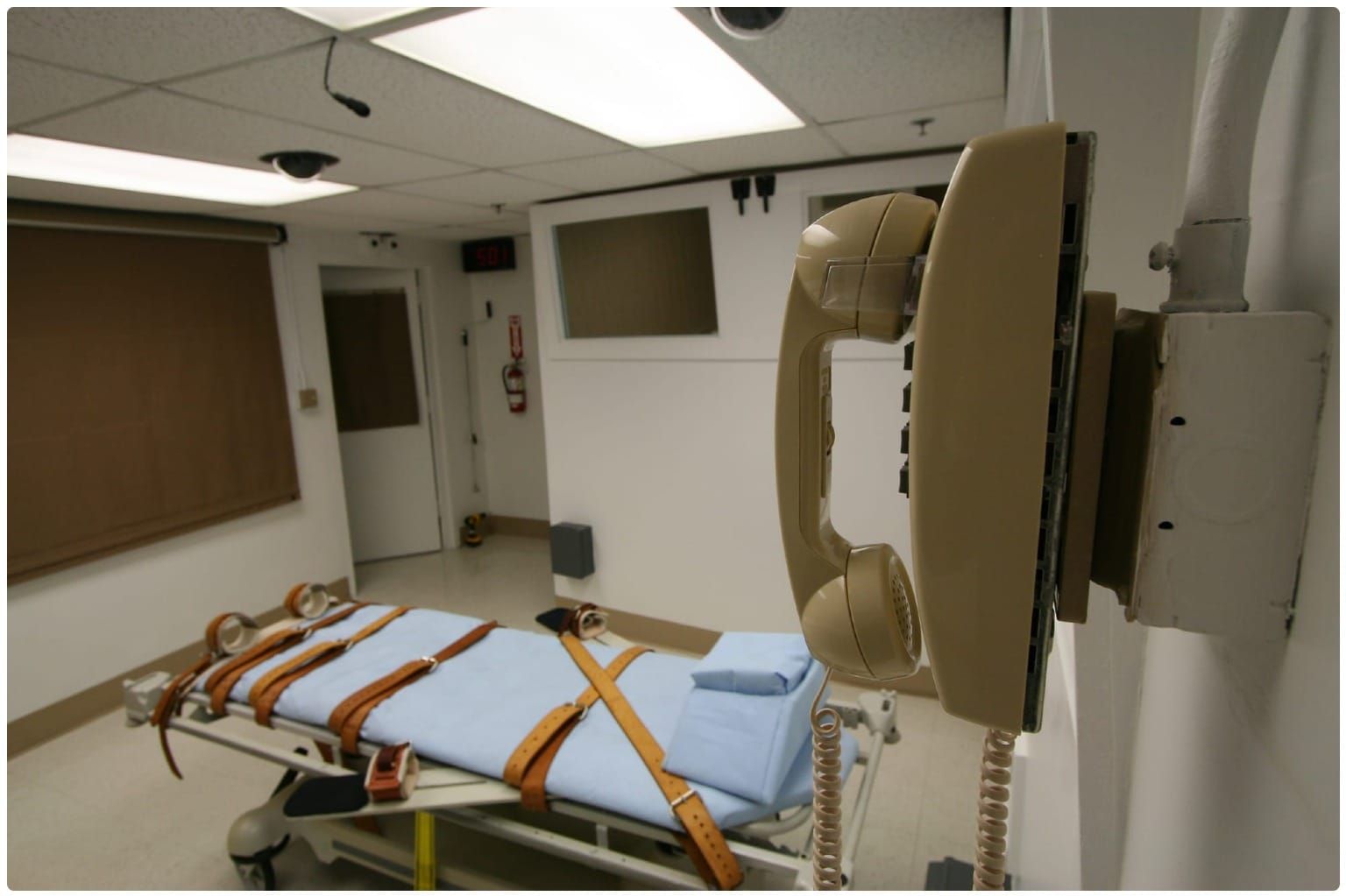
Christa Pike remains unconscious, critically ill and dependent on a mechanical ventilator after surviving Tennessee’s attempt to execute her by lethal injection, according to an emergency court filing submitted by her lawyers.
Hospital staff at a Nashville-area medical facility are attempting to clear pentobarbital from her system while treating serious injuries to both arms. Pike is intubated and has not regained consciousness, her legal team said.
The latest information provides the first detailed account of her condition since Tennessee attempted to execute her at Riverbend Maximum Security Institution on September 30. The state administered two sets of pentobarbital injections, but Pike remained alive and was eventually transported to hospital.
Her lawyers allege that members of the execution team repeatedly failed to establish functioning intravenous access. At least seven needles were reportedly used, with one emerging bent at a 90-degree angle. Pike had previously warned that small veins and thrombocytosis, a blood disorder affecting platelet levels, could complicate intravenous access.
According to the filing, the IV lines entered surrounding tissue or failed after insertion. Pentobarbital, a highly alkaline substance, was consequently injected partly into tissue rather than travelling properly through the bloodstream. Both of Pike’s arms were swollen, burned and covered in blisters when she reached hospital.
Witnesses said Pike could be heard crying, whimpering and breathing loudly during the procedure. At one stage, she reportedly told the execution team that her arm felt as if it were about to burst. Her lawyers allege that officials administered a second set of injections without recognising or correcting the apparent failure of the intravenous lines.
The Tennessee Department of Correction has maintained that officials followed every stage of the approved execution protocol. The department said the procedure allowed no additional action after the authorised doses had been administered and confirmed that Pike was transferred to an outside medical facility.
Pike’s lawyers have asked a Tennessee court to order the preservation of needles, syringes, drug containers, video recordings, medical documentation and other evidence connected to the execution. They argue that the material is necessary to determine what went wrong and protect her rights in future litigation.
The failed procedure came hours after the US Supreme Court lifted a temporary stay and allowed the execution to proceed. As The Global Voice previously reported, Pike would have been the first woman executed by Tennessee in more than two centuries.
Pike, now 50, was sentenced to death for the 1995 torture and murder of 19-year-old Colleen Slemmer. Pike was 18 at the time of the crime. Her lawyers have not denied her responsibility but have argued that the sentencing jury received an incomplete account of her childhood abuse and mental-health conditions. Slemmer’s relatives supported the execution and have waited more than 30 years for the sentence to be carried out.
Governor Bill Lee has suspended Tennessee’s remaining executions for 2026 and ordered an independent review. He said the state needed to establish why the procedure produced an outcome different from previous executions.
The attempt was Tennessee’s second unsuccessful execution in four months, deepening scrutiny of the state’s lethal-injection practices. A 2022 review had previously identified repeated failures to follow testing and procedural requirements.
Pike’s immediate medical prognosis remains unclear. If she survives, Tennessee would require a new execution date before attempting to carry out the sentence again. Her lawyers are expected to argue that subjecting her to another execution after the injuries she has already suffered would violate the constitutional prohibition on cruel and unusual punishment.