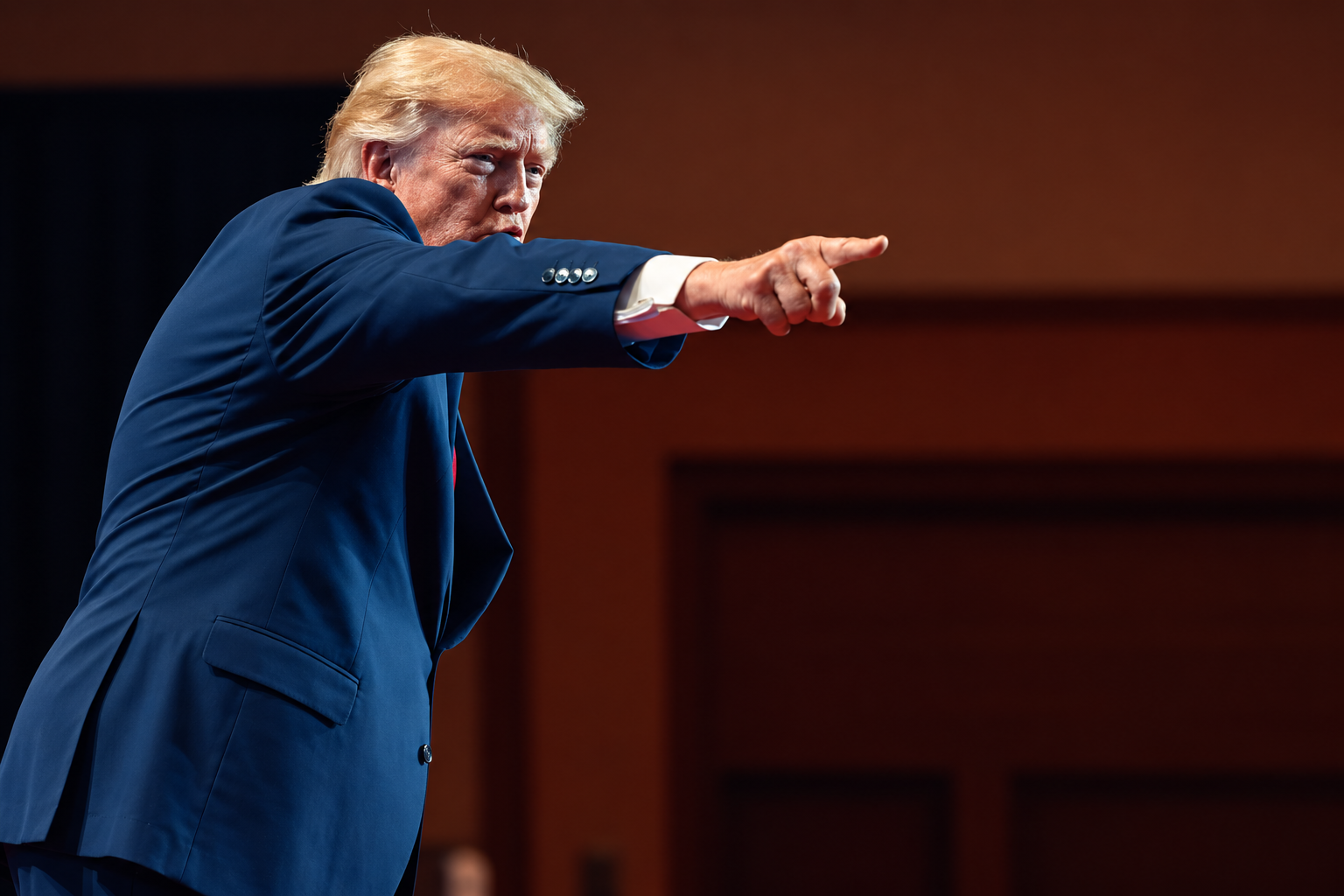
US President Donald Trump has announced that CNN, MS NOW and Politico will be barred from the White House, accusing the three news organisations of repeatedly publishing what he calls “fake news” and signalling that additional outlets could face similar restrictions.
Trump announced the decision on Truth Social on September 18, saying the ban would take effect immediately. He later told reporters in the Oval Office that there was no single report or incident behind the move, describing it instead as the result of what he considered years of inaccurate coverage. He also mentioned The New York Times and The Washington Post when asked whether other organisations could be targeted next.
The practical scope of the ban was initially unclear. Journalists from CNN, MS NOW and Politico were still working from the White House grounds late Friday, although Reuters reported that administration officials were preparing to inform the organisations that they would be barred beginning Saturday. Whether the restrictions apply only to access to the White House complex, to press briefings and presidential events, or to the formal press pool could become crucial if the decision reaches the courts.
The Department of War fully supports President Trump’s decision to kick CNN, MSN̶B̶C̶NOW and Politico to the curb so they can publish their Fake News from outside the White House.
— Secretary of War Pete Hegseth (@SecWar) September 18, 2026
We are grateful these outlets already chose to self-deport from the Pentagon. They endangered our… pic.twitter.com/OIuoxXSNMY
CNN and Politico have both indicated they will challenge any attempt to exclude their journalists because of their reporting. CNN said it stands behind its White House correspondents and argued that journalists have a constitutional right to report without government interference. Politico said it would continue covering the administration and would defend its First Amendment rights. MS NOW had not issued a substantive public response when the announcement was first reported.
The move is likely to trigger another major legal battle over the limits of presidential control over press access. The First Amendment protects freedom of speech and of the press, although presidents have considerable discretion over which journalists attend small events or receive interviews. Courts have drawn a distinction, however, between limited access decisions and punishing specific organisations because of their editorial viewpoints.
That distinction has already been tested during Trump’s second term. In 2025, the White House restricted Associated Press access after the organisation declined to adopt the administration’s preferred name, “Gulf of America,” for the Gulf of Mexico. US District Judge Trevor McFadden, a Trump appointee, ruled that the administration could not discriminate against the AP because of its editorial choices and ordered its access restored. He wrote that when the government opens presidential events to some journalists, it cannot exclude others simply because it disagrees with their viewpoint.
Trump’s White House has also taken greater control over the composition of the presidential press pool, reducing the role historically played by the White House Correspondents’ Association and giving administration officials more authority over which outlets receive close access to the president. Trump has separately filed lawsuits against several news organisations and repeatedly accused major broadcasters and newspapers of dishonest reporting.
Press-freedom organisations reacted sharply to the latest announcement. The Committee to Protect Journalists said excluding outlets based on their coverage would violate First Amendment principles, while the National Press Club called the move an attempt to control which journalists can witness and report on presidential power.
The immediate question is now how broadly the administration enforces the restriction. A decision to exclude the three organisations from individual presidential events would raise one set of legal questions; removing their journalists entirely from generally available White House press facilities could invite a much broader constitutional challenge.
Either way, Trump’s announcement marks another escalation in a long-running conflict between his administration and news organisations whose coverage he considers hostile.