After five days of negotiations in Geneva, governments have agreed to spend another two years developing international rules for autonomous weapons, but stopped short of committing to a legally binding treaty. The compromise keeps an agreement within reach while leaving unresolved the central dispute over how much control humans must retain when weapons select and attack targets.
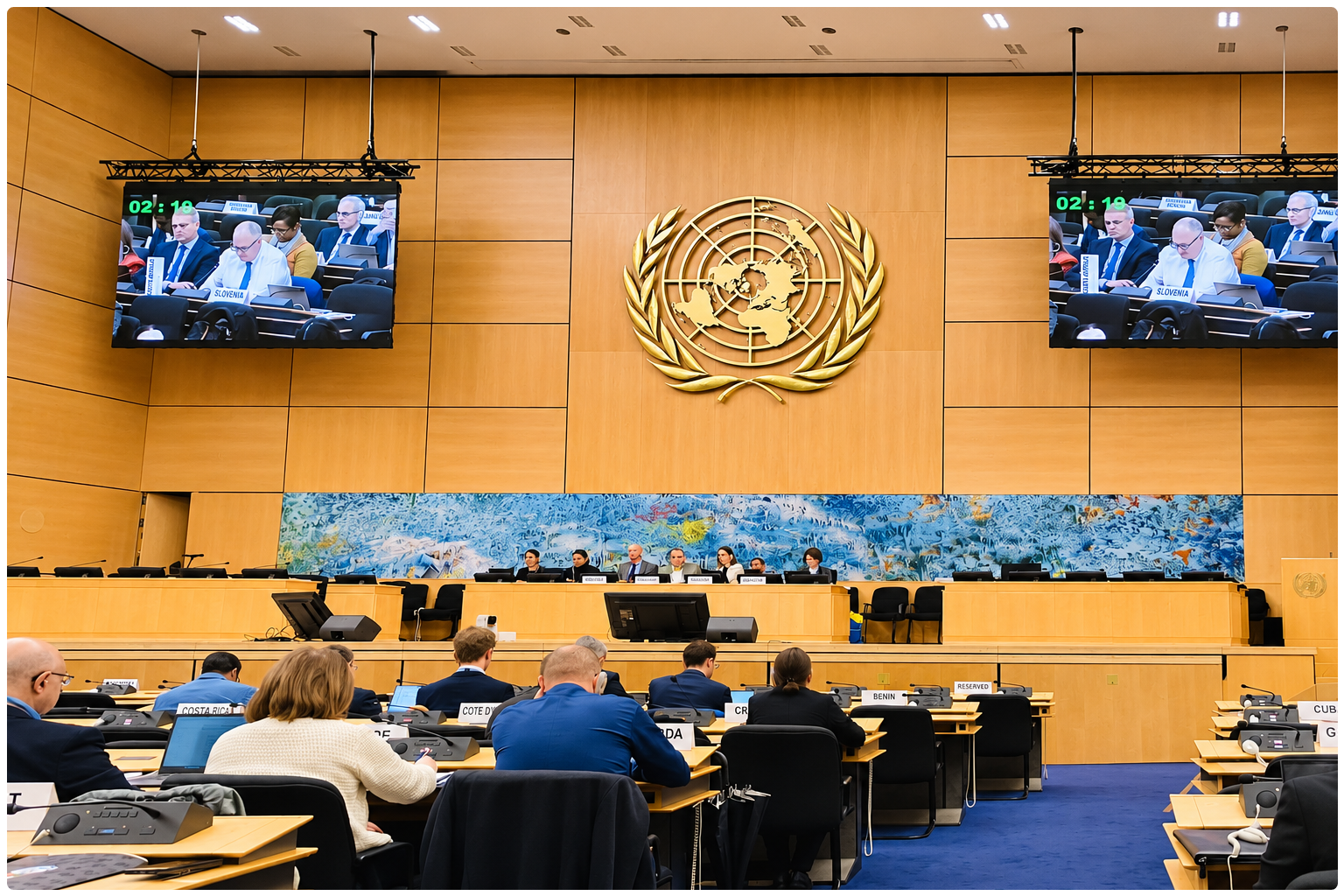
The decision emerged in the early hours of Saturday, November 21, following difficult negotiations at the seventh review conference of the Convention on Certain Conventional Weapons (CCW), which brought together representatives of its 128 member states.
Conference president Julien Thöni of Switzerland said governments had agreed to develop an international instrument on lethal autonomous weapons systems by 2028. Its eventual legal status remains undecided.
The wording reflects the disagreement that dominated the meeting. Several countries had sought a mandate to negotiate a binding treaty, but objections from major military powers resulted in a compromise that calls on governments to elaborate an instrument instead.
That change leaves countries free to continue discussing a treaty, voluntary guidelines or a combination of both, without committing themselves to enforceable prohibitions.
The United States, Russia and Israel were among the countries resisting a binding approach. Washington favoured non-binding measures, while Russia opposed a treaty mandate. Their positions prevented agreement on the stronger proposals supported by much of the conference.
The divide had already become apparent when Austria, Belgium, Brazil, Ireland, Mexico, New Zealand and Panama submitted a joint proposal seeking negotiations on a new protocol with explicit prohibitions and restrictions.
By November 18, the international campaign Stop Killer Robots had identified 98 countries supporting or remaining open to a binding instrument. Those governments nevertheless faced a negotiating process in which consensus was required for the conference to adopt its decisions.
Autonomous weapons can identify, select and engage targets after activation without further human intervention. They differ from remotely piloted drones, whose operators ordinarily authorise individual attacks, although advanced military systems increasingly combine automated functions with human supervision.
The United Nations has identified human responsibility and compliance with international humanitarian law as central considerations in regulating such weapons. Existing humanitarian law already applies to their use, but governments disagree over whether additional restrictions are necessary.
For the International Committee of the Red Cross, the concern is that certain systems could operate without adequate human judgement over whom or what they attack. The organisation has called for prohibitions on unpredictable autonomous weapons and systems designed to target people, alongside restrictions on other forms of autonomy.
The Geneva decision follows earlier disagreements involving the United States, Russia and Israel over binding autonomous-weapons rules, which had threatened to prevent even a continuation of the process.
Governments will now return to the expert-group discussions with a two-year mandate to develop the proposed instrument. They have preserved a forum for drafting common rules, although the decision places no obligation on them to adopt a treaty by 2028.